Best YA Fantasy Series & Trilogies: 12 Series Worth Every Page
The best young adult fantasy series ranked — from Throne of Glass to Six of Crows, The Hunger Games to Shadow and Bone. Start here if you want to fall completely into another world.

Young adult fantasy is the genre that turns readers. These are the series that keep people up until 3am and create lifelong reading habits. They also, at their best, do things that adult fantasy often doesn’t: they care about emotional truth with the same rigour they bring to plot mechanics. Their stakes feel real because growing up makes everything feel like the end of the world.
This list covers the twelve series worth investing in — ranked by overall quality, world-building depth, and staying power.
1. The Hunger Games — Suzanne Collins
Start with: The Hunger Games (Book 1)
Series length: 3 books (+ prequel The Ballad of Songbirds & Snakes)
Best for: Everyone. Genuinely everyone.
The benchmark. A girl chosen at random to fight to the death in a televised spectacle; a tyrannical Capitol; a revolution she didn’t ask to lead. Collins writes action at a level almost no one else in YA matches, but the Katniss Everdeen in these books is also one of the most psychologically complex protagonists in the genre — a survivor who keeps surviving at enormous cost.
The dystopian framework is not subtle. That’s the point. Mockingjay, the third book, does something almost no YA series does: it refuses the triumphant ending and sits instead with what victory actually costs. Divisive when it published. Correct, in retrospect.
Read the The Hunger Games review →
2. Throne of Glass Series — Sarah J. Maas
Start with: Throne of Glass (Book 1)
Series length: 8 books
Best for: Readers who want sweep — plot that runs for thousands of pages across a world that keeps expanding.
Celaena Sardothien, an assassin sent to compete for the position of the king’s champion. What starts as a contained competition novel becomes, by book four, one of the most ambitious world-building enterprises in the genre: multiple continents, warring factions, mythologies, and a protagonist who changes completely across eight books.
The series improves dramatically as it progresses. Books 3–6 are significantly better than 1–2. Give it at least three books before deciding. SJM’s prose rewards patience: the payoffs are genuinely earned.
See the full reading order: Throne of Glass Books in Order →
3. Six of Crows Duology — Leigh Bardugo
Start with: Six of Crows (Book 1)
Series length: 2 books
Best for: Readers who like heists, morally grey characters, and ensemble casts.
The best heist novel in YA fantasy and arguably the best character ensemble. Six thieves, con artists, and outcasts — each with their own agenda — attempt to break into the most impregnable prison in the world. Bardugo writes banter with the precision of a playwright and structures her plot reversals with the discipline of a classically trained thriller writer.
If you haven’t read the original Shadow and Bone trilogy first, you don’t need to. Six of Crows stands completely alone and is the better book by a significant margin.
Read the Six of Crows review →
4. Shadow and Bone Trilogy — Leigh Bardugo
Start with: Shadow and Bone (Book 1)
Series length: 3 books (Grisha Verse)
Best for: Readers who want Russian-inspired fantasy with an original magic system and a complicated romance.
The Grisha Verse starts here: a world where certain humans can manipulate matter — summon light, cut the wind, heal the dying — and the Darkling, one of fantasy’s most genuinely unnerving antagonists. The love triangle between Alina, Mal, and the Darkling remains controversial; the world-building is not.
Read this before Six of Crows if you want the full Grishaverse context, but don’t expect the same level of craft. Six of Crows surpasses it.
Read the Shadow and Bone review →
5. An Ember in the Ashes — Sabaa Tahir
Start with: An Ember in the Ashes (Book 1)
Series length: 4 books
Best for: Readers who want a fully immersive fantasy world inspired by ancient Rome, with high stakes and two alternating protagonists.
One of the most underrated series in YA fantasy. Tahir draws on Roman military culture, Indian folklore, and West Asian mythology to build a world that feels genuinely unlike any other in the genre. The dual POV — Laia, a Scholar girl trying to rescue her brother, and Elias, a Mask (elite soldier) trying to escape his conditioning — gives the series more tonal and emotional range than most single-protagonist YA fantasies.
The third book (A Reaper at the Gates) is among the best single volumes in YA fantasy. The final book sticks the landing.
Read the An Ember in the Ashes review →
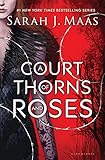
6. A Court of Thorns and Roses Series — Sarah J. Maas
Start with: A Court of Thorns and Roses (Book 1)
Series length: 5 books + novellas
Best for: Readers who want romantasy — fantasy with romance at its centre — and don’t mind content that gets adult from book two onward.
ACOTAR is technically Fae fantasy re-imagining Beauty and the Beast, but by book two it has left its YA origins entirely behind. The world-building (Courts of Prythian, the Fae hierarchy, the magic system) is among the most detailed in the genre. The romance is polarising — deeply beloved by its fans, who are legion.
Be aware of the content shift: A Court of Mist and Fury (Book 2) and beyond contain adult themes. This is a series that has been recategorised as New Adult/adult by most retailers.
See the full reading order: ACOTAR Books in Order →
7. The Cruel Prince — Holly Black
Start with: The Cruel Prince (Book 1)
Series length: 3 books (Folk of the Air)
Best for: Readers who want Faerie politics, morally complex protagonists, and a romance built entirely on antagonism.
Holly Black invented modern Fae fantasy. Her Faerie is not romantic or safe: it is beautiful and cruel and operates by rules that are genuinely alien. Jude Duarte — human, ambitious, raised among Fae who consider her beneath them — is one of the most strategically intelligent protagonists in the genre, and her antagonistic dynamic with Cardan is one of the better slow-burn romances in recent YA.
Short books (each under 350 pages), fast pacing, and a consistently excellent trilogy arc. One of the most complete series in the genre.
Read the The Cruel Prince review →
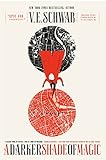
8. A Darker Shade of Magic — V.E. Schwab
Start with: A Darker Shade of Magic (Book 1)
Series length: 3 books (Shades of Magic)
Best for: Readers who want original world-building, a morally grey magic system, and one of the best female characters in fantasy.
Four Londons exist in parallel: Red (magic-rich), White (dying), Grey (ours, without magic), Black (long destroyed). Only a handful of Antari — blood mages — can travel between them. Kell, one of the last Antari, smuggles contraband between worlds until one forbidden object sets everything in motion.
V.E. Schwab’s world-building is extraordinary: each London has its own atmosphere, politics, and aesthetic. Lila Bard, the Grey London pickpocket, is one of the most well-drawn supporting characters in YA fantasy.
Read the A Darker Shade of Magic review →
9. His Dark Materials — Philip Pullman
Start with: The Golden Compass (Book 1, titled Northern Lights outside the US)
Series length: 3 books (+ The Book of Dust trilogy)
Best for: Readers who want literary YA fantasy with philosophical depth and the most ambitious multi-world system in the genre.
Published in the 1990s, still unmatched in ambition. Lyra Belacqua navigates a world where human souls exist outside the body as animal companions (dæmons), where the Church controls knowledge, and where particles called Dust are threatening the established order. Pullman works in theology, physics, and Milton simultaneously; the result is fantasy that rewards adult rereading more than almost any other series in the YA canon.
The Golden Compass and The Subtle Knife are perfect. The Amber Spyglass is divisive. Read all three.
Read the The Golden Compass review →
10. The Maze Runner — James Dashner
Start with: The Maze Runner (Book 1)
Series length: 3 main books + 2 prequels
Best for: Readers who want pure survival thriller with a mystery at the centre.
A boy wakes in a metal box with no memories except his name. Around him: other boys, a community they’ve built, and a giant ever-changing maze no one has ever survived. The Maze Runner is the tightest thriller in YA dystopia — the maze itself is a brilliant structural device — and the mystery of the WICKED organisation drives the series through three books with real urgency.
The later books decline in quality, but the first is one of the best single-volume entries in the genre.
Read the The Maze Runner review →
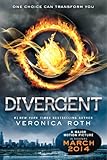
11. Divergent — Veronica Roth
Start with: Divergent (Book 1)
Series length: 3 books
Best for: Readers who want YA dystopia with faction-based world-building and a strong protagonist.
A society divided into five factions — Dauntless, Erudite, Abnegation, Amity, Candor — each representing a different virtue. Tris Prior doesn’t fit any of them cleanly: she is Divergent, which makes her dangerous. The first book is the series’ peak — the choosing ceremony, the Dauntless initiation, the mounting tension — and Allegiant’s ending remains the most debated conclusion in YA dystopia.
Read the Divergent review →
12. The Mortal Instruments — Cassandra Clare
Start with: City of Bones (Book 1)
Series length: 6 books (+ multiple spin-off series in the Shadowhunter world)
Best for: Readers who want an expansive urban fantasy universe with Shadowhunters, Downworlders, and the most developed extended universe in YA.
Clary Fray discovers, on her sixteenth birthday, that she can see creatures no one else can — and that she is not who she thought she was. The Shadowhunters universe is the most fully developed extended world in YA fantasy: dozens of books, multiple series, and a fanbase that has sustained it for nearly twenty years.
The first series is uneven, but the world-building — Shadowhunter lore, the Accords, the political landscape of the Downworld — rewards readers who stay with it.
Read the City of Bones review →
Where to Start If You’re New to YA Fantasy
If you haven’t read any of these series:
- Start here for pure plot: The Hunger Games
- Start here for world-building: His Dark Materials
- Start here for character work: Six of Crows
- Start here for romance + fantasy: The Cruel Prince or ACOTAR
- Start here for something original: A Darker Shade of Magic
All twelve series on this list reward investment. The genre at its best doesn’t ask you to switch off your brain — it asks you to bring everything you’ve got.
Frequently Asked Questions
What is the best YA fantasy series to start with?
The Hunger Games by Suzanne Collins is the most universally recommended starting point — three books, each better than the last, with a protagonist and premise that work for readers of almost any age. If you want something heavier on world-building and magic, start with Throne of Glass or Shadow and Bone instead.
What is the best YA fantasy trilogy?
Six of Crows by Leigh Bardugo is widely considered the best YA fantasy duology (it's technically two books, not three). For a complete trilogy, An Ember in the Ashes by Sabaa Tahir is one of the most consistently brilliant across all four books. The Hunger Games remains the most acclaimed three-book arc in the genre.
Is A Court of Thorns and Roses YA or adult?
A Court of Thorns and Roses started as YA but became New Adult/adult fantasy from book two onwards. It is listed by most retailers in both categories. Readers who start at 16+ should be aware that books three, four, and five contain adult content.
What YA fantasy series has the best world-building?
His Dark Materials by Philip Pullman (starting with The Golden Compass) has the most ambitious and fully realised multi-world system in YA fantasy. For secondary-world magic systems with deep rules, Brandon Sanderson's Stormlight Archive (technically adult but widely read by older YA readers) is unmatched. In YA proper, A Darker Shade of Magic by V.E. Schwab builds one of the most inventive multi-London parallel worlds in the genre.
What is the difference between YA fantasy and adult fantasy?
YA fantasy typically features protagonists aged 14–18, faster pacing, less graphic violence and sexuality, and a coming-of-age arc as the core emotional journey. Adult fantasy allows more moral complexity, slower world-building, and more explicit content. Many adult fantasy readers start with YA — the quality of the best YA series is not lower, just differently calibrated.