Best True Crime Books: 10 Essential Reads That Defined the Genre
True crime is one of publishing's fastest-growing genres. These 10 books — from serial killers to corporate fraud to political murder — are the ones that defined it.
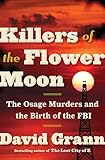
The 3 best true crime books to start with: Killers of the Flower Moon (historical, empathetic, now a Scorsese film), Say Nothing (Northern Ireland, literary, masterclass in narrative nonfiction), Bad Blood (corporate fraud, Theranos, indispensable journalism). All three work as first reads even if you’ve never picked up true crime before.
True crime is one of publishing’s fastest-growing genres — and one of its most contested. Critics argue that the genre sensationalises suffering; defenders point out that the best true crime writing does what journalism and history have always done: it forces an accounting. The books on this list fall firmly into the latter category.
What the true crime boom actually reflects is a hunger for narrative nonfiction that goes beyond the crime itself. The best books in the genre are really about power — who has it, who lacks it, and what institutions do when the two collide. They use a single case, a single family, or a single moment of catastrophic failure as a window into something much larger: the founding of a nation on violence, the capture of regulatory bodies by corporate money, the way ideology shapes a community’s willingness to look away.
This list spans the genre’s main registers: corporate crime, political violence and terrorism, serial killers, and survivor accounts. Each book here treats its subject — and its subjects — with the seriousness the material demands.
All 10 Books at a Glance
| # | Title | Author | Type | Rating |
|---|---|---|---|---|
| 1 | Bad Blood | John Carreyrou | Corporate crime | ★★★★★ |
| 2 | Empire of Pain | Patrick Radden Keefe | Corporate crime | ★★★★★ |
| 3 | Say Nothing | Patrick Radden Keefe | Political violence | ★★★★★ |
| 4 | Killers of the Flower Moon | David Grann | Historical murder | ★★★★★ |
| 5 | The Devil in the White City | Erik Larson | Serial killer | ★★★★★ |
| 6 | I’ll Be Gone in the Dark | Michelle McNamara | Cold case | ★★★★★ |
| 7 | Dead Wake | Erik Larson | Historical disaster | ★★★★★ |
| 8 | The Lost City of Z | David Grann | Disappearance | ★★★★☆ |
| 9 | Know My Name | Chanel Miller | Survivor account | ★★★★★ |
| 10 | Hatching Twitter | Nick Bilton | Corporate betrayal | ★★★★☆ |
Corporate Crime & Institutional Failure
1. Bad Blood — John Carreyrou ⭐⭐⭐⭐⭐
The definitive account of the Theranos fraud, written by the Wall Street Journal reporter whose investigation brought it down. Elizabeth Holmes promised a world-changing blood-testing technology that didn’t exist, raised nearly a billion dollars from investors, and endangered the lives of patients who received inaccurate test results. Carreyrou reconstructs the fraud from the inside — former employees who risked careers and NDAs to speak to him — with the pacing of a thriller and the precision of a legal brief.
What makes Bad Blood more than a business scandal is the culture Carreyrou describes: a Silicon Valley ecosystem so invested in disruption mythology that it rewarded a charismatic founder for years of deception. Holmes’ trial and conviction came later; the book arrived first.
➡ Full review → | Buy on Amazon →
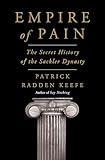
2. Empire of Pain — Patrick Radden Keefe ⭐⭐⭐⭐⭐
Patrick Radden Keefe’s investigation into the Sackler family and the opioid crisis is the most important true crime book of the decade. The Sacklers built one of America’s great philanthropic dynasties — their names grace wings of the Louvre and the Met — while their company, Purdue Pharma, manufactured and aggressively marketed OxyContin in ways that helped trigger an addiction epidemic that has killed over 500,000 Americans.
Keefe traces the family across three generations, from Arthur Sackler’s transformation of pharmaceutical advertising in the 1950s to the litigation that would eventually bankrupt the company. This is true crime on the largest possible scale: the crime is not a murder but a policy, executed over decades with the full cooperation of regulators who should have stopped it.
Political Violence & Terrorism
3. Say Nothing — Patrick Radden Keefe ⭐⭐⭐⭐⭐
Keefe’s earlier masterpiece focuses on the murder of Jean McConville — a widowed mother of ten dragged from her Belfast home in 1972 by the IRA — and the people who killed her. But Say Nothing is really a portrait of the Troubles as lived experience: what it meant to be young, idealised, and violent in West Belfast, and what it means decades later to live with what you did.
The central figures — Dolours Price, Gerry Adams, Brendan Hughes — are rendered with a novelist’s complexity. Keefe refuses easy judgments while making the moral reality absolutely clear. One of the finest works of narrative nonfiction published in the last twenty years, in any genre.
➡ Full review → | Buy on Amazon →
4. Killers of the Flower Moon — David Grann ⭐⭐⭐⭐⭐
In the 1920s, members of the Osage Nation were systematically murdered for their oil wealth — and the killers were often the white men who had married into the tribe to access their headrights. David Grann’s account of the FBI’s early investigation into the murders is both a founding document of federal law enforcement and a devastating account of how American institutions could mobilise to catch individual killers while protecting the larger system that enabled them.
Martin Scorsese’s 2023 film adaptation brought the book to a vastly wider audience, but Grann’s final act — in which he discovers the murders went far deeper than even the FBI’s investigation revealed — remains the book’s most disturbing element.
➡ Full review → | Buy on Amazon →
Serial Killers & Historical Crime
5. The Devil in the White City — Erik Larson ⭐⭐⭐⭐⭐
Erik Larson’s signature device — parallel narratives that illuminate each other — is deployed to its fullest effect here. One narrative follows Daniel Burnham’s herculean effort to build Chicago’s 1893 World’s Columbian Exposition; the other follows H.H. Holmes, the serial killer who used the fair’s crowds and chaos to lure and murder victims in his nearby “Murder Castle.” The structural contrast is Larson’s argument: the same city, the same moment, the same human capacity for obsession — turned toward creation and destruction simultaneously.
The Devil in the White City is the book that established the template for high-literary true crime: meticulous historical research presented with novelistic technique.
6. I’ll Be Gone in the Dark — Michelle McNamara ⭐⭐⭐⭐⭐
Michelle McNamara’s posthumously published investigation into the Golden State Killer — who committed at least 13 murders and 50 rapes across California in the 1970s and 80s — is unique in the genre for making its author’s psychology as visible as its subject’s. McNamara died before completing the book; it was finished by her collaborators from her notes and drafts, and the incompleteness is part of its power.
McNamara brought the Golden State Killer to broader public attention before DNA technology identified him as Joseph James DeAngelo in 2018. The book is simultaneously a cold-case investigation, a meditation on the dark pull of true crime obsession, and an elegy — finished before its author could see it end.
Exploration & Mysterious Disappearance
7. Dead Wake — Erik Larson ⭐⭐⭐⭐⭐
Larson’s account of the RMS Lusitania’s sinking in May 1915 — killed by a single German torpedo that sent 1,198 people to the bottom of the Atlantic in eighteen minutes — applies his parallel-narrative technique to maritime history. Three threads converge: the passengers aboard the Lusitania, the U-20 submarine commander who fired on it, and Woodrow Wilson, whose political paralysis helped keep the US out of a war it would eventually enter partly because of this sinking.
Dead Wake is true crime in the widest sense: a reconstruction of a catastrophe, an investigation into who made what decisions and why, and a study of institutional failure under the pressure of wartime politics.
8. The Lost City of Z — David Grann ⭐⭐⭐⭐
In 1925, British explorer Percy Fawcett disappeared into the Amazon in search of a mythical ancient civilisation he called “Z.” Grann’s account follows two tracks: Fawcett’s original expeditions, reconstructed from journals and letters, and Grann’s own journey into the same jungle, nearly a century later, looking for answers. What he finds complicates both the mystery and the man.
The Lost City of Z is true crime adjacent — there is no confirmed murder, only a disappearance — but its investigation of obsession, colonial hubris, and the Amazon’s capacity to swallow evidence places it squarely in the genre’s spirit.
Survivor Accounts
9. Know My Name — Chanel Miller ⭐⭐⭐⭐⭐
Chanel Miller was known for years only as “Emily Doe” — the anonymous victim in the Brock Turner sexual assault case that made international headlines in 2016. Know My Name is her decision to reclaim her identity and tell the full story: not just the assault behind a dumpster at Stanford, but the two-year legal ordeal that followed, the victim impact statement that went viral, and the long process of rebuilding a life after a trauma the justice system treated as a footnote.
This is true crime written from the position usually silent in the genre — the survivor — and it permanently reframes the question of who these stories are for and whose experience they should centre.
➡ Full review → | Buy on Amazon →
Also Recommended
Hatching Twitter by Nick Bilton — Corporate betrayal, constructed mythology, and the gap between founding stories and founding reality. Bilton’s account of how four founders created Twitter and then destroyed their friendship fighting for credit reads with the pace of a thriller. The investigative reporting on Jack Dorsey’s manufactured origin story belongs in the same conversation as Bad Blood.
A Note on Literary vs. Exploitative True Crime
The true crime genre has a serious ethics problem. Too much of it — particularly in podcast and documentary form, but in books too — treats victims as props in someone else’s compelling narrative, mines grief for entertainment, and leaves real families to live with the re-traumatisation of annual anniversary coverage.
Every book on this list is, we believe, the other kind. Know My Name was written by the survivor herself. Say Nothing and Killers of the Flower Moon and Empire of Pain use crime as a lens on power and history, not entertainment. McNamara was explicit in I’ll Be Gone in the Dark about the uncomfortable questions the genre raises about its own practitioners.
The test we apply: does the book justify its intrusion into people’s worst experiences by illuminating something important about the world? These ten books all do.
True Crime Books by Type
| Type | Best Book |
|---|---|
| Corporate crime | Bad Blood / Empire of Pain |
| Political violence | Say Nothing |
| Historical crime | The Devil in the White City |
| Serial killer investigation | I’ll Be Gone in the Dark |
| Survivor account | Know My Name |
| Historical murder | Killers of the Flower Moon |
Frequently Asked Questions
Which true crime books have been adapted for film or TV?
Killers of the Flower Moon was adapted by Martin Scorsese in 2023, starring Leonardo DiCaprio and Robert De Niro — widely considered one of the best true crime adaptations ever made. Bad Blood was dramatised for television (Hulu’s The Dropout, 2022, starring Amanda Seyfried as Elizabeth Holmes). I’ll Be Gone in the Dark became an HBO documentary series in 2020. The Lost City of Z became a 2016 film directed by James Gray.
What is the best true crime audiobook?
I’ll Be Gone in the Dark is the most highly rated true crime audiobook — Gabra Zackman narrates, and the combination of McNamara’s writing and the incomplete, posthumous nature of the text makes the audio format particularly affecting. Say Nothing (narrated by John Keating) and Empire of Pain (narrated by Will Damron) are also exceptional. All three work well on audio because the prose is strong enough to sustain a listening experience without visuals.
What was the first true crime book?
In Cold Blood by Truman Capote (1966) is considered the foundational text of modern true crime as a literary genre. Capote spent six years reporting on the 1959 murder of the Clutter family in Holcomb, Kansas, and produced a book that blurred the line between journalism and fiction — what Capote called a “nonfiction novel.” In Cold Blood established the conventions that define literary true crime: deep reporting on perpetrators and victims alike, novelistic prose, and a willingness to ask uncomfortable questions about American violence and justice.
What true crime books are similar to Killers of the Flower Moon?
Readers who respond to Killers of the Flower Moon — for its combination of historical depth, forensic reporting, and empathy for its victims — tend to respond strongly to Say Nothing by Patrick Radden Keefe (a similar scale of injustice, equally literary), Empire of Pain (Keefe again, on the Sackler family), and Erik Larson’s The Devil in the White City (similar historical reconstruction of crime from original sources). David Grann’s other book, The Lost City of Z, covers different material but uses the same technique: deep archival research rendered as narrative.
Are there true crime books that focus on wrongful convictions?
Killers of the Flower Moon touches on institutional failure and selective justice, but the most direct treatment of wrongful conviction in literary true crime is Bryan Stevenson’s Just Mercy — not a genre true crime book, but an account of his work defending wrongly convicted people on death row that reads with the urgency of the best crime writing. Robert Kolker’s Lost Girls, about Long Island Serial Killer victims, is also notable for centering women who were ignored by the justice system during their lives.
Affiliate disclosure: Book links are Amazon affiliate links. We earn a small commission at no extra cost to you.
Frequently Asked Questions
What is the best true crime book ever written?
In Cold Blood by Truman Capote is considered the foundational text of the genre and arguably the greatest true crime book ever written. I'll Be Gone in the Dark by Michelle McNamara, The Devil in the White City by Erik Larson, and Killers of the Flower Moon by David Grann are among the most important modern works.
What true crime books are similar to I'll Be Gone in the Dark?
Books with a similar voice and obsessive, personal approach to I'll Be Gone in the Dark include Lost Girls by Robert Kolker, Say Nothing by Patrick Radden Keefe, and My Favorite Murder (the podcast transcripts). All three combine rigorous reporting with a narrator who is visibly invested in the outcome.
Is true crime an ethical genre to consume?
True crime has faced ethical criticism for how it treats victims and their families, and for the entertainment it derives from real suffering. The most ethically considered true crime books, including I'll Be Gone in the Dark, Say Nothing, and Killers of the Flower Moon, treat subjects with dignity and serve a clear journalistic purpose beyond entertainment.
What true crime books are appropriate for beginners to the genre?
The best true crime entry points are The Devil in the White City by Erik Larson (World Fair serial killer, more historical than sensational), Killers of the Flower Moon by David Grann (Osage murders, forensic and empathetic), and Say Nothing by Patrick Radden Keefe (Northern Ireland, more political than crime). All three are considered literary as well as genre works.