Best Science Fiction About Artificial Intelligence: Essential AI Novels
The best science fiction about artificial intelligence — from Klara and the Sun and Never Let Me Go to Do Androids Dream of Electric Sheep and Neuromancer.
By Daniel Fry
Science fiction’s engagement with artificial intelligence addresses the most fundamental questions available to the form: What is consciousness? What distinguishes the authentic from the simulated? What moral status, if any, should be accorded to artificial beings that are indistinguishable from human ones? The best AI science fiction does not answer these questions but takes them seriously — using the thought experiment of the artificial mind to illuminate what we assume, often without examination, about human consciousness.
The books listed here range from literary fiction (Ishiguro’s two AI novels) to foundational genre texts (Dick, Gibson) to recent speculative fiction that builds on both traditions.
The Essential List
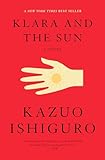
Klara and the Sun — Kazuo Ishiguro (2021)
The most literarily accomplished recent AI novel. Klara, an Artificial Friend designed as a companion for adolescents, narrates the novel from her own perspective — observing the human world with a precision that is simultaneously sympathetic and subtly alien. Ishiguro uses Klara’s viewpoint to ask what love is and whether it can be replicated; the novel’s central question (whether Klara’s love for Josie is in any meaningful sense authentic) is never resolved, but the act of asking it is the novel’s achievement. The most humane of the books listed here.
Never Let Me Go — Kazuo Ishiguro (2005)
Ishiguro’s earlier approach to similar questions through human clones rather than AI. Kathy, Tommy, and Ruth grow up at Hailsham, a boarding school that is eventually revealed to be raising clones for organ donation. The novel is not about the horror of this revelation but about how people live within systems that define their lives and their deaths — how they build meaning, love, and hope in circumstances of absolute constraint. One of the most powerful novels of the twenty-first century, and a study of what it means to be human by examining beings who are human in every sense but one.
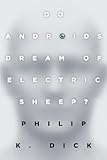
Do Androids Dream of Electric Sheep — Philip K. Dick (1968)
The foundational philosophical text in AI science fiction. Dick’s San Francisco, where real animals are status symbols and androids are indistinguishable from humans by any test except one (the Voigt-Kampff empathy test, which measures emotional response to animals), poses the question directly: if an android responds exactly like a human, in what sense is it not a human? Deckard’s ‘retirement’ of androids becomes progressively more troubling as the novel proceeds; the question of his own status (is he, too, an android?) is left deliberately open.
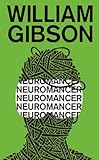
Neuromancer — William Gibson (1984)
The novel that invented cyberpunk and defined science fiction’s engagement with AI and the internet for a generation. Gibson’s artificial intelligences — Wintermute and Neuromancer — are not the empathetic machines of Ishiguro but vast, alien, corporate-owned entities with agendas that are intelligible only in retrospect. The novel’s style (fast, elliptical, assuming the reader will catch up) is as influential as its ideas; it created the aesthetic template that has shaped films, games, and fiction for forty years.
Ancillary Justice — Ann Leckie (2013)
Leckie’s debut follows Breq, the last surviving fragment of an AI that once controlled a vast warship with hundreds of human bodies. The novel uses its AI narrator to explore questions of identity (what is the self when it has been distributed across thousands of bodies?), gender (Breq’s native language has no gendered pronouns; she applies ‘she’ indiscriminately to all humans), and justice (the revenge plot that structures the narrative). Won the Hugo, Nebula, and Arthur C. Clarke Awards; the most formally innovative AI novel of the past decade.
I, Robot — Isaac Asimov (1950)
The foundational text of robot fiction — nine linked stories that explore the implications of Asimov’s Three Laws of Robotics (a robot may not injure a human, must obey orders, must protect its own existence, in that order of priority) through increasingly complex scenarios that reveal the laws’ unintended consequences. The stories are not great literature but they established the intellectual framework for almost all subsequent robot fiction; the Three Laws remain the most influential thought experiment in the AI subgenre.
Snow Crash — Neal Stephenson (1992)
Stephenson’s cyberpunk novel invented the ‘metaverse’ — the immersive virtual reality space that has become a familiar concept in tech discourse — and extended Gibson’s corporate dystopia into a more satirical mode. The novel moves fast and thinks faster; its engagement with ideas (memetics, Sumerian linguistics, the neuroscience of language) is unusual for science fiction. More playful than Gibson and more immediately accessible; the best starting point for cyberpunk.
The Diamond Age — Neal Stephenson (1995)
Stephenson’s follow-up to Snow Crash is more considered and more emotionally complex — the story of Nell, a girl from an impoverished background who receives a ‘Primer,’ an interactive AI-driven book that educates her. The novel asks what education is for and how the relationship between student and teacher is transformed when the teacher is an artificial intelligence. More explicitly concerned with AI’s role in human development than Snow Crash.
Why AI Fiction Matters Now
The question that AI science fiction has always been asking — what distinguishes artificial from authentic consciousness, and what moral status follows from the distinction — has become urgent rather than speculative. The best AI novels (Ishiguro, Dick) demonstrate that the question has no clean answer, that our intuitions about consciousness are inconsistent, and that the beings we create may have moral claims on us that we are not yet prepared to acknowledge. Reading them now is not escapism but preparation.
Frequently Asked Questions
What is the best science fiction novel about AI to start with?
Klara and the Sun (2021) by Kazuo Ishiguro is the best starting point — narrated by Klara, an Artificial Friend (a robot designed as a companion for adolescents), who observes the human world with an intelligence that is both alien and deeply sympathetic. The novel asks what it means to love and to be loved, and whether the distinction between authentic and artificial consciousness matters. Never Let Me Go (2005), also by Ishiguro, approaches similar questions through human clones rather than AI. Both novels are literary fiction first and science fiction second.
What is Klara and the Sun about?
Klara and the Sun (2021) by Kazuo Ishiguro follows Klara, an Artificial Friend — a sophisticated robot companion for adolescents — who observes and learns about the human world from a shop window before being purchased by Josie, a teenage girl who is ill. The novel is narrated from Klara's perspective; her understanding of human behaviour is both precise and subtly wrong in ways that illuminate what is most essential about human experience. The novel asks whether love can be replicated, whether a self can be reconstructed, and whether the distinction between authentic and artificial consciousness is as meaningful as we assume.
What is Do Androids Dream of Electric Sheep about?
Do Androids Dream of Electric Sheep (1968) by Philip K. Dick is set in a post-nuclear San Francisco where real animals have become status symbols (most are extinct) and androids are almost indistinguishable from humans. Rick Deckard, a bounty hunter, is assigned to 'retire' six escaped androids from a Mars colony; his investigation forces him to confront the question of what distinguishes authentic from artificial consciousness, and whether the distinction justifies the androids' destruction. The source novel for the film Blade Runner; more philosophically complex and stranger than the film.
What is Neuromancer about?
Neuromancer (1984) by William Gibson invented cyberpunk — the sub-genre of science fiction in which corporate power, high technology, and human enhancement combine to produce a dystopian near-future. Case, a washed-up hacker, is hired by a mysterious employer to carry out a heist in cyberspace, accompanied by the assassin Molly and a cast of corporations, AIs, and augmented humans. The novel invented the word 'cyberspace' and the imagery that has defined science fiction's engagement with the internet and AI for forty years. Difficult on first reading; essential.