Best Mythology Retellings: The Greatest Modern Myths in Fiction
The best mythology retellings — from Circe to The Song of Achilles to The Silence of the Girls. Modern fiction that reimagines ancient myth with contemporary power.

The mythology retelling — fiction that takes ancient stories (Greek, Norse, Arthurian, or from other traditions) and reimagines them, usually to give voice to characters who were marginalised or silent in the original — has become one of the most vital modes in contemporary literary fiction. The wave of feminist retellings of Greek myth that began in the 2010s reflects a broader turn: a recognition that the original myths were told from a specific perspective (usually male, usually heroic, usually Greek) and that retelling them from other perspectives can reveal what the originals concealed. What follows are the best examples of the form.
Circe — Madeline Miller (2018)
The best contemporary mythology retelling — and the most fully realised. Miller takes the witch of the Odyssey — Circe, daughter of the sun god Helios, who transforms Odysseus’s men into pigs — and gives her a complete life: her childhood among the Titans and gods, her discovery of her power of witchcraft, her banishment to the island of Aeaea, and her encounters with the full cast of Greek mythology (Prometheus, the Minotaur, Medea, Odysseus, Daedalus and Icarus). What Miller’s novel reveals is that Circe was not merely a villain in someone else’s story but a figure of extraordinary complexity and ultimately, through her choice of mortality over divine indifference, of profound moral seriousness.
The prose is sensuous and precise; the narrative is engrossing; and Miller’s feminist reading of the myth — asking what it means for a woman to be powerful in a world designed by and for men — is never didactic but always present.
The Song of Achilles — Madeline Miller (2011)
Miller’s debut — the Iliad retold through the perspective of Patroclus, the companion whose death drives Achilles back to battle. Patroclus, a shy and uncertain boy, becomes the companion of the golden Achilles: their relationship is here explicitly romantic, and Miller traces their childhood friendship through their years of training with Chiron to the beaches of Troy. The novel is an elegy for Achilles — for his beauty, his greatness, and the choice he makes (to fight and die young rather than live quietly and long) — rendered from the perspective of the person who loved him most and understood best what that choice cost.
The emotional intensity of the love story sets this apart from Miller’s later work; if you want to encounter Patroclus’s voice first, this is the more immediate of the two novels.
The Penelopiad — Margaret Atwood (2005)
Atwood’s characteristic wit and feminist intelligence applied to the Odyssey — retold from the perspective of Penelope, who waits for Odysseus’s return for twenty years while managing his household, fending off suitors, and maintaining the fiction of his weaving. Penelope narrates from Hades, where she has an eternity to reconsider what happened; the novel is interspersed with choruses by the twelve handmaids whom Odysseus has executed for sleeping with the suitors — women who had no more choice in the matter than Penelope had.
Short, sharp, and funny — Atwood at her most satirical — and one of the most politically pointed readings of Homer in contemporary fiction.
The Silence of the Girls — Pat Barker (2018)
The most disturbing and most politically serious mythology retelling on this list — the Iliad from the perspective of Briseis, the captured Trojan queen whose seizure by Agamemnon (taken from Achilles, who had taken her) triggers the quarrel at the centre of Homer’s poem. Barker’s Briseis is not a passive symbol in someone else’s story but a full person — captive, survivor, observer — whose account of the war’s violence is unflinching and whose anger at the epic tradition that has silenced her is the novel’s animating force.
The novel does not flinch from the sexual violence of slavery in the ancient world; it is essential reading for anyone who wants to understand what the Iliad looks like from the perspective it suppresses.
The Women of Troy — Pat Barker (2021)
Barker’s sequel to The Silence of the Girls — set after the fall of Troy, as the Greek forces prepare to take their Trojan slaves home. Briseis, now heavily pregnant with Achilles’s child, observes the Greeks’ delay (the winds won’t blow; the prophet says Polyxena must be sacrificed) and the power struggles among the victors. The novel is a study of what happens to women after the story ends: the rape, the distribution as property, the survival that is also a form of loss.
Read The Silence of the Girls first; this is the more complete and more disturbing work.
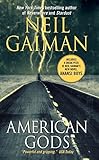
American Gods — Neil Gaiman (2001)
Gaiman’s mythology retelling in a different mode — not the ancient world transported to modern prose but the gods themselves transported to modern America. Shadow Moon, recently released from prison, is hired by a mysterious man called Mr Wednesday (who is Odin) to help fight a war: the old gods (Anansi, Czernobog, the Zorya sisters, Bilquis) who came with their immigrant peoples to America are being replaced by new gods (Media, Technical Boy, the American gods of technology and entertainment). The novel is a road trip across forgotten American places and a meditation on what happens to mythology when the people who believed it disperse.
The most accessible and the most American of the books on this list.
Norse Mythology — Neil Gaiman (2017)
Gaiman’s loving retelling of the Norse myths — Odin, Thor, Loki, Freya, and the entire Norse pantheon from the creation of the world to Ragnarök — rendered in a prose style that captures both the elemental quality of the originals and Gaiman’s own voice. This is not a novel but a series of retellings: each myth is presented as a story, with the cumulative effect of building a complete cosmology and a cast of vivid, contradictory figures.
The best starting point for readers who want to understand the Norse mythology that Gaiman draws on throughout his work, and a pleasure in itself.
Ariadne — Jennifer Saint (2021)
Jennifer Saint’s debut — the story of Ariadne, the Cretan princess who gave Theseus the thread that led him through the labyrinth and out again, and whom he subsequently abandoned on the island of Naxos. Saint follows Ariadne through her childhood in Minos’s palace (the Minotaur is her half-brother), her role in Theseus’s quest, her abandonment, and the life she builds afterward with Dionysus. The novel also follows Phaedra, Ariadne’s sister, whose story is even more tragic.
More directly romantic than Miller’s work and less politically pointed than Barker’s; the most accessible introduction to feminist myth-retelling for readers new to the form.
Reading Mythology Retellings
The best contemporary mythology retellings are not exercises in nostalgia but acts of reading and revision — they ask what the original text was doing, whose perspective it prioritised, and what was lost in the telling. Begin with Circe for the most accomplished and most accessible single-volume experience; read The Silence of the Girls for the most politically serious engagement with the Troy material; try The Penelopiad for Atwood’s wit; and approach American Gods when you want mythology in its most contemporary American form.
Frequently Asked Questions
What makes a great mythology retelling?
The best mythology retellings do more than translate ancient stories into modern prose — they find in the myth a question that the original could not or did not ask, and they use the familiar material to make the answer feel new. The most powerful recent retellings have focused on the women of Greek myth (Circe, Penelope, Briseis, Ariadne), giving voice to characters who existed at the margins of the male-centred epics. Others have explored what happens when ancient mythological figures encounter the modern world (American Gods) or have retold Norse mythology in its own right (Gaiman). The best ask: whose story is this, and what does it look like from the perspective that was not told?
What are the best mythology retellings?
The best mythology retellings include: Circe by Madeline Miller (the witch of the Odyssey given her own full story, from her birth among the Titans to her eventual choice of mortality); The Song of Achilles (the Iliad retold through the perspective of Patroclus, Achilles's beloved); The Penelopiad by Margaret Atwood (the Odyssey from the perspective of Penelope and the twelve hanged maids); and The Silence of the Girls by Pat Barker (the Iliad from the perspective of Briseis, the enslaved woman whose seizure by Agamemnon begins the war).
Do mythology retellings require knowledge of the original myths?
The best mythology retellings are designed to be accessible to readers unfamiliar with the original — they provide enough context to follow the story without prior knowledge. Familiarity with the original myth enriches the experience (you see what has been changed, what has been emphasised, what perspective has been reversed), but it is not required. Circe and The Song of Achilles both provide enough context for readers new to Greek mythology. The Penelopiad rewards more from familiarity with the Odyssey; The Silence of the Girls from familiarity with the Iliad; but neither is inaccessible without that background.
Which mythology retelling should I start with?
Circe is the best starting point for most readers — it is the most immediately accessible, the most emotionally engaging, and the most clearly structured as a self-contained novel. The Song of Achilles is the best alternative for readers who want more romantic intensity; The Penelopiad for readers who want Atwood's wit and feminist sharpness; The Silence of the Girls for readers who want the most politically serious and most disturbing perspective on the Troy story. American Gods is the best option for readers who want mythology in a contemporary setting rather than a retelling of ancient narrative.