Best Detective Fiction: From Golden Age to Hardboiled to Modern Noir
The best detective fiction — from Agatha Christie and Raymond Chandler to Tana French and The Girl with the Dragon Tattoo. The complete guide to crime fiction.
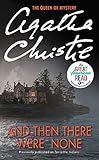
Detective fiction is the most popular literary genre in the world, and it divides into three broad traditions: the Golden Age puzzle mystery (Agatha Christie, Dorothy Sayers), the American hardboiled novel (Chandler, Hammett), and the contemporary literary crime novel (Tana French, Kate Atkinson, Gillian Flynn). Each tradition has its own pleasures and its own conception of what crime fiction is for.
The Golden Age Tradition
And Then There Were None — Agatha Christie (1939)
The most popular mystery novel in history — over 100 million copies sold, and a plotting achievement that has never been equalled. Ten people, each guilty of a death they escaped punishment for, are invited to a Devon island and killed one by one according to a nursery rhyme. The solution to the locked-room problem Christie sets up is simultaneously a surprise and, in retrospect, the only possible answer. Christie herself considered it her finest work.
Murder on the Orient Express — Agatha Christie (1934)
Christie’s second most celebrated novel — a murder on a snowbound train, all suspects trapped, and Poirot’s solution one of the most original in the genre. The ethical implications of the solution (which Christie does not shy away from) give the novel more depth than most Golden Age mysteries.
Crooked House — Agatha Christie (1949)
Christie’s personal favourite among her novels — a dark, psychologically complex mystery about the murder of a Greek patriarch in a large English house full of his quarrelsome family. The ending was too dark for her original publisher and is the most disturbing Christie ever wrote.
The Hardboiled Tradition
The Big Sleep — Raymond Chandler (1939)
The foundational hardboiled novel and the introduction of Philip Marlowe — the archetype of the American literary detective. The Los Angeles Chandler depicts is corrupt from top to bottom; Marlowe moves through it with a code of honour that is outmoded but real. Chandler’s prose style — the similes, the observations, the sardonic distance — is the most imitated in crime fiction and the least successfully imitated.
The Maltese Falcon — Dashiell Hammett (1930)
The novel that established Sam Spade as the American hardboiled detective archetype — and Hammett’s as the prose style that Chandler developed and transformed. The plot (a golden statuette everyone is prepared to kill for turns out to be a fake) is secondary to the portrait of San Francisco’s criminal world and the question of whether Spade is honest enough to do the right thing when the right thing costs him.
Contemporary Literary Crime
In the Woods — Tana French (2007)
The best Irish crime novel and the starting point for French’s Dublin Murder Squad series. Detective Rob Ryan investigates a murder near a site where he alone survived a childhood incident he cannot remember. French’s combination of psychological depth, atmospheric setting, and the willingness to not resolve every mystery distinguishes her from the procedural tradition. The series works best read in order, but each volume has a different protagonist and can be read independently.
Two Visions of Crime and Order
The deepest reason to read across the traditions on this list is that the Golden Age puzzle and the American hardboiled novel embody fundamentally opposed visions of crime, justice, and the world — and the contrast is the genre’s central drama. The Golden Age mystery, perfected by Christie, is essentially reassuring. It presents an ordered world temporarily disrupted by a single aberration: a murder is a puzzle, a violation of a stable social fabric, and the detective’s task is to identify the guilty party and thereby restore order. The pleasure is intellectual and consoling — the world makes sense, evil is an individual deviation, and reason can master it. The hardboiled novel, born in Depression-era America, inverts every one of these assumptions. In Chandler and Hammett, crime is not an aberration but the normal condition of a corrupt society; the murder the detective investigates is merely the visible tip of a pervasive rottenness reaching into business, politics, and the police themselves. Order cannot be restored because there was no order to begin with, and the detective is not a genteel puzzle-solver but a lone figure clinging to a private code of honor in a world that has abandoned codes entirely. To read Christie and then Chandler is to feel the genre’s tectonic shift from the consoling to the disillusioned — from crime as solvable problem to crime as the truth about how the world works.
The Detective as Moral Center
Across all three traditions, what unites the best detective fiction and lifts it above mere puzzle-mongering is the figure of the detective as a moral center — a consciousness through which the reader navigates a compromised world. The specific form this takes varies revealingly. Christie’s Poirot and Marple are agents of restored order, their eccentric brilliance a guarantee that justice will ultimately prevail; their appeal lies in competence and certainty. Chandler’s Philip Marlowe is something altogether different and more modern: a knight in a genre that no longer believes in knighthood, a man who could profit from the corruption around him but chooses, often at real cost, to maintain a battered personal integrity. Marlowe’s famous code — the conviction that a man must walk the mean streets without himself being mean — transforms the detective from a solver of puzzles into a moral hero, and this is Chandler’s enduring contribution to literature far beyond crime fiction. The contemporary literary crime novel, exemplified here by Tana French, deepens the detective into a fully realized psychological subject, often damaged, unreliable, or implicated in the very mysteries they investigate, so that the act of detection becomes an exploration of the self as much as of the crime. In every case, the detective is the lens that gives the genre its moral seriousness, the figure through whom questions of justice, integrity, and truth are actually dramatized.
A Genre That Contains Multitudes
Detective fiction’s status as the world’s most popular literary genre sometimes obscures how vast and varied it actually is, and the traditions on this list are gateways to a literature of remarkable range and depth. Beyond the foundational figures here, each strand has flowered in countless directions. The Golden Age legacy lives on in the contemporary “cozy” mystery and in ingeniously plotted puzzle novels; readers who love Christie should also seek out Dorothy L. Sayers, whose Lord Peter Wimsey novels brought genuine literary ambition to the form. The hardboiled tradition evolved into the modern crime novel through masters like Ross Macdonald, Elmore Leonard, and James Ellroy, and outward into the police procedural and the noir. The contemporary literary crime novel, meanwhile, has become one of fiction’s most fertile territories: Kate Atkinson’s genre-bending Jackson Brodie novels, Gillian Flynn’s psychological thrillers, the entire Nordic noir tradition, and the rise of crime fiction as serious social commentary across the globe. What makes the genre inexhaustible is precisely its flexibility — the basic engine of a crime to be solved can carry almost any cargo, from pure entertainment to profound meditations on guilt, society, and the human capacity for evil. The books on this list are the essential foundation, the works that defined the traditions; from them, a lifetime of rewarding reading branches out in every direction.
Reading Order
Start Golden Age: And Then There Were None → Murder on the Orient Express → Crooked House.
Start hardboiled: The Maltese Falcon → The Big Sleep → The Long Goodbye.
Contemporary: In the Woods (Tana French) → The Girl with the Dragon Tattoo.
Frequently Asked Questions
What is the best detective novel ever written?
And Then There Were None by Agatha Christie is the most popular mystery novel ever written — over 100 million copies sold, and a plotting achievement that has never been equalled. Ten people are lured to an island, killed one by one according to a nursery rhyme, and no one can be the killer because everyone is dead by the end. The Big Sleep by Raymond Chandler is the greatest hardboiled novel — the founding document of American crime fiction's literary tradition. The Maltese Falcon by Dashiell Hammett established the hardboiled detective as an American archetype.
What is the difference between Golden Age and hardboiled detective fiction?
Golden Age detective fiction (Agatha Christie, Dorothy L. Sayers, John Dickson Carr) is characterised by puzzle-solving — the mystery is a logical problem to be solved by an amateur or professional detective through observation and deduction. The solution typically reveals that one person, for a comprehensible motive, committed the crime. Hardboiled detective fiction (Chandler, Hammett, James Ellroy) is characterised by moral ambiguity — the detective operates in a corrupt society, the crimes are systemic rather than individual, and the solution, when it comes, does not restore order. The two traditions correspond to British (Golden Age) and American (hardboiled) conceptions of crime's relationship to society.
What is The Big Sleep about?
The Big Sleep (1939) by Raymond Chandler introduces Philip Marlowe, a Los Angeles private detective hired by the elderly General Sternwood to deal with a blackmailer. The plot is famously convoluted — Chandler himself, asked who killed one of the characters, admitted he did not know — but the plot is not the point. The point is Marlowe: his precise observation of the corrupt Los Angeles that surrounds him, his code of honour that is outdated but real, and his prose style, which is simultaneously hard and beautiful. The novel established the template for the literary crime novel.
What is And Then There Were None about?
And Then There Were None (1939) by Agatha Christie is set on a Devon island where ten strangers, each guilty of a death they were never punished for, are invited by an unknown host and then killed one by one according to the 'Ten Little Indians' nursery rhyme. The puzzle is: if all ten are killed, who is the murderer? Christie's solution is a genuine shock and a genuine logical impossibility made possible — the book's plotting achievement is incomparable. It is the best-selling mystery novel in history.


