Best Books to Read in Your Twenties: Essential List for Young Adults
The best books to read in your twenties — novels, philosophy, and non-fiction that ask the right questions at the right moment. Books that challenge, expand, and stay with you.
Your twenties are the decade in which you first encounter adult life without the structure that school provides. You are making choices — about work, relationships, values, identity — that will shape the decades that follow, often without knowing it. You are also, probably, wrong about many things in ways that will become clear only with time.
The books listed here were chosen for their usefulness in exactly this condition. They are not comfort reading: the best books for your twenties are the ones that make you uncomfortable in productive ways — that challenge your assumptions, ask questions you hadn’t thought to ask, or describe a kind of person you could become and should avoid.
Fiction That Asks the Essential Questions
Crime and Punishment — Dostoevsky (1866)
The most useful novel for the specific intellectual arrogance of early adulthood. Raskolnikov believes his superior intellect places him above ordinary moral constraints — that extraordinary people are entitled to extraordinary acts. The novel is the methodical destruction of this belief, conducted not through argument but through the experience of guilt, the collapse of the self that has been built on a false premise, and the discovery that conscience cannot be argued away.
Read it at twenty-four and you will find it about someone you know. Read it at thirty and you will find it about someone you were.
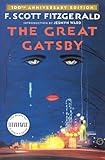
The Great Gatsby — F. Scott Fitzgerald (1925)
The novel about the cost of defining yourself by what you want to become. Gatsby’s entire identity is organised around a past version of himself and a future he imagines recovering. He does not live in the present because the present is not where his self resides. The novel is short (180 pages) and its central image — the green light across the bay, perpetually almost in reach — is the most accurate image of a certain kind of twenties ambition.
The melancholy of the ending is a gift: it is better to feel it at twenty-five than to live it at forty.
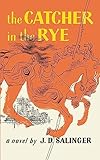
The Catcher in the Rye — J.D. Salinger (1951)
Holden Caulfield’s voice captures a very specific experience — the sense that the adult world is performing itself, that the categories adults use to organise experience are false, that authenticity is possible but barely survivable — with such precision that many readers encounter it as the first time someone has described their private experience accurately. This is the novel’s gift: not wisdom but recognition.
Read it young. It doesn’t hit the same way at forty.
Never Let Me Go — Kazuo Ishiguro (2005)
A novel that works as a thought experiment: what would you do with your life if you knew, from early adulthood, that it would be shorter than you assumed? Kathy, Ruth, and Tommy are students at an English boarding school in the late 1970s, and the novel gradually reveals what they have been prepared for. The question Ishiguro is actually asking is: why do any of us behave as if we have unlimited time? The answer is not comfortable.
Philosophy That Stays With You
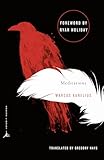
Meditations — Marcus Aurelius (c. 170–180 AD)
The private journal of a Roman emperor — a man who had more power than almost any human in history and used his private writing not to celebrate that power but to remind himself of its limits and his obligations. Aurelius’s Stoic practice is practical: what is within your control, what is not, what follows from that distinction. Reading Meditations in your twenties and returning to it in your thirties, forties, and fifties gives you a continuous conversation with a mind that was grappling with the same questions.
Available free online in multiple translations. The Gregory Hays translation (2002) is the most readable modern version.
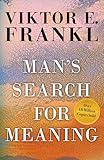
Man’s Search for Meaning — Viktor Frankl (1946)
Frankl survived Auschwitz by developing the psychological framework (logotherapy) that he had been working on before his arrest. His central argument — that the primary human drive is not pleasure or power but meaning, and that meaning can be found even in suffering that cannot be avoided — is not a comfortable idea but a useful one. The memoir section is among the most important Holocaust testimonies; the philosophical section is among the most useful frameworks for understanding how to orient a life.
Short, dense, and worth reading at least twice.
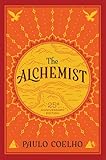
The Alchemist — Paulo Coelho (1988)
The most widely read novel on this list, and the most accessible. Santiago’s journey — following an omen in pursuit of treasure — is a parable about what happens when you pursue what you actually want rather than what is expected of you. Coelho’s argument (the universe conspires to help those who pursue their Personal Legend) is more optimistic than most serious philosophy, which is partly why it has been read by 65 million people.
Whatever you think of its metaphysics, the core question — what would you do if you stopped making compromises with your own desires — is a useful one to ask at twenty-two.
Non-Fiction for Self-Understanding
Man’s Search for Meaning — already above
The Daily Stoic — Ryan Holiday
A contemporary introduction to Stoic philosophy through 366 daily meditations. More accessible than the primary texts and specifically oriented toward practical application. A good gateway to Aurelius, Epictetus, and Seneca if the originals feel daunting.
Reading Order
If you want to start with fiction: The Catcher in the Rye → The Great Gatsby → Crime and Punishment → Never Let Me Go.
If you want to start with philosophy: Meditations → Man’s Search for Meaning → The Alchemist.
The combined arc: The Alchemist (optimism) → The Great Gatsby (its limits) → Crime and Punishment (the cost of self-deception) → Meditations (the practice of staying clear). This sequence traces the essential journey of the decade.
Frequently Asked Questions
What books should you read before you turn 30?
The books that most reward reading in your twenties are those that ask the essential questions of that decade — who you are, what you want, whether your assumptions about yourself and the world are accurate. Crime and Punishment, The Great Gatsby, and The Catcher in the Rye deal with ambition and self-deception in ways that hit differently at twenty-five than at forty. Man's Search for Meaning, Meditations, and Siddhartha provide philosophical frameworks that grow more useful as your twenties proceed.
Why does age matter for reading?
It doesn't — the same book can be read at any age. But certain books unlock more fully at specific life stages. The Great Gatsby's sadness about lost youth means more at thirty than at fifty. Crime and Punishment's examination of intellectual arrogance is most useful at an age when you still believe your intelligence might put you above ordinary moral constraints. Meditations' advice on what is within your control is most needed when you are first encountering the limits of your autonomy. Age doesn't determine understanding, but it shapes what you bring to the encounter.
Are there fiction books that work as well as non-fiction for self-understanding?
Better, in some cases. The Great Gatsby and Crime and Punishment show the consequences of specific kinds of self-deception — ambition mistaken for destiny, intelligence mistaken for superiority — in ways that abstract philosophy cannot. Never Let Me Go by Kazuo Ishiguro asks what you would do with your life if you knew it was shorter than you assumed. The Catcher in the Rye captures adolescent alienation so precisely that many readers feel, for the first time, that their private experience has been named.