Best Books About World War II: Fiction, Non-Fiction & Memoirs
The best World War II books across fiction, non-fiction, memoir, and military history — from The Diary of a Young Girl and All the Light We Cannot See to Antony Beevor's Stalingrad and Band of Brothers.
By Oliver Kane
World War II generated more literature than any other event in human history. The scale, the moral stakes, the global reach, and the specific horror of the Holocaust made it impossible for writers not to respond — and the response has continued without slowing for eighty years. The books listed here represent the best of that response across fiction, memoir, and military history.
We have organised them into three categories: the essential books that every reader should encounter, the best fiction, and the best non-fiction and memoir. Within those categories, the ordering reflects editorial quality and enduring importance rather than date of publication.
Best World War II Books at a Glance
| Book | Author | Best for |
|---|---|---|
| The Diary of a Young Girl | Anne Frank | Everyone |
| All the Light We Cannot See | Anthony Doerr | Literary fiction readers who want |
| The Book Thief | Markus Zusak | Readers of historical fiction who appreciate |
| The Nightingale | Kristin Hannah | Readers of women-centered historical fiction |
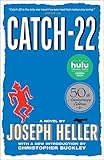
| Catch-22 | Joseph Heller | Readers of literary fiction with appetite |
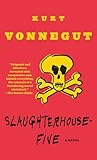
| Slaughterhouse-Five | Kurt Vonnegut | Literary fiction readers, antiwar literature |
| The Tattooist of Auschwitz | Heather Morris | General readers |
| Band of Brothers | Stephen E. Ambrose | Readers interested in World War Two, military |
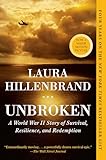
| Unbroken | Laura Hillenbrand | Readers of narrative nonfiction and World War II |
| Schindler’s List | Thomas Keneally | Readers interested in Holocaust history |
| All Quiet on the Western Front | Erich Maria Remarque | Classic Fiction |
The Essential Books
The Diary of a Young Girl — Anne Frank (1947)
No book about the Second World War is more essential or more widely read. Anne Frank’s diary covers two years spent in hiding in a Amsterdam annex before the family was discovered and deported. She was fifteen when she died in Bergen-Belsen, two months before the camp’s liberation. The diary she left behind is not simply a historical document. It is a record of a particular kind of moral intelligence — curious, self-questioning, and fully alive to the world — being destroyed by the bureaucratic machinery of industrialised murder.
The power of The Diary is that it makes the abstract statistics of the Holocaust concrete and personal. One girl, two years, one annex. Everything that happened to the six million is, in some way, in this book.
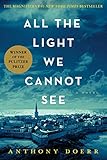
All the Light We Cannot See — Anthony Doerr (2014)
The Pulitzer Prize winner is the best literary novel produced by the war in recent decades. Two narratives run in parallel: Marie-Laure, a blind French girl fleeing Paris with her father; Werner, a German orphan recruited for his technical gifts into the Wehrmacht. Their paths converge in Saint-Malo during the Allied siege of 1944. Doerr’s prose is exact and beautiful, and the novel handles the moral complexity of its German protagonist — a boy who knows what he is part of and cannot stop it — with more honesty than most WWII fiction attempts.
The Book Thief — Markus Zusak (2005)
Narrated by Death, set in a small German town, following a girl who steals books during the war. Zusak’s conceit — giving Death a sardonic, exhausted, humane voice — could have been a gimmick; instead it produces one of the most distinctive WWII novels in the language. The Book Thief is technically a young adult novel. It reads as something more demanding and more lasting.
Best World War II Fiction
The Nightingale — Kristin Hannah (2015)
The most emotionally powerful fictional account of women in the French Resistance. Two sisters respond differently to occupation — one withdraws into domestic survival, one becomes a guide for Allied airmen across the Pyrenees. Hannah does not sentimentalise the war or her heroines; both choices the sisters make are credible and costly. The Nightingale has sold millions of copies and is among the most recommended historical fiction of the past decade.
Catch-22 — Joseph Heller (1961)
The anti-war novel against which all others are measured. Captain Yossarian of the US Army Air Corps wants to be grounded from bombing missions — except the squadron psychiatrist will only ground men who are insane, and a man who asks to be grounded has proved he is sane. Heller’s black comedy captures the bureaucratic absurdity of institutional warfare with a precision that has not dated: the novel is as funny and as frightening as it was in 1961.
Slaughterhouse-Five — Kurt Vonnegut (1969)
Vonnegut survived the firebombing of Dresden as a prisoner of war — the event that generated this novel, though it took him twenty years to write it. Billy Pilgrim, who has “come unstuck in time,” experiences his life in non-chronological fragments, including the bombing. The novel’s flat, affectless prose style is itself a moral argument: horror rendered in deadpan is more terrible than horror rendered dramatically. Slaughterhouse-Five is one of the most influential American novels of the twentieth century.
The Tattooist of Auschwitz — Heather Morris (2018)
Based on the true story of Lale Sokolov, a Slovakian Jew who tattooed identification numbers on the arms of incoming prisoners at Auschwitz and survived through a combination of luck, resourcefulness, and love. The most popular recent Holocaust novel after The Diary of a Young Girl. Critics have noted that Morris, as a novelist rather than a historian, occasionally prioritises emotional impact over factual precision, but the story itself — and the courage it describes — is real.
Best World War II Non-Fiction and Memoir
Band of Brothers — Stephen Ambrose (1992)
The definitive popular history of Easy Company, 506th Parachute Infantry Regiment, from training through D-Day, the liberation of the Netherlands, the Battle of the Bulge, and the end of the war in Germany. Ambrose had access to the veterans themselves, and the book reads with the intimacy of oral history and the pace of excellent narrative journalism. The HBO miniseries (produced by Spielberg and Hanks) is also excellent; the book is better.
Unbroken — Laura Hillenbrand (2010)
Louis Zamperini ran in the 1936 Berlin Olympics. In 1943, his B-24 crashed into the Pacific. He survived on a raft for 47 days, was captured by the Japanese Navy, and spent two years in prisoner of war camps under a guard of particular cruelty. Hillenbrand’s narrative non-fiction technique — she reports with a novelist’s precision and a documentarian’s rigour — makes Unbroken read like a thriller while never compromising the factual record.
Schindler’s List — Thomas Keneally (1982)
Originally published as Schindler’s Ark (the title used outside the US), Keneally’s account of Oskar Schindler — the German factory owner who saved 1,200 Jews from deportation by employing them in his enamelware factory — won the Booker Prize and became the basis for Steven Spielberg’s film. Keneally used testimony from survivors and positioned the book as “documentary novel” to capture both the historical record and the human texture. It remains the most important literary account of a rescuer’s story.
The Diary of a Young Girl
Listed again here deliberately: Anne Frank’s diary is both memoir and the most important Holocaust testimony in the English-speaking world. No other book in this list is more essential.
All Quiet on the Western Front — Erich Maria Remarque (1929)
Technically a World War I novel, but so foundational to the literature of modern warfare that it belongs on any list of the essential war books. The German soldier Paul Bäumer’s account of life and death in the trenches — stripped of heroism, ideology, and meaning — established the anti-war novel as a literary form. Remarque wrote it between the wars; it remains the most important novel about what industrialised combat does to the people who fight it.
Reading by Theme
The Holocaust: The Diary of a Young Girl → The Tattooist of Auschwitz → Night by Elie Wiesel → Schindler’s List.
The European Campaign: Band of Brothers → All the Light We Cannot See → The Nightingale → Catch-22.
The Pacific: Unbroken → Flags of Our Fathers.
The German Home Front: The Book Thief → Slaughterhouse-Five → All Quiet on the Western Front (WWI, essential precursor).
Women in the War: The Nightingale → The Diary of a Young Girl → The Tattooist of Auschwitz.
Frequently Asked Questions
What is the best novel set in World War II?
All the Light We Cannot See by Anthony Doerr is the most acclaimed recent WWII novel — it won the Pulitzer Prize and follows a blind French girl and a German orphan boy on intersecting paths through occupied France. For older fiction, The Book Thief by Markus Zusak and Catch-22 by Joseph Heller are the most enduring. The Nightingale by Kristin Hannah is the most emotionally powerful account of women in the French Resistance.
What is the most important non-fiction book about WWII?
The Diary of a Young Girl by Anne Frank remains the most widely read and morally essential account of the Holocaust. For military history, Antony Beevor's Stalingrad and Berlin are considered the gold standard. Band of Brothers by Stephen Ambrose is the most compelling narrative of the European campaign, and Unbroken by Laura Hillenbrand is the outstanding account of survival in the Pacific.
What World War II books should I read first?
Start with The Diary of a Young Girl if you want to understand the Holocaust at a personal level. Start with All the Light We Cannot See if you want the best literary fiction. Start with Band of Brothers or Unbroken if you want narrative non-fiction that reads like a thriller. These four books cover the most important experiences of the war across different perspectives.
Are there good WWII books about the Pacific War?
Unbroken by Laura Hillenbrand is the outstanding popular account — following Olympic runner Louis Zamperini through shoot-down, survival on a raft, and Japanese prisoner of war camps. James Bradley's Flags of Our Fathers covers Iwo Jima from the families of the flag-raisers. For comprehensive military history, John Toll's A Bridge Too Far covers the European theatre, while Herbert Bix's Hirohito and the Making of Modern Japan provides essential context for the Pacific.
What WWII book is best for young adults?
The Book Thief by Markus Zusak is the most frequently assigned WWII novel for younger readers — it follows a German girl who steals books during the war, narrated by Death. Number the Stars by Lois Lowry is an excellent middle-grade option. The Diary of a Young Girl is read at every age and is as appropriate for twelve-year-olds as for adults.