Best Books About the Holocaust: Essential Reading List
The best books about the Holocaust — memoirs, novels, and history that bear witness honestly. From The Diary of a Young Girl and Night to Maus and The Tattooist of Auschwitz.
By Oliver Kane

The Holocaust was the systematic murder of six million Jewish people and millions of others — Roma, disabled people, gay people, political prisoners — by the Nazi state between 1941 and 1945. It is the most thoroughly documented genocide in history, which means the literature about it is vast and uneven. Some of it is essential testimony. Some of it is exploitation of atrocity for narrative convenience.
What follows is a guide to the books that bear witness honestly — the memoirs, novels, graphic narratives, and histories that have earned their place in the literature by the quality of their moral attention.
Essential Reading: The Testimonies
The Diary of a Young Girl — Anne Frank (1947)
The most widely read Holocaust document in the world, and arguably the most important. Anne Frank’s diary covers the two years her family spent in hiding in a concealed annex above a warehouse in Amsterdam before they were discovered and deported in August 1944. She died in Bergen-Belsen in February 1945, at fifteen, two months before the camp’s liberation. Her father, Otto, the only member of the family to survive, arranged the publication of the diary she had left behind.
What makes the diary essential is not its horror — the horrors are offstage — but its intelligence. Anne Frank was a remarkably self-aware and self-questioning writer, and the diary is a record of a particular kind of mind working through the experience of confinement, of adolescence, of hope maintained against every reason for despair. The ordinary humanity of its subject makes the fate that awaits her impossible to abstract into statistics.
Night — Elie Wiesel (1958; English translation 1960)
The most important short memoir of the camps. Wiesel was fifteen when his family was deported from their Romanian village to Auschwitz, then to Buna, then on the death marches to Buchenwald, where his father died. Night is the account of that experience, written with a ferocity and compression that matches its subject. It is under 120 pages. It reads in a single sitting and does not leave you.
The explicit subject of Night is also the destruction of faith: Wiesel had been a devout boy; the camps forced a confrontation with the absence of God that the book faces without resolution. This makes it a theological document as much as a historical one.
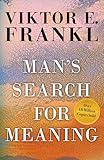
Man’s Search for Meaning — Viktor Frankl (1946)
Viktor Frankl was a Viennese psychiatrist who survived four concentration camps, including Auschwitz. The first part of Man’s Search for Meaning is his account of that survival — what he observed, what sustained him, what was destroyed. The second part is the description of logotherapy, the psychological framework he developed partly in response to the experience: the idea that the primary human drive is not pleasure but meaning, and that meaning can be found even in suffering that cannot be avoided.
The memoir section is among the most precise accounts of concentration camp experience available. The philosophical section transforms the experience into something applicable to human suffering more broadly. Both halves are essential.
Essential Reading: History and Literary Non-Fiction
Schindler’s List — Thomas Keneally (1982)
Published as Schindler’s Ark outside the US, Keneally’s account of Oskar Schindler — the German factory owner who saved approximately 1,200 Jews from deportation and murder — won the Booker Prize and became the basis for Steven Spielberg’s film. Keneally used extensive testimony from survivors and positioned the book as a “documentary novel” — fiction’s techniques applied to a factual record.
The result is the most important literary account of a rescuer. Schindler is rendered without sentimentalisation: he was a womaniser, a black-market operator, and a war profiteer whose motivations remain genuinely ambiguous — which makes his actions more, not less, morally significant.
Essential Reading: Novels and Graphic Narratives
The Tattooist of Auschwitz — Heather Morris (2018)
The most widely read recent Holocaust novel. Based on the testimony of Lale Sokolov, a Slovakian Jew who tattooed identification numbers on the arms of incoming Auschwitz prisoners and who survived through resourcefulness, luck, and a love affair that began inside the camp. Morris is a novelist rather than a historian, and critics have noted occasional departures from strict factual precision; the story itself is real, and Sokolov authorised and assisted the telling before his death in 2006.
For readers encountering Holocaust fiction for the first time, the love story at the centre provides an accessible entry point into conditions that are otherwise almost impossible to inhabit imaginatively.
Maus — Art Spiegelman (1991, complete edition)
The first graphic novel to win a Pulitzer Prize. Spiegelman interviews his father Vladek — an Auschwitz survivor — and renders the testimony in graphic form, depicting Jews as mice, Nazis as cats, and Poles as pigs. The conceit is not whimsy: it alienates the reader from the assumption of realistic representation and forces a confrontation with the nature of testimony, memory, and the experience of hearing atrocity at one generation’s remove.
Maus is also a memoir about Spiegelman’s relationship with his difficult, damaged, survivor father — which makes it simultaneously a Holocaust narrative and an account of what survival costs the people who survive and the families they build afterward.
Further Reading
For younger readers: The Diary of a Young Girl is appropriate at twelve and older. Number the Stars by Lois Lowry is an accessible middle-grade novel set during the Danish rescue of its Jewish population.
For depth on specific topics:
- The camps: Primo Levi’s If This Is a Man (US title: Survival in Auschwitz) — considered by many critics the most philosophically exact account of the dehumanisation of camp experience.
- The perpetrators: Christopher Browning’s Ordinary Men — the disturbing history of Reserve Police Battalion 101, ordinary German middle-aged men who became mass murderers. Essential for understanding how genocide is executed.
- The bystanders: Jan Karski’s Story of a Secret State — the Polish resistance courier who entered the Warsaw Ghetto and a transit camp to gather testimony, then reported to Allied governments that did not act.
A Note on Reading
The scale of the Holocaust — six million Jewish deaths, eleven million total, from across Europe and the Soviet Union — resists individual imagination. The testimonies listed here work not by conveying that scale but by making it concrete through particular people: Anne Frank in her annex, Wiesel and his father on the death march, Lale Sokolov with his tattooing needle. This is what literature can do that statistics cannot.
Read the testimonies first. Let the fiction extend and illuminate what they establish.
Frequently Asked Questions
What is the best book to start with about the Holocaust?
The Diary of a Young Girl by Anne Frank is the most widely read starting point — it puts a single face and voice at the centre of a catastrophe that otherwise resists human comprehension. Night by Elie Wiesel is the best short memoir of the camps themselves: under 120 pages, written with a severity that matches its subject. These two books together give both the before and the during.
Are Holocaust novels appropriate, or should you only read non-fiction?
Both have value. Non-fiction and memoir — The Diary of a Young Girl, Night, Man's Search for Meaning, The Diary of Dawid Sierakowiak — provide testimony and historical record. Novels — The Tattooist of Auschwitz, The Book Thief, The Boy in the Striped Pyjamas — can reach readers who resist non-fiction and can render emotional truth that documentation alone cannot. The best approach is to read both, with non-fiction grounding the fiction.
What is the most important Holocaust memoir?
Night by Elie Wiesel is widely considered the most important Holocaust memoir in the English-speaking world — both for the severity and precision of its witness and for its explicit confrontation with the crisis of faith the camps provoked. Primo Levi's If This Is a Man (published in the US as Survival in Auschwitz) is considered by many critics to be the more literary achievement, with a philosopher's exactness applied to the experience of degradation.
Is The Boy in the Striped Pyjamas historically accurate?
No — The Boy in the Striped Pyjamas by John Boyne contains several historical implausibilities that have been criticised by Holocaust educators and historians. The scenario it depicts could not have happened as described. It is a fable rather than a realistic historical novel and should be read as one. For historically accurate fiction, The Tattooist of Auschwitz (though not without its critics) or The Book Thief are more reliable.
What is Maus, and should it be on this list?
Maus by Art Spiegelman is a graphic novel — the first to win a Pulitzer Prize — in which Spiegelman interviews his father about his survival of Auschwitz, depicting the Jews as mice and the Nazis as cats. It is one of the most important Holocaust narratives in any medium: the graphic form captures the experience of hearing testimony at generational remove in a way that prose cannot. It belongs on any essential Holocaust reading list.