Best Books About Identity: Essential Reading List
The best books about identity — from Invisible Man and Middlesex to Americanah and White Teeth. Literature on race, gender, culture, and who we are.
By Aisha Patel
Books about identity ask the questions that are hardest to answer in life: Who am I beneath the roles assigned to me? How much of myself is the product of forces — race, class, gender, history — that I did not choose? What is the relationship between the self I present and the self I experience? The best novels on identity don’t resolve these questions but make them visible, and in making them visible, make the reader’s own identity somewhat more available for examination.
Race and Visibility
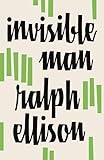
Invisible Man — Ralph Ellison (1952)
The most important American novel about racial identity. The unnamed narrator, a Black man, moves from the South to Harlem through a series of encounters that demonstrate, with sustained irony, how thoroughly American society refuses to see Black people as individuals — projecting onto them whatever symbolic role is needed: the grateful subordinate, the noble primitive, the dangerous radical, the useful tool. Ellison’s achievement is to make the narrator’s individuality — his intelligence, his ambition, his sense of humour — so vivid that the reader experiences the refusal to see it as a specific kind of violence.
The novel’s prologue and epilogue, set in the narrator’s underground room, frame the story as a kind of preparation: the preparation to become visible.
Beloved — Toni Morrison (1987)
Morrison’s most important novel — a meditation on slavery, memory, and the identity that slavery attempted to destroy. Sethe, a former enslaved woman living in Cincinnati, is haunted by the ghost of the daughter she killed rather than see returned to slavery. Morrison renders the interior experience of enslavement with a fractured prose that enacts the fragmentation of identity under conditions designed to deny selfhood. The novel won the Pulitzer Prize and is widely considered the greatest American novel of the twentieth century.
Gender and the Body
Middlesex — Jeffrey Eugenides (2002)
The most ambitious novel about gender identity and its intersection with family, ethnicity, and history. Cal Stephanides narrates the family history that produced his intersex condition — from a Greek village through two generations of Detroit immigrants, through the race riots of the 1960s — and the novel is simultaneously a multigenerational saga and an examination of how identity is formed by the convergence of biology, history, and family inheritance.
Eugenides’s decision to give Cal a family history as long as the novel itself makes the point: any individual identity is the product of everything that came before it.
Immigration and Cultural Identity
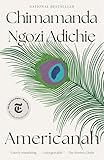
Americanah — Chimamanda Ngozi Adichie (2013)
The most perceptive contemporary novel about race as a construct that means different things in different countries. Ifemelu, who grows up in Lagos without thinking of herself as Black, moves to America and discovers that she is — and the novel tracks her navigation of American racial categories with intelligence, wit, and the specific clarity available to someone encountering them for the first time as an outsider. Her blog posts on race in America, included throughout the novel, are some of the most precise writing about American racial dynamics in contemporary fiction.
White Teeth — Zadie Smith (2000)
Smith’s debut novel — set in multicultural North London across three generations of two families, a Bangladeshi and a white English — examines how identity is inherited, performed, and negotiated across cultures. The Iqbal family and the Jones family are bound together by a wartime friendship, and Smith traces the ways that immigration, religion, and assimilation produce children who are neither what their parents expected nor what the host culture assumed. The comedy is sharp; the sympathy is total.
Homegoing — Yaa Gyasi (2016)
Gyasi’s multigenerational novel traces what happens to identity across eight generations when one lineage stays in Ghana and the other is enslaved and taken to America. The divergence — two halves of the same family developing entirely different identities in entirely different conditions — is the novel’s central subject, and each chapter’s portrait of one person’s life shows how identity is constructed and reconstructed from what has been inherited.
The Central Question of Contemporary Fiction
Identity has emerged as perhaps the central preoccupation of contemporary literature, and the prominence of these books reflects a broader truth about the age in which we live — one in which the question of who we are, and what forces shape and constrain that self, has acquired unprecedented urgency. In earlier eras, identity was more often treated as a given, fixed by birth, place, class, and tradition; the modern and contemporary world, by contrast, has made identity into a question, a problem, and a project. The loosening of old certainties, the increased mobility and mixing of peoples, the rise of movements organized around race, gender, and sexuality, and a deepened cultural attention to the experiences of those long marginalized have all conspired to put the nature and formation of the self at the center of intellectual and artistic life. Fiction has responded by making identity its great subject, exploring how the self is shaped by the categories into which a person is born and sorted, how those categories constrain and define, how individuals resist or reconcile themselves to the identities imposed upon them, and how authentic selfhood is achieved against the pressure of external definition. The books on this list approach these questions from multiple angles, but they share a conviction that identity is among the most important and most fraught aspects of human experience, particularly for those whose race, gender, sexuality, or origins have made the question of who they are a source of struggle rather than a settled fact. This literature matters because it gives voice and complexity to experiences of selfhood that were long ignored or simplified, and because it speaks to a near-universal contemporary concern with the question of identity that defines so much of modern life and thought.
The Body, the Name, the Gaze
Identity is not merely an abstract matter of inner selfhood; it is profoundly bound up with the concrete and the external — with the body one inhabits, the name one carries, and the way one is seen and categorized by others — and the best fiction on this subject grasps how thoroughly the self is shaped by these tangible forces. The body is fundamental: race is read on the skin, gender is assigned and enforced through the body, and the physical form a person inhabits powerfully determines how they move through the world and how the world responds to them. Much of the most searching identity literature attends closely to embodiment — to the experience of living in a body that others mark as different, to the gap between the self one feels oneself to be and the body through which one is perceived, to the ways physical existence shapes and constrains identity. The name, too, carries identity, encoding origin, heritage, and belonging, and the fiction often dwells on names — their changing, their mispronunciation, their power to claim or betray an inheritance. And above all there is the gaze of others: the recognition that identity is not simply self-determined but is constantly being assigned from outside, that one is seen, categorized, and defined by a society whose perceptions may bear little relation to one’s own sense of self. The experience of being looked at, judged, and reduced to a category — of having one’s identity imposed rather than chosen — is central to this literature, particularly for those whose visible difference makes them objects of the social gaze. By grounding the question of identity in the body, the name, and the gaze, the best of these books resist the temptation to treat selfhood as a purely interior matter, insisting instead on the powerful external forces that shape who we are allowed to be.
A Mirror and a Window
The deepest value of literature about identity lies in its dual power to serve as both a mirror and a window — to reflect readers’ own experiences back to them with clarifying force, and to open windows onto the experiences of others profoundly different from themselves. For readers who share the identities and struggles the books depict, this literature offers the mirror: the often profound experience of recognition, of seeing one’s own previously unspoken experiences rendered with precision and seriousness, of discovering that what felt private and isolating is in fact shared and significant. This recognition has real power, validating experiences that the dominant culture has ignored or distorted, combating the isolation of those who have rarely seen themselves reflected in literature, and affirming the dignity and complexity of lives long pushed to the margins. For these readers, identity literature can be genuinely transformative, a means of understanding and claiming one’s own selfhood. But the same books serve equally as windows for readers who do not share the depicted experience, offering entry into lives and perspectives radically unlike their own and cultivating the understanding and empathy that come from inhabiting, through fiction, another’s reality. This window function is no less important than the mirror, for it is one of the primary ways that literature expands moral imagination, allowing readers to comprehend experiences of race, gender, sexuality, and belonging that they could never access directly, and to recognize the full humanity of those different from themselves. The greatest identity literature performs both functions at once, mirror for some and window for others, and in doing so it does essential cultural work: affirming the marginalized while educating everyone else, and building, reader by reader, the mutual understanding on which any genuinely inclusive society depends.
Reading Order
American tradition: Invisible Man → Beloved → Americanah.
Global perspective: White Teeth → Americanah → Homegoing → Middlesex.
By historical range: Homegoing (widest) → Middlesex → White Teeth → Americanah (most contemporary).
Frequently Asked Questions
What is the best novel about identity?
Invisible Man by Ralph Ellison is the most important American novel about identity — specifically about Black identity in a country that refuses to see Black people as individuals rather than symbols. Middlesex by Jeffrey Eugenides is the most ambitious novel about the intersection of gender, ethnicity, and generational inheritance. Americanah by Chimamanda Ngozi Adichie is the most perceptive contemporary novel about race and identity across cultures. Each approaches identity from a different angle — racial, gendered, diasporic — and each is essential.
What is Invisible Man about?
Invisible Man by Ralph Ellison (1952) follows an unnamed Black narrator from the American South to Harlem, through a series of encounters that reveal how thoroughly American society refuses to see Black people as individuals — projecting onto them whatever symbolic role is most convenient. The novel is simultaneously realistic and allegorical, moving through the narrator's experiences with white liberals, Black nationalists, and the Communist Party with a sustained irony that makes it both a specific historical document and a timeless account of what it means to be refused individuality.
What is Americanah about?
Americanah by Chimamanda Ngozi Adichie follows Ifemelu and Obinze, two Nigerians who grow up together in Lagos, separate when they leave Nigeria — Ifemelu to America, Obinze to England — and reunite years later. The novel is partly a love story and partly an examination of race: Ifemelu, who did not think of herself as Black in Nigeria, discovers that in America she is Black, and the novel charts her navigation of American racial categories with intelligence and wit. Adichie's treatment of the difference between African and African American identity is the most perceptive in contemporary fiction.
What is Middlesex about?
Middlesex by Jeffrey Eugenides follows Cal Stephanides, an intersex person, narrating the family history — from a Greek village through the Detroit race riots to the present — that produced him. The novel is simultaneously a multigenerational immigrant saga, a novel of sexual identity, and a meditation on how the self is formed by forces entirely outside its control. Eugenides won the Pulitzer Prize for it in 2003.