Best Books About Gender and Feminism: Essential Reading
The best books about gender and feminism — from A Room of One's Own and The Handmaid's Tale to Bad Feminist and We Should All Be Feminists. Essential reading.
By Aisha Patel

Books about gender and feminism span the spectrum from canonical political philosophy to personal essay to dystopian fiction — the best of them do what all serious literature does: make visible what has been invisible, and make the familiar strange enough to be examined. The books below are the essential starting points, covering the foundational texts of feminist thought, fiction that dramatises gender’s consequences, and contemporary essays that address the ongoing project.
The Foundational Texts
A Room of One’s Own — Virginia Woolf (1929)
The most beautiful argument for women’s intellectual equality ever written — a sustained meditation on the material conditions (money, privacy, time) that have been systematically denied to women, and the relationship between those conditions and women’s creative achievement. Woolf’s prose makes the argument inescapable: she demonstrates, even as she argues, that women can think as well as any man. The most essential text in feminist literature.
Men Explain Things to Me — Rebecca Solnit (2014)
Solnit’s collection of essays on gender, power, and the systematic silencing of women — beginning with the essay that coined the concept of ‘mansplaining’ and extending to essays on violence against women, marriage equality, and the relationship between storytelling and power. Short, sharp, and essential.
We Should All Be Feminists — Chimamanda Ngozi Adichie (2014)
Adichie’s case for feminism, adapted from her TED Talk — a short, direct argument for why the existing gender imbalance harms everyone, delivered with her characteristic warmth and clarity. The most accessible introduction to contemporary feminism and the best starting point for readers new to the subject.
Feminist Fiction
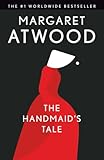
The Handmaid’s Tale — Margaret Atwood (1985)
The most influential feminist dystopia — a theocratic future America in which women have been stripped of all rights and assigned rigid reproductive roles. Atwood’s genius is that everything in Gilead has historical precedent: the novel is as much a work of history as of imagination. The most politically urgent novel on this list and the one most widely read in secondary schools and universities.
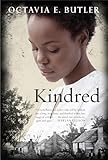
Kindred — Octavia Butler (1979)
Butler’s time-travel novel about slavery and survival — a Black woman from 1970s Los Angeles pulled back repeatedly to antebellum Maryland, where she must save the life of her enslaved ancestors’ enslaver. The novel uses its science fiction premise to make viscerally immediate both the experience of slavery and the question of how people survive — and what survival costs — under extreme oppression. The most formally inventive novel on this list.
Lives of Girls and Women — Alice Munro (1971)
Munro’s only novel — a young woman growing up in small-town Ontario, navigating the narrow expectations placed on women in the 1940s and her own determination to be a writer. The most novelistically complete treatment of female ambition and its obstacles in Canadian literature.
Personal Essays
Bad Feminist — Roxane Gay (2014)
Gay’s witty, wide-ranging collection of essays on feminism, pop culture, race, and the contradictions of trying to live a feminist life in a world that makes it difficult. The most readable book on this list and the most honest about the gap between feminist principles and feminist practice.
Argument, Story, and Imagined Worlds
The deliberate range of forms on this list — political philosophy, personal essay, dystopian and historical fiction — reflects a conviction about how the understanding of gender actually changes, and it offers readers complementary routes to the same destination. The foundational essays, from Woolf’s A Room of One’s Own onward, work through direct argument, building the intellectual case for women’s equality and naming the material and psychological structures that have constrained women’s lives; they convince the mind. But argument alone has limits, and this is where fiction does its distinctive work. The Handmaid’s Tale makes the consequences of patriarchal control viscerally felt rather than merely understood, projecting present tendencies into a future terrifying precisely because every element has historical precedent. Kindred uses the device of time travel to collapse the distance between a modern reader and the lived reality of slavery and gendered oppression, achieving an immediacy no historical argument could match. The personal essays of Solnit, Adichie, and Gay occupy the productive middle ground, grounding political argument in lived experience and individual voice. Reading across these forms is not redundancy but reinforcement: the philosophy supplies the framework, the fiction supplies the felt reality, and the essays connect the two to actual lives. A reader who engages only the arguments understands feminism intellectually; one who also reads the fiction comes to feel why it matters. The combination is what produces genuine, durable understanding rather than mere assent.
A Movement of Many Voices
A crucial thing this list demonstrates, and an essential corrective to any monolithic notion of “feminism,” is that feminist thought has always been a chorus of distinct and sometimes competing voices rather than a single doctrine. The very inclusion of writers as different as Virginia Woolf, Octavia Butler, Chimamanda Ngozi Adichie, and Roxane Gay signals the range. Feminism is not one fixed position but an ongoing, internally vigorous conversation, and its richness comes precisely from the diversity of perspectives within it. Butler’s Kindred insists that gender cannot be understood apart from race and the specific history of slavery, embodying the insight that would come to be called intersectionality — the recognition that women’s experiences differ profoundly according to race, class, sexuality, and circumstance. Gay’s Bad Feminist makes a virtue of contradiction and imperfection, pushing back against any rigid or purist conception of what a feminist must be, and giving voice to the lived reality of trying to hold feminist principles amid a culture and a self full of inconsistencies. Adichie offers an accessible, globally minded case that speaks across cultural divides. This internal diversity is a strength, not a weakness: a movement capacious enough to contain Woolf’s modernist meditation and Gay’s pop-culture essays, the political philosophy of equality and the dystopian warning, is a movement engaging the full complexity of its subject. Readers should approach this list not in search of a single correct line but as an invitation into a living debate, one whose disagreements are as illuminating as its agreements.
Why These Books Still Matter
It would be a mistake to treat the books on this list as historical documents describing battles already won, and their continued urgency is part of what makes them essential reading. The questions these works raise — about whose voices are heard and believed, about who controls women’s bodies and choices, about the material conditions required for any person to think and create freely, about the persistence of violence and inequality — remain live and contested across the world. Woolf’s argument about the necessity of money and a room of one’s own for creative work speaks directly to ongoing debates about who has the security and freedom to pursue ambition. Atwood’s Gilead has only grown more resonant as reproductive rights have become more, not less, contested in many places, and the novel’s adaptation and cultural ubiquity attest to its continuing power as political warning. Solnit’s anatomy of women being disbelieved and overridden named a dynamic that subsequent movements would push to the center of public consciousness. The fact that these books continue to be read, taught, adapted, and argued over is evidence that the project they belong to is unfinished. They reward reading not as artifacts but as living interventions — works that still have the power to make the invisible visible and the familiar strange, which is exactly the work that remains to be done. To read them is to join a conversation that is centuries old and very much ongoing, and to be better equipped to think clearly about one of the defining questions of any society: how it treats half its members.
Reading Order
Start accessible: We Should All Be Feminists → Bad Feminist → A Room of One’s Own.
Fiction focus: The Handmaid’s Tale → Kindred → Lives of Girls and Women.
Complete: A Room of One’s Own → The Handmaid’s Tale → Kindred → Men Explain Things to Me → We Should All Be Feminists → Bad Feminist.
Frequently Asked Questions
What is the best feminist book to start with?
A Room of One's Own (1929) by Virginia Woolf is the foundational text — the argument that a woman needs money and a space of her own if she is to write fiction, delivered in the form of an extended essay that is also one of the most brilliant pieces of prose in the English language. We Should All Be Feminists (2014) by Chimamanda Ngozi Adichie is the most accessible and contemporary starting point — adapted from her TED Talk, it is a short, clear argument for why feminism matters now, for both women and men. Bad Feminist (2014) by Roxane Gay is the most readable — a collection of essays covering everything from popular culture to race to gender, written with wit and self-awareness about the contradictions of living a feminist life.
What is A Room of One's Own about?
A Room of One's Own (1929) by Virginia Woolf is an extended essay based on two lectures Woolf delivered at Cambridge in 1928, arguing that women have been prevented from writing great literature not by lack of talent but by lack of money and privacy — the material conditions that make sustained intellectual work possible. Woolf examines the history of women's exclusion from universities, the literary marketplace, and public life; she invents the figure of Shakespeare's sister (a woman as talented as Shakespeare but born female, who would have been destroyed rather than celebrated by the world into which she was born). The most elegant and influential argument for women's intellectual equality.
What is Kindred about?
Kindred (1979) by Octavia Butler follows Dana, a Black woman living in 1970s Los Angeles, who is repeatedly pulled back in time to antebellum Maryland to save the life of Rufus, the white son of a plantation owner — and her own ancestor. Each time she returns to the past she stays longer, becoming more deeply implicated in the plantation's violence. Butler uses the science fiction device of time travel to make visceral and immediate the experience of American slavery, and to explore the complex question of how people survive under conditions of extreme oppression — what they do, what they become, and what it costs.
What is The Handmaid's Tale about?
The Handmaid's Tale (1985) by Margaret Atwood is set in the near-future Republic of Gilead, formerly the United States, in which a theocratic government has stripped women of all rights — property, employment, reading, freedom of movement. Offred is a Handmaid — a fertile woman assigned to a Commander whose wife cannot conceive, required to bear his children. The novel is told as Offred's record of her daily life under this regime. Atwood's novel is a dystopia constructed entirely from historical precedents — everything that happens to women in Gilead has happened to actual women in actual societies — making it both a work of political imagination and a work of history.