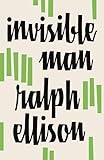
Ralph Ellison was an American novelist whose Invisible Man ranks among the most important and technically accomplished novels in the American literary canon.
Ralph Ellison published Invisible Man in 1952, won the National Book Award, and spent the remaining forty years of his life working on a second novel he never completed. That the second novel never appeared should not diminish the achievement of the first: Invisible Man is a book of extraordinary ambition and accomplishment, a work that draws on African American vernacular traditions, jazz, blues, surrealism, and the entire Western literary canon to create something that belongs to all of those traditions while being reducible to none of them.
The novel’s unnamed narrator — a Black man in mid-century America who is “invisible” because white society refuses to see him as an individual — moves from the Deep South through Harlem, encountering a series of institutions and ideologies (a Southern Black college, the Communist-like Brotherhood, Black nationalism) that offer frameworks for understanding his situation without ever granting him genuine selfhood. Ellison uses this picaresque structure to examine the full complexity of Black American life in the twentieth century, refusing both sentimentality and simple political prescription. The prose is dense, allusive, and often dazzling.
Ellison’s reputation is occasionally complicated by the contrast between his one major novel and his incomplete second project, and by certain political disagreements with other Black writers and intellectuals — his complex relationship to the Black Arts Movement generated significant controversy. The posthumously assembled second novel, Juneteenth (1999), edited from thousands of pages of manuscript by John Callahan, is interesting but incomplete. None of this diminishes Invisible Man, which is simply one of the great American novels, and which rewards re-reading at every stage of a reader’s life.
Reading Guides