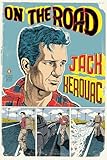
American novelist and Beat Generation figurehead whose autobiographical On the Road captured post-war restlessness and became a defining text of American countercultural literature.
Jack Kerouac wrote On the Road in three weeks in 1951 on a continuous scroll of teletype paper, though it was revised considerably before its publication in 1957. The novel, thinly fictionalized autobiography, follows Sal Paradise and Dean Moriarty — stand-ins for Kerouac and Neal Cassady — across multiple cross-country trips, seeking sensation, connection, jazz, and escape from the conformist pressures of postwar America. It became the most celebrated document of the Beat Generation and an enduring myth of American freedom and mobility.
Kerouac’s prose style — “spontaneous prose,” he called it — aimed to capture the rhythms of bebop jazz and the speed of unmediated thought. At its best, it has a genuine exhilaration: long rushing sentences that carry readers through landscapes and nights with physical immediacy. At its worst, it can feel undisciplined, repetitive, and self-indulgent. The novel’s romantic treatment of Dean Moriarty, who in real life abandoned children and treated women destructively, has been a sustained point of criticism — On the Road’s vision of freedom is largely available to men only.
Kerouac’s influence on American prose and on the mythology of the road trip is undeniable, and On the Road still finds readers who experience it as a genuine revelation. Those readers are usually young, usually male, and usually haven’t yet met Dean Moriarty — which may be part of what Kerouac understood about his own story.
Reading Guides