Where to Start with Jack Kerouac: A Reading Guide
Where to start with Jack Kerouac — whether to begin with On the Road, The Dharma Bums, or Big Sur. A complete reading guide to Kerouac's Beat Generation novels.
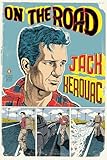
Jack Kerouac (1922–1969) is the most celebrated figure of the Beat Generation — the author of On the Road (1957), which defined a generation’s desire for freedom, movement, and experience unconstrained by the conventions of postwar American life. His novels — written in what he called ‘spontaneous prose’ (though extensively revised) — are the most direct expression in American fiction of the search for pure experience and the cost of that search. He died at forty-seven, his health destroyed by alcoholism, having never recovered from the fame that On the Road brought him.
Where to Start: On the Road (1957)
The essential Kerouac — and one of the most influential American novels of the twentieth century. Sal Paradise makes several journeys across America with the electric, exhausting Dean Moriarty, chasing jazz clubs, conversations, women, and the indefinable ‘IT’ that represents pure aliveness. The novel is less a conventional narrative than a sustained expression of a desire — for freedom, for motion, for experience unmediated by responsibility — and its power is the power of that desire rather than of plot or character development.
On the Road has been the gateway to American road fiction, to the counterculture, and to a certain kind of restless youth for sixty years. Its portrait of Dean Moriarty is one of the most ambivalent in American fiction: exhilarating and exhausting, life-affirming and destructive, everything and nothing.
The Dharma Bums (1958)
The most reflective and most spiritually engaged Kerouac — and the best alternative to On the Road for readers who want something more meditative. Ray Smith and Japhy Ryder (based on Gary Snyder) mountain-climb, discuss Buddhism, drink sake, and argue about the possibility of rejecting American materialism for a life of Buddhist wandering. The novel is Kerouac’s most explicit engagement with the spiritual tradition he turned to in the later 1950s — Zen Buddhism filtered through his Catholic upbringing — and his most sustained engagement with the American natural landscape.
Big Sur (1962)
The counterweight to On the Road — Kerouac’s most honest and most painful account of what the life his first novel celebrated actually cost. Jack Duluoz, now famous and unable to escape his own legend, retreats to Lawrence Ferlinghetti’s cabin at Big Sur for three weeks of solitude, and instead has a complete mental breakdown. The novel documents the alcoholism, the paranoia, the sense of having been celebrated for something he no longer believed in, and the physical and mental deterioration that the Beat life had produced.
Big Sur should be read after On the Road: as a necessary counterpart, an honest account of the wreckage that the freedom and motion of the earlier novel left behind.
Why On the Road Is the Ideal First Book
For a reader new to Jack Kerouac, On the Road is the ideal first book because it is his most famous and influential novel, the defining work of the Beat Generation, and the fullest expression of his distinctive gifts, the restless energy, the spontaneous style, and the search for experience, freedom, and meaning. On the Road recounts a series of frenetic cross-country journeys, loosely based on Kerouac’s own travels and friendships, capturing the exhilaration and yearning of a generation in motion. As an entry point it is ideal, for it is his signature work and the purest expression of his style and spirit. It welcomes the newcomer with its propulsive energy, its vivid sense of place and freedom, and its iconic place in American literature, drawing the reader into the world of the Beats. It is his most celebrated work and the one that best represents his gifts, so the new reader encounters Kerouac at his most characteristic. For the newcomer, then, On the Road is the natural and ideal starting point.
What to Expect as a New Reader
As a new reader, you can expect On the Road to be a restless, energetic, and lyrical novel of travel, freedom, and the search for meaning. You can expect a spontaneous style, for Kerouac wrote in a flowing, improvisational, jazz-inflected prose meant to capture the rhythm of experience as it happens. You can expect restless energy, for the novel follows a series of frenetic journeys back and forth across America, driven by a yearning for experience and intensity. You can expect a vivid sense of place and era, capturing postwar America and the spirit of the Beat Generation. You can expect themes of freedom, friendship, longing, and the search for meaning beneath the surface excitement. You can expect a loosely autobiographical, episodic structure rather than a tightly plotted story. Expect, in short, a restless, energetic, and lyrical novel of travel and freedom, the defining introduction to Kerouac and the Beats.
Going Deeper After Your First Book
Once On the Road has introduced you to Kerouac’s spirit, the reader who wishes to go deeper can explore his other novels, which continue his restless, autobiographical, spontaneous writing across the loosely connected saga of his life and friendships. The Dharma Bums follows his engagement with Buddhism, mountains, and the search for enlightenment, while the darker, more sorrowful Big Sur confronts the toll of fame and excess, showing a more troubled side of his vision. Reading these after On the Road deepens your appreciation of Kerouac’s distinctive gifts, the spontaneous style, the restless energy, and the search for experience and meaning. His characteristic qualities run through his work, much of which forms a loose chronicle of his own life. Building your reading journey through Kerouac is a matter of following his autobiographical fiction from On the Road into The Dharma Bums, Big Sur, and his other novels. The reader who begins here and continues will find the defining voice of the Beat Generation.
Reading Jack Kerouac
Kerouac is best read quickly and in the spirit of his prose — not pausing to analyse but moving through it as Sal moves through America, following the rhythm and the energy rather than parsing each sentence. His prose works rhythmically; read it aloud to hear what it does. Begin with On the Road for the ecstatic core of his vision; read The Dharma Bums for the more reflective counterpart; read Big Sur for the honest accounting. The three together provide the full arc of a writer who captured a desire — for freedom and experience and pure aliveness — with extraordinary accuracy, and who then lived out the consequences.
Frequently Asked Questions
Where should I start with Jack Kerouac?
On the Road (1957) is both the defining Kerouac and the only correct starting point — the novel that defined the Beat Generation and that remains, sixty years after publication, the most direct literary expression of the desire for freedom from convention and responsibility that makes American road fiction so enduring. Sal Paradise's journeys across America with the ecstatic Dean Moriarty established the template for a mode of American writing that continues to the present. The Dharma Bums is the best alternative for readers who want something more reflective; Big Sur for Kerouac at his most honest about the costs of the life On the Road celebrated.
What is On the Road about?
On the Road (1957) is narrated by Sal Paradise, a young writer in New York, who makes several transcontinental journeys across America in the late 1940s with Dean Moriarty — a character based on the real Neal Cassady — and a rotating cast of Beat Generation figures. The novel is less plotted than experienced: a series of encounters, conversations, jazz clubs, cities, highways, and moments of the 'IT' that Kerouac and his circle were chasing — the peak of experience, the pure present, the feeling of being fully alive. It was written in three weeks on a scroll of paper, or so the myth goes; it took seven years of revision before publication.
What is The Dharma Bums about?
The Dharma Bums (1958) is based on Kerouac's friendship with the poet Gary Snyder and his own engagement with Zen Buddhism in the mid-1950s. Ray Smith and Japhy Ryder (based on Snyder) go mountain-climbing and discuss Buddhism, poetry, and the possibility of a 'rucksack revolution' — a generation of wandering American bodhisattvas who would reject the materialism of postwar American life. The novel is less frantic than On the Road and more reflective; its account of the natural world (particularly the mountains of the Pacific Northwest) is Kerouac's most sustained engagement with American landscape.
What is Big Sur about?
Big Sur (1962) is Kerouac's most honest and most painful novel — the account of his own breakdown during a period at Lawrence Ferlinghetti's cabin in Big Sur. Kerouac's alter ego Jack Duluoz, now famous as the author of On the Road and unable to handle the fame or the continued attempts to live the life his book celebrated, has a mental breakdown. The novel is a devastating counterpoint to On the Road: where that novel celebrated freedom and movement, Big Sur counts the costs. Kerouac was an alcoholic whose health was rapidly deteriorating when he wrote it.