Jack Kerouac Books in Order: Complete Bibliography & Best Starting Points
Jack Kerouac's complete bibliography in order — from On the Road and The Dharma Bums to Big Sur. Best starting points and reading order for the Beat Generation's defining novelist.
Jack Kerouac was the defining novelist of the Beat Generation — the literary movement that emerged in 1950s America as a response to postwar conformity, suburban domesticity, and the narrowing of American possibility. He grew up French-Canadian in Lowell, Massachusetts, attended Columbia University, served briefly in the merchant marine, and spent the 1940s and 1950s in the company of Allen Ginsberg, William S. Burroughs, Neal Cassady, and the other figures who would become the Beats.
On the Road, written in 1951 but not published until 1957, made him famous and established the mythology of Beat freedom, spontaneity, and movement that influenced American culture far beyond literature. He spent the rest of his life trying to live up to and escape from what that book made him, and died in 1969 from alcoholism at forty-seven.
Where to Start
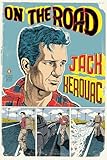
On the Road (1957)
The essential starting point and the defining Beat Generation text. Sal Paradise and Dean Moriarty cross America repeatedly — New York to Denver to San Francisco to New Orleans to Mexico — in a rhythm of movement, jazz, sexual adventure, poverty, and intensity that Kerouac presents as the alternative to the grey stability of postwar American life.
The novel was famously written in a three-week burst on a 120-foot roll of paper (so Kerouac would not have to pause to load new sheets into the typewriter) and published six years later, after extensive revision. The famous spontaneity is partly myth — but the feeling of immediacy that the prose creates is genuine and unlike anything in American fiction before or since.
The Dharma Bums (1958)
The best second novel. Ray Smith (Kerouac) and Japhy Ryder (the poet Gary Snyder) climb mountains, throw parties, discuss Buddhism, and navigate the San Francisco poetry scene. The novel is more considered than On the Road — more interested in the content of the spiritual search, not just its energy — and the portrait of Snyder, who appears as a figure of genuine intellectual and physical discipline, complicates the Beat mythology in productive ways.
The Darker Counterpart
Big Sur (1962)
Kerouac’s most honest novel — the account of his breakdown, his alcoholism, and his encounter with the limits of the freedom he had celebrated in On the Road. After the fame of On the Road, Kerouac escapes to Lawrence Ferlinghetti’s cabin in Big Sur, intending to recover his equilibrium, and instead finds his disintegration accelerating. The prose style is still recognisably Kerouac’s, but the energy of On the Road has curdled into despair. Essential for understanding what the Beat myth actually cost its central figure.
The Earlier Work
The Subterraneans (1958)
A short novel about a love affair — Kerouac and a Black woman named Mardou Fox in the beatnik underground of San Francisco and New York. Written in three nights, it is the most intimate of Kerouac’s novels and the one most focused on interior experience rather than movement through space. Its treatment of the relationship, and of Kerouac’s failure to sustain it, is more self-aware than On the Road about what his commitment to freedom costs the people around him.
Complete Bibliography in Order
| Title | Year | Note |
|---|---|---|
| The Town and the City | 1950 | First novel; Wolfe-influenced; conventional |
| On the Road | 1957 | Essential; start here |
| The Subterraneans | 1958 | Short; intimate; San Francisco |
| The Dharma Bums | 1958 | Second essential; Buddhism |
| Doctor Sax | 1959 | Childhood in Lowell; experimental |
| Maggie Cassidy | 1959 | Adolescent romance; Lowell |
| Mexico City Blues | 1959 | Poetry; jazz rhythms |
| Tristessa | 1960 | Novella; Mexico; morphine |
| Lonesome Traveler | 1960 | Travel essays |
| Book of Dreams | 1961 | Dream journal |
| Pull My Daisy | 1961 | Film script with Ginsberg |
| Big Sur | 1962 | Breakdown; essential counterpart |
| Visions of Gerard | 1963 | His brother’s death; childhood |
| Desolation Angels | 1965 | Fire lookout; later Beats |
| Satori in Paris | 1966 | Short; trip to France |
| Vanity of Duluoz | 1968 | WWII years; retrospective |
The Voice of the Beat Generation
Jack Kerouac was the defining voice of the Beat Generation, the writer whose restless, exuberant fiction captured the spirit of postwar American restlessness, rebellion, and spiritual searching, and whose celebrated novel of the open road became a defining text of its era. Kerouac gave voice to the Beat Generation, the postwar movement of writers and seekers who rejected the conformity and materialism of mainstream American life in favor of restlessness, rebellion, experience, and spiritual searching. His celebrated novel of cross-country travel, with its restless energy and its yearning for experience and meaning, became a defining text of the Beat movement and captured the spirit of postwar American restlessness and rebellion. This role as the voice of the Beat Generation is central to Kerouac’s significance, for his restless, exuberant fiction captured the spirit of his era and movement, the restlessness, rebellion, and spiritual searching of the Beats. His fiction gave voice to a generation’s rejection of conformity and its yearning for experience, freedom, and meaning. For readers, Kerouac offers the voice of the Beat Generation, the restless, exuberant fiction that captured the spirit of postwar American restlessness, rebellion, and spiritual searching. The voice of the Beat Generation, Kerouac captured the spirit of postwar American restlessness, rebellion, and spiritual searching in his restless, exuberant fiction, and his celebrated novel of the open road became a defining text of its era.
The Road, Freedom, and the Search
A central preoccupation of Jack Kerouac’s fiction is the open road and the yearning for freedom, experience, and meaning, the restless movement and searching that express a deep longing for liberation and for something more than the conformity and emptiness of ordinary life. Kerouac’s fiction is animated by the image of the open road and the restless yearning for freedom, experience, and meaning, by a deep longing for liberation from the conformity and emptiness of mainstream American life and for the intensity of genuine experience and the discovery of meaning. His protagonists are restless seekers, perpetually in motion, searching for freedom, experience, intensity, and meaning, and his fiction expresses their yearning for liberation and for something beyond the ordinary. This preoccupation with the road, freedom, and the search is central to Kerouac’s fiction, for he gave voice to the restless yearning for freedom, experience, and meaning, the longing for liberation and for the intensity of genuine experience, that defined the Beat sensibility. His fiction captures the restless movement and searching that express a deep longing for something more than ordinary life. For readers, Kerouac offers the road, freedom, and the search, the restless yearning for freedom, experience, and meaning that animates his fiction. The road, freedom, and the search are a central preoccupation of Kerouac’s fiction, the open road and the yearning for freedom, experience, and meaning, the restless movement and searching that express a deep longing for liberation and for something more than ordinary life.
Spontaneous Prose and Lyrical Energy
Jack Kerouac’s fiction is distinguished by its distinctive style, the spontaneous, energetic, and lyrical prose that he developed to capture the flow of experience and the rhythms of restless movement and feeling. Kerouac developed a distinctive method of spontaneous prose, an energetic, flowing, and improvisational style, often compared to the rhythms of jazz, that sought to capture the immediate flow of experience, perception, and feeling without the constraints of conventional structure and revision. His prose is marked by its energy, its lyricism, and its sense of spontaneous flow, seeking to render the rhythms of restless movement, intense experience, and yearning feeling in a style as restless and energetic as its subjects. This spontaneous prose and lyrical energy are central to Kerouac’s achievement and his distinctive voice, for his energetic, flowing, improvisational style sought to capture the immediate flow of experience and the rhythms of restless movement and feeling. His distinctive prose, with its energy, lyricism, and spontaneous flow, gives his fiction its characteristic voice and its restless, exuberant energy. For readers, Kerouac offers spontaneous prose and lyrical energy, the energetic, flowing, improvisational style that captures the flow of experience and the rhythms of restless movement and feeling. Spontaneous prose and lyrical energy distinguish Kerouac’s fiction, the energetic, flowing, and improvisational style that he developed to capture the flow of experience and the rhythms of restless movement and feeling.
Reading Order Recommendations
New to Kerouac: On the Road → The Dharma Bums → Big Sur. The essential arc: the myth, its refinement, its honest conclusion.
The Beat trilogy: On the Road → The Subterraneans → The Dharma Bums — three aspects of the same world.
For the full picture: On the Road → The Dharma Bums → Big Sur → Desolation Angels. The complete account of what the Beat life was actually like, from the peak to the aftermath.
Frequently Asked Questions
What is the best Jack Kerouac book to start with?
On the Road is the only sensible starting point — it is Kerouac's defining work and the novel that created his reputation and established the Beat Generation's central mythology. The Dharma Bums is the best second novel — shorter, calmer, and in many ways a refinement of On the Road's essential themes (freedom, movement, spiritual seeking, friendship). Big Sur is the honest counterpart to both: Kerouac's account of his own breakdown and alcoholism, written with the clarity of someone who has seen the end of his own myth.
What is On the Road about?
On the Road follows Sal Paradise (Kerouac himself) and Dean Moriarty (Neal Cassady) across America in a series of road trips between 1947 and 1950. Dean is the energy at the novel's centre: wild, charming, unfaithful, irresponsible, and somehow embodying a quality of pure aliveness that draws everyone around him. The novel is partly a portrait of a friendship, partly a portrait of a country, and partly a statement of values: spontaneity, freedom from convention, jazz, movement, the moment. It was written in three weeks on a continuous roll of paper and became the defining document of the Beat Generation.
What is The Dharma Bums about?
The Dharma Bums follows Ray Smith (Kerouac) and Japhy Ryder (the poet Gary Snyder) through California's literary and mountaineering scene in the late 1950s. Where On the Road is about movement across America's horizontal geography, The Dharma Bums is partly about vertical movement — mountain climbing as spiritual practice — and about the encounter between the Beat Generation's values and Buddhism. The novel is generally considered more mature than On the Road: less frenetic, more reflective, and more honest about what the search for freedom actually involves.
Is Jack Kerouac considered a great writer?
Kerouac's literary reputation is contested. His admirers — and they include major writers across several generations — point to the rhythmic energy of his prose, his capacity to render immediacy and movement, and the genuine spiritual seriousness beneath On the Road's surface of wild living. His detractors find his work repetitive, self-indulgent, and limited in psychological range (his female characters in particular are thinly drawn). The honest assessment is that On the Road is a genuine literary achievement of a specific kind — it captures a feeling, a way of being in the world, with an accuracy that more formally accomplished novels rarely achieve.