Editor's Pick
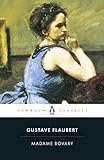
Madame Bovary
by Gustave Flaubert
4.6
Emma Bovary, a romantic idealist trapped in a provincial marriage, pursues passion and luxury through two affairs — until her delusions destroy her.
Check Price on Amazon (paid link)French · b. 1821
Gustave Flaubert was a French novelist whose Madame Bovary, prosecuted for obscenity on publication, became one of the foundational texts of literary realism and a masterwork of psychological fiction.
Gustave Flaubert spent five years writing Madame Bovary, reportedly tearing up pages that contained a single imprecise word, and the novel that emerged from that obsessive labour is among the most technically perfect in existence. Published in 1857 — and immediately prosecuted for immorality, a charge of which Flaubert was acquitted — the novel follows Emma Bovary, a provincial doctor’s wife who fills the gap between her romantic illusions and her actual life with adultery, shopping, and accumulating debt. The story does not end well.
Flaubert’s achievement is multiple. He invented or perfected free indirect discourse as a narrative technique — embedding a character’s thoughts directly into the third-person narration without quotation marks, so that the narration itself becomes ironic, reflecting Emma’s self-deceptions back at the reader through the language she would use. The result is a portrait of a woman’s inner life rendered with such precision that its ironies cut in several directions simultaneously: Flaubert mocks Emma’s sentimentalism while also making the social deprivation that fuels it entirely legible.
Some readers have found Flaubert’s ironised sympathy for Emma unsatisfying — the novel can feel cold, controlled to the point of emotional distance. His own reported comment that “Madame Bovary, c’est moi” has been taken as both confession and deflection. But for readers interested in what a novelist can do with language at the level of the sentence, Madame Bovary is essential, a novel whose method has influenced virtually every serious writer since.
Gustave Flaubert was one of the greatest novelists in the history of literature, a French writer whose meticulous craftsmanship and uncompromising artistic standards made him a founding figure of literary realism and a profound influence on the development of the modern novel. Renowned for his relentless pursuit of the perfect word and the perfectly constructed sentence, Flaubert elevated prose to the level of high art and set new standards for the novel as a serious literary form. His major works, above all Madame Bovary, are masterpieces of realist fiction, and his influence on subsequent writers has been incalculable.
Flaubert’s masterpiece, Madame Bovary, ranks among the most important and influential novels ever written, a precise and unsparing study of Emma Bovary, a provincial doctor’s wife whose romantic illusions, dissatisfaction, and reckless pursuit of passion and luxury lead to her ruin. Famous for its objective narration, its psychological depth, and its flawless construction, the novel scandalised contemporary society and even led to Flaubert’s prosecution for offending public morals. It has since been recognised as a foundational work of realism and a touchstone for the art of the novel, admired for its perfection of form and its merciless honesty.
Flaubert is legendary for his perfectionism and his agonising devotion to style. He labored over his prose with extraordinary care, sometimes spending days on a single page in search of le mot juste, the exactly right word, and he read his sentences aloud to test their rhythm and sound. This obsessive craftsmanship, his belief that the form and language of a novel were as important as its content, transformed the standards of prose fiction and established the ideal of the novelist as a dedicated artist. His letters about the struggle of writing are themselves celebrated documents of literary devotion.
A central principle of Flaubert’s art was the ideal of authorial objectivity and impersonality. He sought to remove the author’s overt presence and judgment from the narrative, presenting his characters and their world with detached, precise observation and allowing readers to draw their own conclusions. This technique of impersonal narration, refusing the moralising intrusions common in earlier fiction, was revolutionary, and it deeply influenced the development of the modern novel. His commitment to showing rather than telling, to rendering reality with clinical exactness, became a model for realist and modernist writers alike.
Flaubert’s vision of human life is marked by a profound irony and a clear-eyed disillusion. He had a keen eye for human folly, vanity, mediocrity, and self-deception, and his fiction exposes the gap between his characters’ romantic illusions and the often-banal reality of their lives. This ironic, unsentimental perspective, evident in his merciless dissection of bourgeois society and provincial life, gives his work its cool brilliance and its enduring critical power. His satirical Bouvard and Pécuchet and his catalogue of received ideas further reveal his contempt for stupidity and cliché.
Beyond Madame Bovary, Flaubert demonstrated remarkable range and ambition. Sentimental Education, his panoramic novel of a young man’s romantic and political disillusionment against the backdrop of revolutionary Paris, is admired by many as his most profound work, while Salammbô shows his gift for vivid historical reconstruction and Three Tales displays his mastery of shorter forms. Across these very different works, his commitment to artistic perfection and his penetrating vision of human nature remain constant, confirming the breadth as well as the depth of his achievement.
Gustave Flaubert’s influence on the novel is immense; his devotion to style, his realist technique, and his ideal of the impersonal artist shaped generations of writers and helped define modern fiction. For newcomers, Madame Bovary is the essential starting point, with Sentimental Education and the Three Tales offering further entry into his art. For readers seeking fiction of supreme craftsmanship, psychological precision, and unflinching honesty about human folly and longing, Flaubert remains one of the supreme masters of the novel and an essential figure in the history of literature.
by Gustave Flaubert
Emma Bovary, a romantic idealist trapped in a provincial marriage, pursues passion and luxury through two affairs — until her delusions destroy her.
Check Price on Amazon (paid link)
by Gustave Flaubert
Three short masterpieces: 'A Simple Heart,' in which a servant woman's life of devotion is rendered with complete moral seriousness; 'The Legend of Saint Julian Hospitator,' a medieval tale of guilt and redemption; and 'Hérodias,' a retelling of the story of Salome.
Check Price on Amazon (paid link)
by Gustave Flaubert
Frédéric Moreau arrives in Paris from the provinces and spends twenty years pursuing an idealized love, a political career, wealth, and artistic ambition — achieving none of them. Flaubert's most autobiographical novel is his most devastating account of an entire generation's failure.
Check Price on Amazon (paid link)
by Gustave Flaubert
Two copy-clerks who become friends retire to the countryside and systematically attempt to master every branch of human knowledge — agriculture, chemistry, medicine, archaeology, philosophy, religion — failing at each in turn. Flaubert's unfinished final novel, published posthumously, is his most radical satirical project.
Check Price on Amazon (paid link)
by Gustave Flaubert
Set during the Mercenary War in Carthage (240-238 BC), Flaubert's archaeological novel follows mercenary soldier Mâtho's obsession with Salammbô, daughter of Hamilcar Barca and guardian of the sacred veil — a deliberate departure from domestic realism into extreme historical otherness.
Check Price on Amazon (paid link)guide
Gustave Flaubert's complete bibliography in order — from Madame Bovary and Sentimental Education to Three Tales and Salammbô. Best starting points for new readers.
guide
Where to start with Gustave Flaubert — whether to begin with Madame Bovary, Sentimental Education, or Three Tales. A complete reading guide to Flaubert's novels.
Disclosure: Amazon links on this page are affiliate links. If you purchase through them we earn a small commission at no extra cost to you.