Health psychologist Kelly McGonigal distills the science of self-control from her popular Stanford course, presenting research-based strategies for strengthening willpower and understanding why it fails.
Cialdini and co-authors Noah Goldstein and Steve Martin present fifty research-backed techniques for ethical persuasion, drawn from behavioral science and organized for immediate practical application.
Cal Newport argues that the inbox-driven, always-on workday is not a productivity system but an accident of history — one that fragments attention, exhausts cognitive resources, and can be replaced by intentionally designed workflows that produce far more output with less overhead.
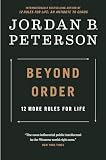
The follow-up to 12 Rules for Life, offering twelve new principles focused on navigating the dangers of too much order — rigid thinking, bureaucratic tyranny, and the stagnation of the over-controlled life.
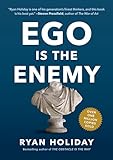
Ryan Holiday examines how ego — the sense of entitlement and inflated self-image — undermines people at every stage of life, from aspiration through success to failure.
Anne Lamott's short, accessible book on prayer reduces the practice to its three essential forms — asking for help, giving thanks, and expressing wonder — arguing that anyone can pray, regardless of belief.
The third volume in Ryan Holiday's Stoic trilogy argues that stillness — inner calm and focus — is the competitive advantage that all great achievers across history have cultivated.
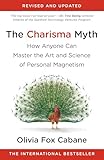
Olivia Fox Cabane dismantles the myth that charisma is an innate quality and provides a science-based framework for developing presence, power, and warmth.
Six philosophers — Socrates, Epicurus, Seneca, Montaigne, Schopenhauer, Nietzsche — applied to six common sources of human unhappiness: unpopularity, not having enough money, frustration, inadequacy, a broken heart, and difficulties.
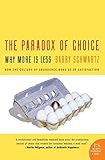
A psychologist argues that the explosion of choice in modern life, while seemingly liberating, actually produces anxiety, paralysis, and dissatisfaction.
Science journalist Catherine Price argues that what most people call 'fun' — passive screen consumption, scrolling, numbing out — is not actually fun in the meaningful sense, and that true Fun requires the combination of three elements: playfulness, connection, and flow.
Erin Lowry translates the fundamentals of personal finance — budgeting, debt elimination, credit scores, and negotiation — into plain, judgment-free language aimed at young adults who feel financially lost but are too embarrassed to admit what they don't know.
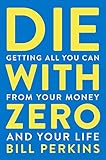
A provocative argument that optimizing for maximum wealth accumulation is the wrong goal — that the aim should be to use your money to create maximum life experiences before you die.
An examination of why we care so much about our position in the social hierarchy — and a survey of the philosophers, artists, and thinkers who have offered alternatives to that anxiety.
A catalogue of 99 cognitive errors, logical fallacies, and psychological biases — from confirmation bias and survivorship bias to the sunk cost fallacy — presented as short, standalone chapters with vivid examples.