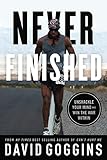
David Goggins continues his life story beyond Can't Hurt Me, exploring how he pushed further into the darkest corners of his mind to unlock the next level of human potential.
Licensed therapist Nedra Glover Tawwab provides a comprehensive, practical guide to identifying, setting, and maintaining healthy boundaries in every area of life.
A curated collection of Naval Ravikant's Twitter threads, podcast appearances, and interviews on building wealth, achieving happiness, and developing judgment.
A guide to freeing yourself from the voice in your head and the patterns that limit your consciousness — drawing on mindfulness, yoga philosophy, and Vedantic thought.
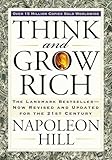
Napoleon Hill's classic distillation of the success principles he observed in over 500 self-made millionaires, including Andrew Carnegie, Henry Ford, and Thomas Edison.
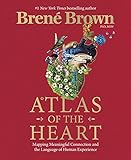
Brené Brown maps 87 human emotions and experiences, providing a language for the full complexity of what we feel and why naming emotions accurately changes our lives.
A former self-help enthusiast argues that conventional time management is based on a false premise — and that accepting the radical finitude of our time is the only path to meaningful life.
Matthew McConaughey's memoir drawn from 35 years of diary entries — a personal philosophy built from the experiences, mistakes, and epiphanies of an unconventional life.
Robert Greene examines the lives of history's greatest masters — Leonardo da Vinci, Charles Darwin, Mozart, Bobby Fischer — to identify the common path toward genuine mastery of any field.
The #1 personal finance book of all time. Kiyosaki contrasts the money lessons he learned from his own 'poor dad' — his biological father — with those of his best friend's 'rich dad', arguing that what you're taught in school about money is dangerously incomplete.
A collection of 23 short essays on the timeless behaviors and patterns that drive human decision-making — the things that never change even as the world changes around them.
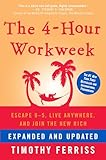
Tim Ferriss dismantles the assumption that the standard life script — work 40+ hours a week for 40 years, then retire — is either necessary or desirable. He outlines a practical system for outsourcing, automating, and liberating your work life to create what he calls 'lifestyle design'.
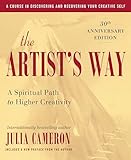
A twelve-week program for recovering and developing creativity through two core practices: Morning Pages (three pages of stream-of-consciousness writing each morning) and the Artist's Date (a weekly solo creative excursion).
A dialogue between a philosopher and a young man across five nights explores Alfred Adler's psychology of freedom — the idea that unhappiness is a choice, trauma is a story, and happiness requires the courage to be disliked.
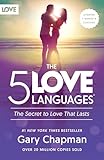
Marriage counselor Gary Chapman identifies five distinct ways people express and receive love — words of affirmation, quality time, receiving gifts, acts of service, and physical touch — and argues that mismatches cause most relationship conflict.
Drawing on ancient Toltec wisdom, Don Miguel Ruiz identifies four agreements — be impeccable with your word, don't take anything personally, don't make assumptions, always do your best — that can transform life by dismantling the limiting beliefs we absorbed in childhood.
Robert Greene analyzes eighteen fundamental aspects of human psychology — from narcissism and envy to grandiosity and conformism — and shows how understanding them enables better navigation of people and situations.
Gino Wickman presents the Entrepreneurial Operating System, a practical framework for helping small and mid-size businesses achieve clarity, accountability, and execution.
Marianne Williamson draws on A Course in Miracles to offer a vision of love as the only force powerful enough to heal relationships, careers, and the deepest wounds of the self.
An exploration of the power of intuitive snap judgments — when they are reliable, when they fail, and how thin-slicing works in experts and everyday people.
Donald Miller applies the seven universal elements of storytelling to marketing, arguing that businesses fail because they make themselves the hero rather than their customer.