bell hooks reimagines education as the practice of freedom — arguing that genuine learning requires engaged, passionate pedagogy that acknowledges the whole person and makes the classroom a site of liberation rather than domination.
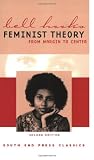
bell hooks argues that mainstream feminism has failed by centering the experiences of white, middle-class women, and calls for a feminist movement rooted in the lives of those at the margins — women of color, the poor, and the working class.
Simone de Beauvoir's monumental 1949 study of women's oppression. Drawing on philosophy, biology, history, and literature, she argues that woman has been constructed as the 'Other' to man — and that femininity is not destiny but a situation imposed and lived.
Naomi Klein's investigation into how disaster capitalism exploits crises to implement radical free-market policies that could not survive democratic scrutiny in normal times.
A collection of Ta-Nehisi Coates's most important essays from the Obama years, each introduced with a new personal reflection, tracing both the trajectory of his thinking about race in America and the arc from Obama's election to Trump's — arguing that white supremacy was the connective tissue between both.
Twenty-one meditations on pressing questions of our time — from artificial intelligence and political disillusionment to terrorism, nationalism, and the challenge of staying sane in the information age.
Woolf's extended essay argues that a woman must have money and a room of her own to write fiction. Through invention, irony, and a fictional woman narrator, she examines why women have historically been excluded from literary culture — and what would change if they weren't.
Thomas Paine's incendiary 1776 pamphlet that helped spark the American Revolution. Written in plain, electrifying prose for ordinary readers, Common Sense made the radical case for American independence from Britain and for republican government, becoming one of the most influential political documents ever written.
Ibram X. Kendi argues that there is no neutral position on racism — only racist and antiracist policies and ideas — and weaves this argument through memoir, examining his own history of internalized racism and the process of thinking himself out of it.
Naomi Klein's urgent case for a Green New Deal. Gathering more than a decade of her climate writing alongside new material, On Fire argues that the climate crisis demands not incremental tweaks but a transformative political and economic response equal to the scale of the emergency.
Fatema Mernissi explores the different versions of Scheherazade that Western and Eastern cultures have created — arguing that the Western harem fantasy reveals more about Western fears than about Eastern reality.