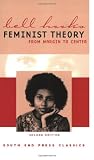
Editors Reads Verdict
A foundational text of intersectional feminist thought, Feminist Theory challenges the mainstream feminist movement to reckon with race and class, offering a vision of liberation broad enough to include everyone — not just those already closest to power.
What We Loved
- The critique of mainstream feminism's class and race blind spots remains essential and incisive
- hooks articulates a positive vision of feminism rather than merely a critique
- The writing is direct and accessible without sacrificing intellectual depth
Minor Drawbacks
- Some readers in feminist circles find the critique of second-wave figures challenging to receive
- The short length means some arguments are developed more briefly than their importance warrants
Key Takeaways
- → Feminism built on the experiences of privileged women will replicate the hierarchies it claims to oppose
- → True liberation requires attending to race, class, and gender as interlocking systems of oppression
- → The margin is not only a site of deprivation but also of resistance and critical perspective
| Author | bell hooks |
|---|---|
| Publisher | South End Press |
| Pages | 180 |
| Published | January 1, 1984 |
| Language | English |
| Genre | Feminism, Political Theory, Social Justice |
How Feminist Theory: From Margin to Center Compares
Feminist Theory: From Margin to Center at a glance against 3 similar books readers weigh alongside it.
| Book | Author | Rating | Best for |
|---|---|---|---|
| Feminist Theory: From Margin to Center (this book) | bell hooks | ★ 4.5 | Feminism |
| Ain't I a Woman: Black Women and Feminism | bell hooks | ★ 4.6 | Feminism |
| All About Love | bell hooks | ★ 4.5 | Readers interested in love as a philosophical and political subject |
| Teaching to Transgress | bell hooks | ★ 4.6 | Education |
Centering the Margins
Published in 1984, Feminist Theory: From Margin to Center is bell hooks’s systematic challenge to the mainstream American feminist movement. Her argument is direct and unsparing: a feminism that takes the white, college-educated, middle-class woman as its default subject cannot speak for the majority of women, and cannot build a movement capable of genuine liberation. This was not a comfortable argument for the feminist establishment in 1984. It remains bracing today.
hooks does not simply critique second-wave feminism for its exclusions — though she does that clearly and specifically. She also proposes an alternative: a feminism whose starting point is the experience of women at the margins, the women for whom gender oppression is inseparable from racial and economic oppression. This is not an abstraction. hooks draws throughout on the concrete experiences of Black women, poor women, and working-class women whose lives reveal what feminist theory looks like when it takes intersecting oppressions seriously.
A Positive Vision
What distinguishes Feminist Theory from many works of political critique is that hooks does not stop at diagnosis. Her final chapters articulate a positive vision of feminist politics and feminist community — one grounded in relationships across difference, in the transformation of domestic life, and in a commitment to ending all domination, not just the forms that affect the most privileged. This utopian dimension is not naive; it is presented as the necessary horizon without which political struggle loses its meaning.
The book also addresses the feminist movement’s relationship to men — arguing against a separatist politics that defines feminism as a women-only project, and for a feminism that invites men into the project of dismantling the patriarchal structures that damage everyone. This was a minority position in 1984 and remains contested.
Essential Intersectional Thought
Feminist Theory: From Margin to Center preceded Kimberlé Crenshaw’s coinage of “intersectionality” by several years, but it is one of the foundational texts that made that concept necessary and possible. Reading it alongside hooks’s Ain’t I a Woman and Teaching to Transgress reveals one of the most coherent and developed bodies of feminist thought in American intellectual life.
Our rating: 4.5/5 — A foundational text of intersectional feminism, as essential now as when it was first published, and considerably more readable than most political theory.
From Critique to Construction
The structure of Feminist Theory: From Margin to Center mirrors its argument. hooks begins at the margin — with the women whose experience mainstream feminism had failed to centre — and works inward, asking what a movement built from that vantage would look like. The opening chapters are diagnostic, naming the class and race blindnesses of the second wave with a directness that unsettled the feminist establishment of 1984. But hooks does not linger in critique. The later chapters are constructive, sketching a feminism defined not by the grievances of the relatively privileged but by a commitment to ending domination in all its forms.
This is the book’s most important and most demanding move. It is comparatively easy to catalogue the failures of a movement; it is much harder to articulate what should replace them. hooks does both, and the constructive half is where her vision becomes clearest: feminism as a struggle against the entire interlocking apparatus of race, class, and gender oppression, rather than a narrower project aimed only at securing for some women the privileges already enjoyed by some men.
The Definition of Feminism
One of the book’s lasting contributions is its working definition of feminism as a movement to end sexist oppression — a formulation hooks chooses deliberately over definitions framed around equality with men. To define feminism as the pursuit of equality with men, she argues, is to leave unexamined the question of which men, and to accept the existing social order as the standard to which women should aspire. Her alternative keeps the focus on oppression itself, which allows the analysis to extend naturally to race and class without treating them as afterthoughts.
This definitional precision is characteristic. hooks understood that political movements are shaped by the language in which they describe themselves, and that a movement which defined its goal as equality within an unjust system had already conceded too much.
A Standing Challenge
Feminist Theory: From Margin to Center remains a challenge rather than a settled text. Its critique of feminism’s tendency to centre the already-privileged has been absorbed into the vocabulary of contemporary discourse — “centring the margins” is now almost a cliché — but the substantive demand the book makes is far from satisfied. To read it now is to be reminded both of how much hooks anticipated and of how much of what she called for remains undone.
Ending Domination, Not Joining the Center
The book’s most radical move is its refusal of the assimilationist goal. hooks argues that a feminism content to win women a larger share of an unjust order mistakes access for liberation; the deeper aim must be to end domination in all its interlocking forms — of race, class and gender together. Written as a corrective from inside the movement rather than an attack from outside it, the book reframes solidarity as something built across difference rather than assumed from a shared womanhood, and it remains a foundational text wherever feminism takes class and race as seriously as gender.
Decades after its publication, the book’s insistence on that wider horizon continues to shape how scholars and activists think about who feminism is for.
Frequently Asked Questions
What is "Feminist Theory: From Margin to Center" about?
bell hooks argues that mainstream feminism has failed by centering the experiences of white, middle-class women, and calls for a feminist movement rooted in the lives of those at the margins — women of color, the poor, and the working class.
What are the key takeaways from "Feminist Theory: From Margin to Center"?
Feminism built on the experiences of privileged women will replicate the hierarchies it claims to oppose True liberation requires attending to race, class, and gender as interlocking systems of oppression The margin is not only a site of deprivation but also of resistance and critical perspective
Is "Feminist Theory: From Margin to Center" worth reading?
A foundational text of intersectional feminist thought, Feminist Theory challenges the mainstream feminist movement to reckon with race and class, offering a vision of liberation broad enough to include everyone — not just those already closest to power.
Ready to Read Feminist Theory: From Margin to Center?
Check the current price on Amazon.
Check Price on Amazon (paid link)Prices and availability are subject to change. See Amazon for current price.
Review last updated: