The sequel to A Wild Sheep Chase: the same nameless narrator returns to the Dolphin Hotel in Hokkaido — now replaced by a gleaming luxury development — and finds the Sheep Man waiting for him. The investigation that follows involves a missing woman, a boy with psychic powers, and an old high-school friend who has become a celebrity actor. The darkest and most culturally specific of Murakami's early novels, explicitly about what Japan lost in the 1980s economic boom.
Lydia Lee — the favourite daughter of a mixed-race family in 1970s Ohio — is found dead in the local lake. The investigation into how she got there unravels the secrets and silences at the heart of the Lee family: the expectations her parents poured into her, the loneliness she could not admit, and the ways families fail each other while trying to love.
DeLillo's 9/11 novel follows Keith Neudecker, who walks away from the World Trade Center on the morning of the attacks carrying a stranger's briefcase, and the weeks afterward as he and his wife Lianne try to rebuild — and the performance artist who falls from buildings in a harness, recreating the image of the falling man. DeLillo writes around the event rather than depicting it, which is the only honest formal strategy for something that defeated language.
Casey Han, the daughter of Korean immigrants in New York City, graduates from Princeton and finds herself navigating a world she was educated to enter but never quite allowed to inhabit — a big, ambitious novel about class, identity, and the cost of assimilation.
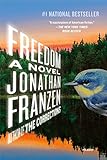
The Berglunds — an outwardly ideal liberal family in St. Paul — fall apart across decades as Walter, Patty, and their son Joey pursue freedom in ways that destroy the people around them.
A woman who has lost her language — who has gone mute following personal losses — attends a class in ancient Greek taught by a man who is losing his sight. A novel about language, loss, and the possibility of connection when ordinary communication fails.
An unnamed researcher interviews dozens of people about Leni Pfeiffer—a German woman who survived the Nazi period, the war, and the postwar economic miracle by simply being, refusing ideology and staying human. The novel is assembled from testimony. Böll's most humanist and most comprehensive work—the book that won him the Nobel Prize.
John Wade, a Vietnam veteran and politician, retreats to a lakeside cabin after a catastrophic election defeat. Then his wife Kathy disappears. The novel assembles evidence — testimonies, documents, O'Brien's own speculations — without ever resolving what happened.
Set in a near-future North America where years are sponsored by corporations, David Foster Wallace's sprawling novel interweaves two main locations — the Enfield Tennis Academy and the Ennet House Drug and Alcohol Recovery House — around the search for a film so entertaining that viewers lose all will to do anything else.
A journalist shipwrecked on the fictional island of Pala discovers a society that has successfully integrated Eastern and Western wisdom — meditation, psychedelics, rational education, and cooperative economics — into a functional utopia. Huxley's final novel is his deliberate answer to Brave New World.
In 1926 Harlem, a man shoots his young lover at her funeral while his wife grieves, attacks the dead girl's face, and attempts to understand what the city and their history have made of them all.
John Buddy Pearson, a Black man of great physical beauty and rhetorical power, becomes a Baptist preacher in Florida and cannot resist the women who desire him. Hurston's first novel — published before Their Eyes Were Watching God — uses her father's life as raw material and her folk research as language.
A Mumbai developer offers the residents of a crumbling housing society an enormous sum to vacate — all but one agree. Masterji, a retired schoolteacher, refuses. What happens to him is the novel.
Peter Aaron narrates the story of his friend and fellow writer Benjamin Sachs, who died in an explosion while detonating a replica of the Statue of Liberty — and gradually reconstructs, from memory and from investigation, how a man of political ideals became a bomber.
Jaromil is a poet from birth — his mother has decided so — and grows up to be a genuine revolutionary lyric poet who informs on his girlfriend to the secret police. Kundera's Prix Médicis-winning novel is a satire of the Romantic artist's egoism and the way revolutionary politics and artistic grandiosity feed each other.
Muriel Spark's mordant, brilliant comedy of old age. A group of elderly Londoners begins receiving anonymous phone calls from a voice that says only, 'Remember you must die.' Spark turns this eerie premise into a sharp, witty meditation on mortality, vanity, and the secrets of a lifetime.
At an airport bar, a chance encounter leads a narrator to spend hours with a former acquaintance who tells the story of saving a drowning stranger's life — and of what happened when that stranger became enormously successful.
Will, a 'coloured' South African teenager, discovers his father Sonny—a political activist—is having an affair with a white woman who works for the anti-apartheid movement. The novel is narrated by Will and is about the cost of the political life on the family that sustains it. Gordimer's most personal meditation on the activist's divided loyalties.
Nana, daughter of the Lantier-Maheu family from L'Assommoir, rises from the Parisian slums to become the most celebrated courtesan of the Second Empire. Men ruin themselves for her; she ruins them. A study of female power and its relationship to the corruption of the Bonapartist regime.
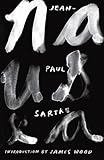
Jean-Paul Sartre's first novel and a foundational text of existentialism. Through the diary of Antoine Roquentin, a solitary historian gripped by a creeping 'nausea' at the sheer, meaningless existence of things, Sartre dramatizes the confrontation with a universe without inherent purpose.
The sequel to Things Fall Apart follows Okonkwo's grandson Obi Okonkwo, who returns to Lagos after education in England, hoping to resist corruption in the colonial civil service. Achebe's mordant second novel is about the generation that inherited colonialism's aftermath — caught between their elders' world and a Western modernity that has no genuine place for them.
In a near-future America consumed by anti-Asian sentiment and a PACT law criminalising anything deemed unpatriotic, twelve-year-old Bird's mother — a poet — has disappeared. Bird sets out to find her, following a trail of clues hidden in her mother's poems. A dystopian novel about the power of stories and what parents sacrifice for their children.
Alexander Portnoy, a Jewish-American man from Newark, unburdens himself to his psychoanalyst about his overbearing mother, his Jewish guilt, his masturbation, his complicated relationships with Gentile women, and his inability to reconcile the person his community wants him to be with the person he is.
Tashi, the African woman who appeared briefly in The Color Purple, undergoes female genital mutilation as an act of cultural solidarity and spends the rest of her life dealing with the trauma, eventually killing the woman who performed the procedure. Walker's most confrontational novel — a direct political act about female genital cutting as a cultural and feminist issue.