Wallace's first essay collection includes his piece on the Illinois State Fair, an extended essay on David Lynch, 'E Unibus Pluram' on television and American fiction, and the title essay on a Caribbean cruise — the funniest and most formally inventive piece of literary journalism of the 1990s.
Elizabeth Warren and her daughter present the 50/30/20 budget — allocating 50% of income to needs, 30% to wants, and 20% to savings — as the foundation of financial security.
Peter Lynch's sequel to One Up on Wall Street — covering his management of the Magellan Fund after the 1987 crash and his stock-picking process in practice. More hands-on than the first book, with specific examples of how Lynch evaluated individual companies across different sectors.
Journalist David Sheff chronicles his son Nic's methamphetamine addiction from the first terrifying signs through years of recovery attempts, relapse, and survival — a memoir that examines addiction from the parent's perspective with unflinching honesty and reportorial rigor.
Hawking's final book addresses ten of humanity's most pressing questions: Is there a God? Will we survive on Earth? Is time travel possible? Should we colonize space? Assembled posthumously from his notes and essays, it is the clearest expression of his intellectual legacy.
The philosophical and practical case for retiring in five years on a fraction of a typical salary, by redesigning your life around personal competence and low-cost living.
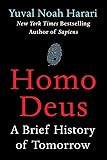
A sweeping vision of humanity's future as Homo sapiens pursues the ancient goals of immortality, bliss, and divinity — and what we risk losing in the process.
Michael Pollan's response to the nutritionism that has dominated American food culture — a short, elegant argument that the answer to the question of what to eat is simpler than the food industry and nutrition science want us to believe.
Actor Ewan McGregor and his friend Charley Boorman ride motorcycles east from London through Europe, Ukraine, Russia, Kazakhstan, Mongolia, Siberia, and Alaska to New York — 31,000 miles through some of the most extreme terrain on earth.
Hurston's collection of Southern Black folklore — gathered during fieldwork in Florida and Louisiana in the early 1930s — is both a scholarly work of anthropology and a literary performance. The tales, sayings, and voodoo practices are presented inside a frame narrative that shows how the material was collected.
Anne Lamott's follow-up to Traveling Mercies — personal essays on faith, doubt, aging, the Iraq War, her son's adolescence, and the ongoing attempt to live with grace when plan A has clearly failed.
Cialdini's follow-up to Influence reveals that the most powerful moment in persuasion is the moment before the message — what you direct attention to immediately before a request shapes what people are receptive to.
Kazantzakis's spiritual autobiography — addressed to his Cretan ancestor El Greco — tracing his intellectual and spiritual journey from Crete through Athens, Paris, Mount Athos, Russia, and across the battlefields of ideas of the 20th century.
The third volume in Ryan Holiday's Stoic Virtues series examines justice — the most outward-facing of the classical virtues, governing how we treat others, fulfil our obligations, and act ethically under pressure. It is the most philosophically demanding book in the trilogy and the most difficult virtue to practice.
Pasternak's autobiographical prose combines memoir of his own development as a writer with extended meditations on Scriabin, Rilke, and Mayakovsky — the three presences that shaped his aesthetic. The book ends with Mayakovsky's suicide, rendered with grief that is also a kind of self-examination: the poet who chose visibility and the poet who chose obscurity, and what each choice costs.
A financial history of the world, tracing the evolution of money, banking, bonds, stocks, insurance, and real estate from ancient civilisations to the 2008 crisis.
Written after his release from prison and published under a pseudonym, Wilde's poem about the execution of a fellow prisoner — 'he did not wear his scarlet coat, for blood and wine are red' — is his most politically direct work. The poem indicts the prison system, capital punishment, and Victorian society's treatment of those it destroys, written in ballad form that gives the critique populist reach.
Dawkins dismantles the argument from design — the claim that complex organisms require a designer — by demonstrating how natural selection can generate complexity from simplicity without guidance. His most fully realised work of popular science.
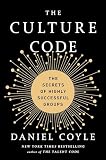
Coyle investigates what makes the world's best groups — the Navy SEALs, Pixar, the San Antonio Spurs, the US Women's Volleyball team — tick. The answer is culture: three specific skills that successful groups share and that anyone can learn to build.
Burton Malkiel and Charles Ellis distil a lifetime of investing wisdom into five simple elements: save, index, diversify, avoid complexity, and keep costs low.
Pinker argues that language is a biological instinct — an evolved faculty, not a cultural invention. Weaving together linguistics, cognitive science, evolutionary biology, and neuroscience, he makes one of the most compelling cases in popular science.
Joel Greenblatt's Magic Formula investing strategy — a simple, systematic approach to finding good companies at cheap prices that has beaten market averages over time.
David Grann investigates the disappearance of British explorer Percy Fawcett, who vanished in the Amazon in 1925 while searching for an ancient lost civilization he called Z.
Andrew Tobias's perennially updated personal finance classic — covering spending, saving, insurance, taxes, and investing with wit, clarity, and common sense.