Jared Diamond's first major popular book asks what makes humans unique among the great apes — examining language, art, agriculture, drugs, and genocide as distinctly human traits — and what our evolutionary history predicts about our future.
A classic personal finance guide told as a story about three young people who receive financial wisdom from their town's wealthy barber, covering saving, investing, and insurance.
A practical, research-backed hiring system built on scorecard design, structured sourcing, and the four-part 'Who Interview,' designed to help leaders make better hiring decisions and dramatically reduce costly mis-hires.
Cialdini and co-authors Noah Goldstein and Steve Martin present fifty research-backed techniques for ethical persuasion, drawn from behavioral science and organized for immediate practical application.
Cal Newport argues that the inbox-driven, always-on workday is not a productivity system but an accident of history — one that fragments attention, exhausts cognitive resources, and can be replaced by intentionally designed workflows that produce far more output with less overhead.
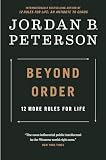
The follow-up to 12 Rules for Life, offering twelve new principles focused on navigating the dangers of too much order — rigid thinking, bureaucratic tyranny, and the stagnation of the over-controlled life.
George Orwell's first book: a memoir of destitution — months spent penniless in Paris, working as a plongeur in restaurant kitchens, and then weeks tramping between workhouses in England — written with the observational precision that would define everything that followed.
Hurston's autobiography — the most unreliable and most revealing of the Harlem Renaissance — traces her childhood in Eatonville, Florida, her years studying under Franz Boas, her folk research in the South and Caribbean, and her life as a writer. Hurston revises, omits, and invents throughout; the book is most honest about what it refuses to say.
Anne Lamott's short, accessible book on prayer reduces the practice to its three essential forms — asking for help, giving thanks, and expressing wonder — arguing that anyone can pray, regardless of belief.
A selection of Sylvia Plath's correspondence with her mother Aurelia from 1950 to 1963, edited by Aurelia Plath — a complex document that reveals the public face Plath maintained for her mother and the gap between that performance and the inner life she described elsewhere.
Wheelan uses real-world examples to explain the core concepts of economics — incentives, markets, the price system, human capital, financial markets, trade, and the limitations of GDP. Aimed at readers who want to understand how the economy works without a textbook.
Aristotle asks: what is the good life for a human being? His answer — eudaimonia, often translated as happiness but better understood as flourishing — requires virtue, practical wisdom, and the right social conditions. The foundational text of virtue ethics and one of the most influential works in the history of moral philosophy.
How do artists and entrepreneurs create work that sells not for a season but for decades? Ryan Holiday examines the principles behind books, albums, films, and businesses that become classics — and the specific disciplines that separate creators of lasting work from those chasing momentary attention.
A documentary filmmaker's account of discovering the FIRE movement and transforming his family's finances to pursue early retirement and a more intentional life.
A curated anthology of Fortune magazine articles spanning five decades, edited by Carol Loomis, that traces Warren Buffett's rise from obscure Omaha investor to the world's most celebrated businessman. The collection captures Buffett's evolving philosophy, sharp wit, and uncommon candor across a remarkable career.
A philosophical meditation on why we travel, what we hope to find, and why the reality so rarely matches the anticipation — structured around de Botton's own journeys and the writers, artists, and thinkers who have illuminated the meaning of travel.
Physicist Brian Greene explains superstring theory and the quest for a unified theory of everything — the attempt to reconcile quantum mechanics and general relativity in a single mathematical framework.
NPR foreign correspondent Eric Weiner travels to ten countries ranked at the extremes of happiness surveys — Netherlands, Bhutan, Qatar, Iceland, Switzerland, Thailand, India, Moldova, Britain, and the USA — to investigate what makes some places measurably happier than others.
Richard Dawkins makes the case that belief in a personal God is not merely wrong but irrational — that the existence of any supernatural creator is a scientific hypothesis that the evidence decisively refutes, and that religion is neither necessary for morality nor harmless in its effects.
The definitive account of the 1929 stock market crash — the speculative bubble, the collapse, and the economic consequences that shaped modern financial regulation.
Herodotus's account of the Greco-Persian Wars — from Croesus of Lydia through the Persian invasions of Greece, culminating in Marathon, Thermopylae, Salamis, and Plataea. Along the way, extensive digressions on Egypt, Scythia, Babylon, and the customs of peoples across the known world.
Nine financial rules so simple they fit on an index card — save 10–20% of your income, pay off credit cards, invest in low-cost index funds, and ignore financial TV.
Paul Auster's first major work in two parts: A Portrait of an Invisible Man, written after his father's sudden death, an attempt to understand a man he never truly knew; and The Book of Memory, an autobiographical meditation on solitude, fatherhood, memory, and the act of writing.
A research-based portrait of how America's wealthy actually think and behave — the habits, values, and choices that lead to financial success, based on surveys of over 1,000 millionaires.