One of the most important American autobiographies ever written, chronicling Malcolm X's transformation from street criminal to international civil rights icon.
William Shirer's definitive account of Nazi Germany — from Hitler's birth to the Reich's collapse — written by a journalist who witnessed much of it firsthand.
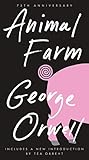
The animals of Manor Farm overthrow their human farmer, establish a democracy, and watch helplessly as the pigs gradually become indistinguishable from the humans they replaced.
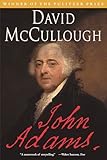
David McCullough's Pulitzer Prize-winning biography of John Adams, the principled, irascible, and frequently underestimated second president of the United States.
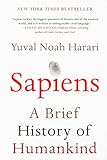
From the emergence of Homo sapiens in Africa to the 21st century, Harari traces the full sweep of human history, asking why our species conquered Earth while others failed.
A narrative history of the first month of World War I — August 1914 — tracing how Europe's powers stumbled into catastrophe through a combination of rigid military planning, diplomatic failure, and the momentum of mobilization.
The story of Henrietta Lacks, the Black woman whose cancer cells were taken without her consent in 1951 and became the most important biological materials in modern medical history — all while her family lived in poverty and ignorance of what had been done.
Michelle Alexander's landmark argument that mass incarceration is the newest system of racial caste control in America — the functional successor to Jim Crow laws and before them, slavery.
Erik Larson's account of Winston Churchill's first year as Prime Minister — May 1940 to May 1941 — when Britain stood alone against Nazi Germany and Churchill forged a nation's will to endure.
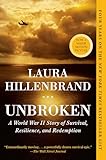
The true story of Louis Zamperini — Olympic runner turned World War II bombardier who survived 47 days adrift in the Pacific and then two years in Japanese POW camps — and his eventual path to redemption through faith.
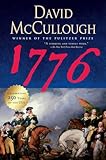
David McCullough narrates the military history of 1776 — the year of American independence — through the campaigns, retreats, and nearly disastrous reverses that shaped the Revolutionary War's decisive year.
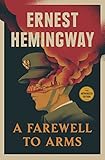
American ambulance driver Frederic Henry falls in love with English nurse Catherine Barkley against the backdrop of the Italian front in World War I — a love story that the war will not leave intact.
Barack Obama's presidential memoir covers his early life, 2008 campaign, and first term, examining both the machinery of American democracy and the personal cost of holding its highest office.
Written as a letter to his teenage son, Ta-Nehisi Coates examines the history and present reality of anti-Black racism in America — its origins in the destruction of Black bodies, its persistence through white supremacy — with unsparing intellectual force.
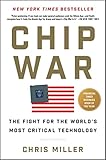
Economic historian Chris Miller traces the history of the semiconductor industry from the invention of the transistor to the US-China technology war, showing how computer chips became the defining resource of the twenty-first century.
Ron Chernow's monumental biography of Ulysses S. Grant reclaims one of American history's most misunderstood figures — the general who won the Civil War and the president who fought to protect Black Americans during Reconstruction.
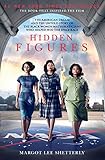
The true story of the Black female mathematicians who served as 'human computers' at NASA during the Space Race — women whose calculations helped launch America into space while they navigated the segregated South.
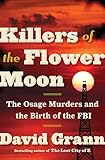
In 1920s Oklahoma, members of the Osage Nation were being systematically murdered for their oil wealth in a conspiracy that eventually drew in J. Edgar Hoover's nascent FBI.
The intertwined stories of the 1893 Chicago World's Fair — one of the most ambitious construction projects in American history — and the serial killer H.H. Holmes, who used the fair's crowds as cover for his murders.
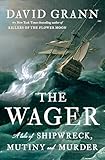
The true story of the 1741 shipwreck of HMS Wager off the coast of Patagonia, the murderous castaways who survived, and the competing accounts of what happened that constituted a kind of 18th-century trial.
A comprehensive, revisionist history of ancient Rome from its murky origins to the extension of citizenship across the empire, written with the authority of Britain's greatest living classicist.
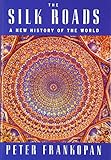
A radical reorientation of world history centered on the Silk Roads — the trade routes connecting East and West — arguing that Asia, the Middle East, and Central Asia have been the world's true centers for most of recorded history.
Adapted from her viral TEDx talk, Chimamanda Ngozi Adichie makes a passionate and personal case for feminism rooted in the realities of both African and Western experience.