Science fiction is the literature of consequences: every great novel in the genre asks "what if?" and follows the answer wherever it leads. These are the science fiction novels worth reading.
Ryland Grace wakes up alone on a spacecraft millions of miles from Earth, with no memory of how he got there. As he pieces together the mission, he realises he may be humanity's last hope against a microscopic threat that is slowly extinguishing the Sun — and that he is not entirely alone.
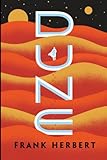
On the desert planet Arrakis, young Paul Atreides must navigate political intrigue, ecological disaster, and prophetic destiny to avenge his family and fulfil a legend centuries in the making. The best-selling science fiction novel of all time.
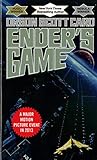
Andrew 'Ender' Wiggin is humanity's most gifted military mind, trained from childhood in the zero-gravity Battle Room of a space station to fight the alien Formics. But the game and the war may not be as separate as Ender believes.
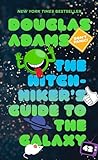
Seconds before Earth is demolished to make way for a hyperspace bypass, Arthur Dent is rescued by Ford Prefect — who turns out to be a researcher for the Hitchhiker's Guide to the Galaxy, the standard repository for all knowledge and wisdom in the universe. Their adventures take them to the Restaurant at the End of the Universe, a planet populated by telephone sanitisers, and a search for the Ultimate Question to Life, the Universe, and Everything.
Astronaut Mark Watney is stranded alone on Mars after his crew evacuates, and must use science, engineering, and dark humour to survive until a rescue mission can reach him.
Seven pilgrims journey to the Time Tombs on the world of Hyperion, each telling their story before facing the Shrike — a creature of blades that moves backward through time — in a far-future Canterbury Tales structured around one of science fiction's most enduring mysteries.
A billionaire's dinosaur theme park — built using ancient DNA extracted from prehistoric mosquitoes — collapses into chaos when the animals escape containment, in a gripping techno-thriller that is also a serious argument about the limits of human control over nature.
Snowman may be the last human alive after an engineered plague has wiped out humanity. Surviving among a tribe of genetically modified humanoids, he looks back on his friendship with the brilliant, catastrophic Crake — and the world they destroyed together.
In 2131, a massive cylindrical alien spacecraft enters the solar system, and Commander Norton leads a crew to explore it before it departs — discovering a perfect, silent, alien world inside with no clear purpose and no clear occupants.
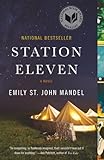
A flu pandemic obliterates civilization, and twenty years later a traveling Shakespeare company moves through the Great Lakes region, their story woven together with the pre-collapse lives of an actor whose death on opening night becomes the novel's pivot point.
Twelve-year-old Jonas lives in a Community where pain, conflict, and choice have been eradicated through Sameness — until the Ceremony of Twelve assigns him the singular role of Receiver of Memory, forcing him to carry the full weight of human history and exposing the quiet violence that keeps his world frictionless.
Women develop the ability to electrocute at will, and within a generation the global order inverts — a speculative inversion that asks not whether women would govern better but whether power itself is the problem.
Charlie Gordon, a man with intellectual disabilities, undergoes experimental brain surgery that dramatically increases his intelligence — and must grapple with the emotional and social consequences.
The first book in Asimov's groundbreaking Foundation series, in which mathematician Hari Seldon predicts the fall of a galactic empire and sets in motion a thousand-year plan to preserve civilisation.
In a galaxy divided into zones of thought where intelligence itself is limited by proximity to the galactic core, a human ship accidentally releases an ancient evil and two children are stranded on a world of pack-minded aliens while the fate of civilization is debated across an early proto-internet.
The last surviving fragment of a troop-carrier AI seeks revenge against the ruler of a vast interstellar empire, told through a narrator who was once thousands of bodies simultaneously and who perceives no gender distinctions.
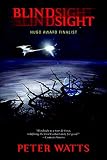
A crew of cognitively modified humans — including a man with half his brain removed and a vampire revived from extinction — is sent to make first contact with an alien presence on the edge of the solar system, and finds something that profoundly challenges the assumption that consciousness is adaptive.
In the World State of 632 AF (After Ford), human beings are hatched in hatcheries, conditioned from birth for their social function, and kept content by the pleasure drug Soma. There is no disease, no war, no poverty — and no freedom, no art, no genuine love. Bernard Marx begins to question whether happiness without meaning is worth having.
The last remnants of humanity race across the stars toward a terraformed world, only to find it already claimed by a civilization of intelligent spiders uplifted across millennia by a nanovirus meant for monkeys.
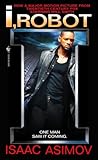
Isaac Asimov's linked short story collection introducing the Three Laws of Robotics and exploring their logical implications in a series of increasingly complex scenarios.
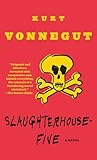
Kurt Vonnegut's anti-war masterpiece follows Billy Pilgrim, who has become 'unstuck in time' and moves non-linearly through his experiences as a prisoner of war in Dresden and his later suburban American life.
Severian, a torturer's apprentice exiled from his guild for showing mercy to a condemned prisoner, narrates his journey across a dying far-future Earth in a memoir he claims is perfectly remembered but which the careful reader will find riddled with unreliable omissions.
Todd Hewitt is the last boy in Prentisstown — a colony world where a germ has made everyone's thoughts audible as constant Noise — until he discovers a pocket of silence in the swamp and finds Viola, the first girl he has ever seen, whose ship crashed nearby.
The second Wayfarers novel — Sidra, the AI who used to run a starship, now lives inside a human body kit. Alongside her human companion Pepper, she must learn what it means to be one small, embodied person in a vast universe.
Andy Weir's The Martian and Project Hail Mary are outstanding entry points — gripping, funny, and scientifically rigorous without requiring prior knowledge of the genre. Ender's Game by Orson Scott Card and Dune by Frank Herbert are classic starting points.
Hard sci-fi prioritises scientific accuracy and plausible extrapolation from current knowledge. Kim Stanley Robinson's Mars trilogy and Arthur C. Clarke's Rendezvous with Rama are classic examples. Contrast with soft sci-fi, which uses science as backdrop for social and philosophical exploration.
Science fiction extrapolates from scientific principles and tends toward rational explanation for its wonders; fantasy accepts the supernatural as a given. The boundary is contested — many works blend both — but intent and tone usually distinguish them.
Disclosure: Amazon links on this page are affiliate links. If you purchase through them we earn a small commission at no extra cost to you.
We use cookies to understand how visitors use our site (Google Analytics). No data is collected until you accept.
Privacy Policy