New Yorker editor Bill Buford quits his job to apprentice in Mario Batali's chaotic Babbo kitchen, then traces Italian cooking to its source — apprenticing with a Tuscan butcher and a pasta master in Emilia-Romagna.
Dave Eggers, twenty-one, loses both parents to cancer within weeks of each other and becomes the primary guardian of his eight-year-old brother — a memoir that is also a meditation on memoirs and on the absurdity of claiming to capture grief in prose.
The fourth volume of Maya Angelou's autobiography — New York in the late 1950s, the Harlem Writers Guild, the civil rights movement, her friendship with Malcolm X and Martin Luther King Jr., and her years in Cairo and Accra.
Sebastian Junger spent a year embedded with a US Army platoon at a small outpost in the Korengal Valley of Afghanistan — one of the most violent postings of the entire war. The book is an account of what those men found there: the fear, the boredom, the violence, and the specific form of belonging that combat produces.
Why do soldiers miss war? Why do PTSD rates in modern armies exceed those of many historical conflicts? Junger argues that humans evolved to live in small, interdependent tribes with shared purpose and genuine mutual dependence — and that wealthy modern societies cannot provide this, producing alienation, depression, and the specific tragedy of veterans who find civilian life unbearable after combat.
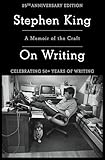
Part memoir, part writing guide, Stephen King reflects on his life, his near-fatal accident, and the craft principles that have made him one of the most productive writers in American literature.
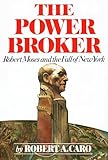
Robert Caro's Pulitzer Prize-winning biography of Robert Moses, the unelected master planner who shaped New York City for four decades and accumulated more power than any other American in the 20th century.
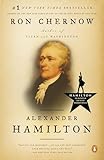
The definitive biography of Alexander Hamilton — orphan immigrant, Revolutionary War hero, first Secretary of the Treasury, and the Founding Father who built the American financial system.
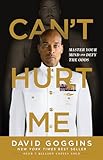
The memoir of Navy SEAL and ultramarathon runner David Goggins — from a traumatic childhood and an overweight, unfulfilled existence to becoming one of the world's elite endurance athletes.
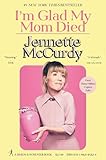
Former child actress Jennette McCurdy's unflinching memoir about her mother's emotional abuse, the exploitation of the child acting industry, and her path to recovery from eating disorders and trauma.
Known publicly as 'Emily Doe,' Chanel Miller reclaims her full identity and tells the complete story of the assault, trial, and aftermath of the Brock Turner case.
Nelson Mandela's autobiography traces his journey from a Transkei village through law, activism, 27 years of imprisonment, and his emergence to lead South Africa's democratic transition.
Doris Kearns Goodwin examines Lincoln's political genius through the lens of the three rivals he defeated for the 1860 Republican nomination — whom he then appointed to his cabinet.
One of the most important American autobiographies ever written, chronicling Malcolm X's transformation from street criminal to international civil rights icon.
Oscar winner Viola Davis recounts her extraordinary journey from crushing poverty in rural Rhode Island to EGOT status, with unflinching honesty about trauma, shame, and self-worth.
The Nobel Peace Prize laureate tells the story of growing up in Pakistan's Swat Valley, her father's school, the Taliban occupation, and surviving a targeted assassination attempt at fifteen.
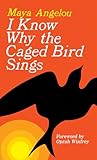
Maya Angelou's first autobiographical volume, covering her childhood in Stamps, Arkansas, her rape at eight years old, her years of traumatized silence, and her eventual recovery through literature and language.
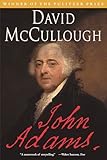
David McCullough's Pulitzer Prize-winning biography of John Adams, the principled, irascible, and frequently underestimated second president of the United States.
Therapist Lori Gottlieb writes about going to therapy herself after a painful breakup, interweaving her own journey as a patient with the stories of four clients she is treating simultaneously.
Nobel Prize-winning physicist Richard Feynman's collection of outrageous, funny, and illuminating adventures — from cracking safes at Los Alamos to learning to draw, playing bongo drums, and embarrassing the censors of the Brazilian physics curriculum.
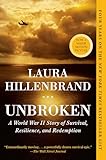
The true story of Louis Zamperini — Olympic runner turned World War II bombardier who survived 47 days adrift in the Pacific and then two years in Japanese POW camps — and his eventual path to redemption through faith.
Barack Obama's presidential memoir covers his early life, 2008 campaign, and first term, examining both the machinery of American democracy and the personal cost of holding its highest office.
The Japanese Breakfast musician writes about her Korean-American identity, her mother's death from cancer, and how food became the medium for grief and memory.