Editors Reads Verdict
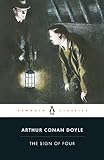
Tighter and more romantic than its predecessor, The Sign of Four perfects the Holmes formula with a genuinely thrilling Thames boat chase as its set piece.
What We Loved
- The Thames boat pursuit is one of the best action sequences in the Holmes canon
- Watson's romance with Mary Morstan adds emotional texture without slowing the plot
- The two-part structure is handled more smoothly here than in A Study in Scarlet
Minor Drawbacks
- The Agra treasure backstory, while entertaining, is less historically grounded than the Utah sections of the first novel
- Tonga, the Andaman Islander, is portrayed through an uncomfortably crude Victorian lens
Key Takeaways
- → Holmes's cocaine use and disdain for emotion are not incidental details — they define his relationship to the cases that give his life meaning
- → The novel shows that detective fiction can carry genuine romantic stakes without becoming melodrama
- → Conan Doyle was already experimenting with dual narrative timelines in his second Holmes novel
- → The best Holmes stories balance intellectual puzzle with visceral action — this one achieves that balance
| Author | Arthur Conan Doyle |
|---|---|
| Publisher | Penguin Classics |
| Pages | 128 |
| Published | February 1, 1890 |
| Language | English |
| Genre | Mystery, Detective Fiction, Classic Fiction |
How The Sign of Four Compares
The Sign of Four at a glance against 3 similar books readers weigh alongside it.
| Book | Author | Rating | Best for |
|---|---|---|---|
| The Sign of Four (this book) | Arthur Conan Doyle | ★ 4.5 | Mystery |
| A Study in Scarlet | Arthur Conan Doyle | ★ 4.6 | Mystery |
| The Adventures of Sherlock Holmes | Arthur Conan Doyle | ★ 4.9 | Mystery |
| The Hound of the Baskervilles | Arthur Conan Doyle | ★ 4.8 | Mystery |
The Sign of Four Review
Published three years after A Study in Scarlet, The Sign of Four arrived at the request of an American magazine editor who wanted another Holmes story and got something considerably more assured. This second novel opens at 221B Baker Street with Holmes injecting cocaine and expounding his philosophy of pure reason — a scene that captures his character more completely than pages of backstory could — before a young woman named Mary Morstan arrives with a singular problem.
She has been receiving anonymous pearls for six years and has now received an invitation to meet her mysterious benefactor. Holmes and Watson accompany her, and what follows unfolds with the controlled energy of a story that knows exactly where it is going: a locked-room murder, a note signed by four men, a stolen Indian treasure with a decades-long trail of betrayal and revenge, and a breathless steamboat chase down the Thames that Conan Doyle orchestrates with genuine thriller pacing.
The novel’s emotional architecture is as well-constructed as its plot. Watson, usually the steady observer, falls in love with Mary Morstan over the course of the investigation. Holmes, asked his opinion of her, replies that he has not noticed — he cannot afford to let personal feelings influence his judgement. The exchange is funny, slightly sad, and perfectly economical. It tells us everything about both men in one breath.
The colonial backstory — centred on the Agra treasure and the Indian Rebellion of 1857 — carries the prejudices of its era, and Tonga’s characterisation has not aged with any grace. But the core novel is a remarkably efficient machine: 128 pages that deliver mystery, romance, action, and one of fiction’s great double-acts operating at full stretch.
What Distinguishes This Book
Among the qualities that set The Sign of Four apart: The Thames boat pursuit is one of the best action sequences in the Holmes canon; Watson’s romance with Mary Morstan adds emotional texture without slowing the plot; and The two-part structure is handled more smoothly here than in A Study in Scarlet. These strengths are evident from the first pages and sustain across the whole work.
Themes
The thematic concerns of The Sign of Four give it weight beyond its surface narrative. Holmes’s cocaine use and disdain for emotion are not incidental details — they define his relationship to the cases that give his life meaning. The novel shows that detective fiction can carry genuine romantic stakes without becoming melodrama. Conan Doyle was already experimenting with dual narrative timelines in his second Holmes novel. The best Holmes stories balance intellectual puzzle with visceral action — this one achieves that balance. These ideas emerge from the texture of the work rather than explicit statement, which is the mark of ambitious fiction done well.
Why It Endures
The Sign of Four belongs to the literary canon for reasons that become clear on reading. Arthur Conan Doyle’s command of the form was exceptional for their era and remains impressive today. The social observation is precise, the characterisation is economical, and the underlying moral intelligence is never heavy-handed. These are the properties that separate enduring literature from period curiosity.
Limitations
The Agra treasure backstory, while entertaining, is less historically grounded than the Utah sections of the first novel. Tonga, the Andaman Islander, is portrayed through an uncomfortably crude Victorian lens. These are worth knowing before starting, though they are unlikely to diminish the experience for the readers the book is written for.
Publication and the Oscar Wilde Dinner
The Sign of Four was published in Lippincott’s Monthly Magazine in February 1890. The commission came from a dinner in August 1889 at which the editor of Lippincott’s, J.M. Stoddart, also commissioned Oscar Wilde to produce The Picture of Dorian Gray — published in the same magazine a year later, in July 1890. The two most celebrated novels in Victorian popular fiction were thus commissioned at the same table.
The novel introduces Mary Morstan, who becomes Watson’s wife and whose presence in the Baker Street world represents the pull of domestic life against the consuming intensity of Holmes’s work. Watson’s courtship of Mary — conducted against the backdrop of a murder investigation and a mystery involving the Agra treasure and the Andaman Islands — is the emotional heart of the novel. Holmes’s cocaine habit, which Watson observes and deplores in the opening chapters, is here at its most prominent; later stories quietly reduce its presence.
The novel’s historical background — the Indian Rebellion of 1857, the penal colony on the Andaman Islands — was drawn from contemporary sources, and the villain’s backstory about the British army in India reflects the same imperial anxieties that Kipling was addressing in his fiction of the same period. The Sign of Four remains, with The Hound of the Baskervilles, among the most technically accomplished of the four Holmes novels.
The August 1889 dinner at Lippincott’s Monthly Magazine that commissioned both this novel and Wilde’s The Picture of Dorian Gray simultaneously was one of the most consequential publishing meetings in Victorian literature; both novels appeared in Lippincott’s in 1890, and both immediately exceeded expectations — the magazine’s American circulation increased substantially as a result.
The novel introduced the character of Mary Morstan, who becomes Watson’s wife — the first of Watson’s two marriages mentioned in the canon, and the event that briefly removes him from Baker Street.
Final Verdict
Our rating: 4.5/5 — Tighter and more romantic than its predecessor, The Sign of Four perfects the Holmes formula with a genuinely thrilling Thames boat chase as its set piece.
Frequently Asked Questions
What is "The Sign of Four" about?
The second Sherlock Holmes novel weaves stolen treasure, a mysterious four-man pact, and a chase through the fog-bound Thames into a tightly plotted adventure. Watson falls in love with their client while Holmes remains coldly analytical — a contrast that gives the story much of its warmth.
What are the key takeaways from "The Sign of Four"?
Holmes's cocaine use and disdain for emotion are not incidental details — they define his relationship to the cases that give his life meaning The novel shows that detective fiction can carry genuine romantic stakes without becoming melodrama Conan Doyle was already experimenting with dual narrative timelines in his second Holmes novel The best Holmes stories balance intellectual puzzle with visceral action — this one achieves that balance
Is "The Sign of Four" worth reading?
Tighter and more romantic than its predecessor, The Sign of Four perfects the Holmes formula with a genuinely thrilling Thames boat chase as its set piece.
Ready to Read The Sign of Four?
Check the current price on Amazon.
Check Price on Amazon (paid link)Prices and availability are subject to change. See Amazon for current price.
Review last updated: