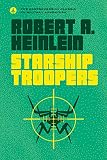
Editors Reads Verdict
A rigorous thought experiment about duty, citizenship, and the ethics of violence — Heinlein's polished didacticism makes Starship Troopers one of SF's most intellectually provocative classics, regardless of whether you agree with its conclusions.
What We Loved
- The political philosophy is presented with genuine intellectual rigour — Heinlein argues his positions rather than simply asserting them
- The military training sequences are vivid and psychologically honest about what it means to become a soldier
- The framing device — Rico looking back — gives the ideological content a personal grounding
Minor Drawbacks
- The novel is more philosophical treatise than plot-driven story — readers expecting action will find long stretches of lecture
- The political conclusions — that only veterans should vote — are deliberately provocative and require active critical engagement
Key Takeaways
- → Civic virtue, Heinlein argues, requires skin in the game — rights must be balanced by willingness to accept responsibility and risk
- → Military training is not just physical but moral — it reshapes how recruits understand duty, death, and their relationship to the collective
- → The novel poses rather than settles its central question: what do citizens owe their society, and what does society owe them?
| Author | Robert A. Heinlein |
|---|---|
| Publisher | Ace |
| Pages | 263 |
| Published | November 1, 1959 |
| Language | English |
| Genre | Science Fiction, Military Science Fiction, Classic SF |
How Starship Troopers Compares
Starship Troopers at a glance against 3 similar books readers weigh alongside it.
| Book | Author | Rating | Best for |
|---|---|---|---|
| Starship Troopers (this book) | Robert A. Heinlein | ★ 4.1 | Science Fiction |
| Ender's Game | Orson Scott Card | ★ 4.7 | Science fiction readers from teenage years upward, fans of military fiction who |
| Old Man's War | John Scalzi | ★ 4.3 | Science fiction readers looking for smart, accessible, and entertaining |
| The Forever War | Joe Haldeman | ★ 4.3 | Science fiction readers interested in military SF, anti-war fiction, and |
Starship Troopers Review
Starship Troopers is the novel that established Robert Heinlein’s reputation as science fiction’s most serious political philosopher — and, depending on your politics, its most infuriating or most bracing polemicist. Published in 1959 and winner of the Hugo Award, it follows Juan “Johnny” Rico, the son of a wealthy Manila family, as he impulsively enlists in the Terran Mobile Infantry, survives its brutal training, and fights in an interstellar war against the Arachnids — a race of insectoid aliens who do not negotiate.
The war is almost a backdrop. What Heinlein is really interested in is the society that fights it: the Terran Federation, in which full citizenship — and with it the right to vote and hold public office — is available only to veterans who have completed federal service. He does not argue for military dictatorship but for the idea that civic rights require a demonstrated willingness to place the community’s interests above your own survival. The novel’s long classroom sequences, in which Rico’s instructor delivers impassioned lectures on moral philosophy, history, and the nature of violence, are not padding — they are the point.
What makes the book endure beyond its ideology is the honesty of its military sequences. Heinlein served in the US Navy and writes about the transformation of civilian into soldier with genuine authority. The Mobile Infantry’s powered armour suits prefigured decades of military SF, but the novel’s real legacy is its insistence that the genre could carry philosophical weight. Even readers who find its conclusions repellent tend to acknowledge that the argument is made with rare intellectual care.
What Distinguishes This Book
Among the qualities that set Starship Troopers apart: The political philosophy is presented with genuine intellectual rigour — Heinlein argues his positions rather than simply asserting them; The military training sequences are vivid and psychologically honest about what it means to become a soldier; and The framing device — Rico looking back — gives the ideological content a personal grounding. These strengths are evident from the first pages and sustain across the whole work.
Themes
The thematic concerns of Starship Troopers give it weight beyond its surface narrative. Civic virtue, Heinlein argues, requires skin in the game — rights must be balanced by willingness to accept responsibility and risk. Military training is not just physical but moral — it reshapes how recruits understand duty, death, and their relationship to the collective. The novel poses rather than settles its central question: what do citizens owe their society, and what does society owe them?. These ideas emerge from the texture of the work rather than explicit statement, which is the mark of ambitious fiction done well.
The Reading Experience
Starship Troopers is the kind of book that changes slightly depending on when you read it. The surface — plot, character, setting — remains constant, but the reader brings different things to it at different points in life, and the book meets them there. This is a property of enduring work, and it distinguishes Starship Troopers from titles that are consumed once and not returned to.
Limitations
The novel is more philosophical treatise than plot-driven story — readers expecting action will find long stretches of lecture. The political conclusions — that only veterans should vote — are deliberately provocative and require active critical engagement. These are worth knowing before starting, though they are unlikely to diminish the experience for the readers the book is written for.
The Hugo Award and the Controversy
Starship Troopers was published in December 1959 and won the Hugo Award for Best Novel in 1960 — one of the most controversial Hugo wins in the award’s history, because the novel’s political content was widely contested. Heinlein had written it partly in response to a political advertisement calling for a halt to nuclear weapons testing that he opposed; the novel’s extended arguments for corporal and capital punishment, and for the restriction of civic rights to veterans, were taken by many readers as an endorsement of fascism, and by others as a straightforward argument for military citizenship of the kind that had existed in various historical democracies.
The Verhoeven Film
Paul Verhoeven directed a film adaptation in 1997, with Casper Van Dien and Dina Meyer. Verhoeven has described his film as an intentional inversion of the novel’s politics: where Heinlein’s text presents the militaristic society approvingly, Verhoeven’s film depicts it as fascist propaganda, using the visual language of Leni Riefenstahl and Nazi iconography to make the satire explicit. Many viewers missed the satirical intent; many admirers of the novel were offended by it. The film failed commercially on release but has been substantially reassessed since, and Verhoeven’s reading of the source material as fascist is now the majority critical position.
Hugo Award and the Verhoeven Film
Starship Troopers won the Hugo Award for Best Novel in 1960. Paul Verhoeven’s 1997 film adaptation deliberately inverted the novel’s politics, treating the Federation’s military culture as fascist spectacle; Verhoeven acknowledged he had not finished the novel before filming, finding its politics unappealing. The film’s cast of attractive young actors and its satirical use of propaganda-style sequences created a cult following that has grown since its mixed initial reception.
Paul Verhoeven’s 1997 film adaptation radically inverted Heinlein’s politics, turning the novel’s earnest defence of civic militarism into a satire of fascist propaganda; Verhoeven has said he read only a portion of the novel before making the film. The divergence between novel and film has made Starship Troopers an unusual case study in adaptation and intent.
Final Verdict
Our rating: 4.1/5 — A rigorous thought experiment about duty, citizenship, and the ethics of violence — Heinlein’s polished didacticism makes Starship Troopers one of SF’s most intellectually provocative classics, regardless of whether you agree with its conclusions.
Frequently Asked Questions
What is "Starship Troopers" about?
Rico joins the Terran Mobile Infantry to fight in an interstellar war against insectoid aliens. Heinlein's Hugo-winning novel is a passionate defence of civic virtue, military service, and the idea that citizenship must be earned — one of SF's most celebrated and most debated books.
What are the key takeaways from "Starship Troopers"?
Civic virtue, Heinlein argues, requires skin in the game — rights must be balanced by willingness to accept responsibility and risk Military training is not just physical but moral — it reshapes how recruits understand duty, death, and their relationship to the collective The novel poses rather than settles its central question: what do citizens owe their society, and what does society owe them?
Is "Starship Troopers" worth reading?
A rigorous thought experiment about duty, citizenship, and the ethics of violence — Heinlein's polished didacticism makes Starship Troopers one of SF's most intellectually provocative classics, regardless of whether you agree with its conclusions.
Ready to Read Starship Troopers?
Check the current price on Amazon.
Check Price on Amazon (paid link)Prices and availability are subject to change. See Amazon for current price.
Review last updated: