Editors Reads Verdict
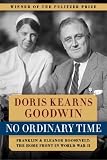
No Ordinary Time is Goodwin's Pulitzer Prize winner — a compelling dual biography of Franklin and Eleanor Roosevelt during the war years that is also a portrait of a marriage, a political partnership, and a civilization mobilizing itself against fascism.
What We Loved
- The dual focus on both Roosevelts gives depth that a single-subject biography could not achieve
- The home front narrative — rationing, women entering the workforce, the transformation of industry — is richly detailed
- Eleanor Roosevelt emerges as a more consequential figure than in most accounts of the period
Minor Drawbacks
- At 635 pages the scope is ambitious; some secondary figures receive less development than they deserve
- Franklin Roosevelt's complexities are occasionally softened in the portrait
Key Takeaways
- → The transformation of American industry for war production was one of history's most remarkable organizational achievements
- → Eleanor Roosevelt's influence on the administration's social policies was substantial and consistently underestimated
- → The partnership between the Roosevelts was built on mutual need and complementary strengths despite personal distance
| Author | Doris Kearns Goodwin |
|---|---|
| Publisher | Simon & Schuster |
| Pages | 635 |
| Published | October 1, 1994 |
| Language | English |
| Genre | Biography, History, World War II |
How No Ordinary Time Compares
No Ordinary Time at a glance against 3 similar books readers weigh alongside it.
| Book | Author | Rating | Best for |
|---|---|---|---|
| No Ordinary Time (this book) | Doris Kearns Goodwin | ★ 4.6 | Biography |
| Leadership: In Turbulent Times | Doris Kearns Goodwin | ★ 4.5 | Biography |
| Team of Rivals | Doris Kearns Goodwin | ★ 4.7 | Readers of American history, biography, and political science — particularly |
| The Fitzgeralds and the Kennedys | Doris Kearns Goodwin | ★ 4.4 | Biography |
The Arsenal of Democracy
Between December 1941 and August 1945, the United States transformed itself from a nation still recovering from the Depression into the most powerful military and industrial force the world had ever seen. Doris Kearns Goodwin’s Pulitzer Prize-winning No Ordinary Time tells this story through the lens of the White House — specifically through the partnership and tensions of Franklin and Eleanor Roosevelt, and the remarkable household they presided over during the most consequential years of American history.
Goodwin’s approach is to render the White House as a place where history was made by specific people making specific decisions under enormous pressure, and where the personal and the political were inseparable. She draws on diaries, letters, and interviews to reconstruct the daily texture of the Roosevelt White House — the visitors, the dinners, the late-night conversations, the crises managed and mismanaged — and in doing so makes the period vivid and immediate in ways that more distant historical accounts cannot.
Two Partners, One Marriage
The Roosevelt marriage is one of American history’s most complex partnerships. Franklin’s paralysis from polio had transformed their relationship, and Eleanor had developed an independent political life and network of her own. By the war years they were less husband and wife in any conventional sense than two people who needed each other for political purposes while living largely separate emotional lives — Eleanor with her close friend Lorena Hickok, Franklin with his companion Missy LeHand.
Goodwin neither sensationalizes nor elides these complexities. Eleanor’s constant pressure on Franklin to extend the New Deal’s promises to Black Americans, to support labor rights, to refuse the compromises that political expediency demanded — and Franklin’s resistance, accommodation, and occasional genuine response to that pressure — constitutes one of the book’s central dramas.
The Home Front
No Ordinary Time is equally a history of the home front: the conversion of automobile factories to tank production, the entry of millions of women into the industrial workforce, the agonizing decision to intern Japanese American citizens, the debates over desegregating the military. These chapters give the book its breadth, showing how thoroughly the war transformed American society in ways that its participants were experiencing in real time without fully understanding.
Eleanor as the Conscience of the New Deal
The most lasting impression No Ordinary Time leaves is of Eleanor Roosevelt as a political actor of the first rank rather than a ceremonial First Lady. Goodwin restores her to the center of the narrative: the tireless traveler who served as Franklin’s eyes and ears, the columnist whose “My Day” reached millions, the advocate who pressed the administration on civil rights, refugee policy, public housing, and the rights of workers when political caution counseled silence. The book’s enduring image is of Eleanor as the household’s restless conscience, forever pushing her husband toward the harder, more principled choice, and of Franklin as the supreme pragmatist who absorbed that pressure, deflected what he could not use, and occasionally allowed himself to be moved. Goodwin treats their estrangement and their interdependence with equal honesty, and the result is one of the most psychologically rich portraits of a presidential marriage in American letters.
Goodwin’s Place Among War Histories
The book belongs to Goodwin’s signature mode — the intimate, scene-driven group biography she would later perfect in Team of Rivals — and it differs deliberately from the grand strategic narratives of the Second World War. Readers who want the campaigns, the conferences, and the maps will find that material handled briskly here; Goodwin’s subject is the war as experienced from the second floor of the White House and from the factory floors and kitchen tables of the home front. That choice is the book’s strength. By keeping the lens on a single household and the society it presided over, Goodwin makes the abstraction of “the Arsenal of Democracy” concrete — a matter of specific people making specific, consequential decisions under almost unimaginable pressure.
Who Should Read It
No Ordinary Time is ideal for readers drawn to American political and social history who want narrative momentum rather than dry institutional analysis, and for anyone curious about how leadership functions under sustained crisis. At 635 pages it asks for commitment, but Goodwin’s storytelling carries the reader, and the home-front chapters make it valuable even for those who feel they already know the broad outline of the war. Pair it with her Lincoln and Roosevelt studies to see a major historian working at the height of her powers.
The Cast Around the Roosevelts
One of the book’s pleasures is the supporting cast that animated the wartime White House, and Goodwin gives each figure room to breathe. Missy LeHand, the devoted secretary whose presence eased Franklin’s loneliness; Lorena Hickok, the journalist who lived in the White House and shared an intense bond with Eleanor; Harry Hopkins, the frail, indispensable adviser who managed Lend-Lease from a bedroom down the hall; and the parade of generals, cabinet officers, and visiting heads of state who passed through the residence — all are rendered as fully realized people rather than functionaries. This is Goodwin’s particular gift: she treats a presidential administration as a household, a web of loyalties, jealousies, and affections, and shows how the largest decisions of the war emerged from that intimate human texture. The approach makes a familiar period feel newly immediate, and it explains why the book has endured as both a work of serious history and a deeply absorbing read.
Our rating: 4.6/5 — Goodwin’s Pulitzer Prize winner is a masterful dual biography and a vivid account of how a civilization mobilizes for survival — essential reading on the Roosevelt years.
Frequently Asked Questions
What is "No Ordinary Time" about?
Doris Kearns Goodwin's Pulitzer Prize-winning account of Franklin and Eleanor Roosevelt during World War II — their partnership, their tensions, and their transformation of America into the Arsenal of Democracy.
What are the key takeaways from "No Ordinary Time"?
The transformation of American industry for war production was one of history's most remarkable organizational achievements Eleanor Roosevelt's influence on the administration's social policies was substantial and consistently underestimated The partnership between the Roosevelts was built on mutual need and complementary strengths despite personal distance
Is "No Ordinary Time" worth reading?
No Ordinary Time is Goodwin's Pulitzer Prize winner — a compelling dual biography of Franklin and Eleanor Roosevelt during the war years that is also a portrait of a marriage, a political partnership, and a civilization mobilizing itself against fascism.
Ready to Read No Ordinary Time?
Check the current price on Amazon.
Check Price on Amazon (paid link)Prices and availability are subject to change. See Amazon for current price.
Review last updated: