Where to Start with Vladimir Nabokov: A Reading Guide
Where to start with Vladimir Nabokov — whether to begin with Lolita, Pnin, Pale Fire, or Speak, Memory. A complete reading guide to Nabokov's major works.
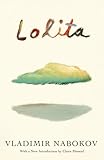
Vladimir Nabokov (1899–1977) is the most stylistically extraordinary novelist of the twentieth century — a Russian aristocrat who fled the Revolution, wrote nine Russian novels, learned English in his thirties, and went on to write some of the finest prose in the English language. His major English novels — Lolita, Pnin, Pale Fire — are simultaneously works of dazzling virtuosity, deeply humane concern for their characters (all of them, including those their narrators dismiss), and formal experiments in the relationship between storytelling, unreliability, and truth.
Where to Start
The Most Accessible: Pnin (1957)
The ideal first Nabokov — his warmest novel and his most immediately comic. Timofey Pnin, a Russian émigré professor of Russian at an American university, is one of the most lovable figures in American fiction: absent-minded, dignified, perpetually the victim of misunderstanding, genuinely scholarly, and genuinely kind. The narrator who tells Pnin’s story becomes, by the novel’s end, increasingly sinister — his warmth toward Pnin is revealed to be something more complicated — but the pleasures of Pnin’s portrait are real and unshadowed by the novel’s moral complexities. The best demonstration of Nabokov’s gifts for those new to his work.
The Masterpiece: Lolita (1955)
Nabokov’s most celebrated and most misunderstood novel — and one of the most complex reading experiences in American fiction. Humbert Humbert’s seductive, brilliant, self-justifying narration must be read against itself: the reader who attends to what Humbert does not say — to Dolores Haze’s actual experience, her suffering, her destroyed life — will find a novel of extraordinary moral seriousness beneath the dazzling surface prose. The famous opening (‘Lolita, light of my life, fire of my loins’) is one of the great opening sentences in American fiction and one of the most manipulative.
The Formal Experiment: Pale Fire (1962)
Nabokov’s most formally inventive novel — a poem and its commentary that together constitute a novel of psychological revelation and unreliable narration taken to its furthest extreme. Kinbote’s madness (is he really the exiled king of Zembla? is Zembla real?) unfolds through a commentary that barely engages with the poem it purports to explain. The novel is a satire of academic criticism, a metaphysical thriller, and a portrait of solipsistic madness more disturbing for being so brilliantly funny. Not a starting point; essential reading after Lolita and Pnin.
The Memoir: Speak, Memory (1967)
Nabokov’s autobiography — one of the great literary memoirs in English, covering his aristocratic Russian childhood, his exile in Europe after the Revolution, and his eventual emigration to America. The prose is Nabokov at his most unguardedly beautiful; the account of his father (a liberal politician murdered by a Russian monarchist in 1922) is his most personally felt writing. The memoir is also a systematic account of the making of the artist — how his obsession with lepidopterology, his chess problems, his love of poetry and prose, converged into the novelist he became.
Invitation to a Beheading (1938)
Nabokov’s Russian-language novel (originally written in 1935), widely considered the masterpiece of his Russian period. Cincinnatus C. is in prison, condemned to death for an unspecified crime; the prison, the jailers, the trial, and the execution are all conducted in an atmosphere of theatrical unreality that makes them simultaneously menacing and farcical. The novel is Nabokov’s response to totalitarianism — less realistic than Orwell’s response but perhaps more psychologically accurate about the experience of living under a system that demands performance of inauthenticity.
Why Pnin Is the Ideal First Book
For a reader new to Vladimir Nabokov, Pnin is the ideal first book because it is his warmest and most immediately accessible novel and a fine expression of his distinctive gifts, the dazzling prose, the wit, and the blend of comedy and tenderness. Pnin follows Timofey Pnin, a bumbling, endearing Russian émigré professor at an American university, in a series of comic and poignant episodes that reveal the dignity and sorrow beneath his absurd surface. As an entry point it is ideal, for it is more approachable and warmer than some of his more dazzling, demanding works, while fully displaying his gifts. It welcomes the newcomer with its endearing hero, its comic warmth, and its beautiful prose, drawing the reader into his distinctive vision. It is among his most beloved and accessible novels, so the new reader encounters Nabokov at his most welcoming. For the newcomer, then, Pnin is the natural and ideal starting point.
What to Expect as a New Reader
As a new reader, you can expect Pnin to be a warm, witty, and beautifully written comic novel. You can expect an endearing hero, for the bumbling, exiled Russian professor Pnin is one of Nabokov’s most lovable characters. You can expect dazzling prose, for Nabokov writes with extraordinary verbal brilliance, precision, and beauty. You can expect comedy, for the novel is full of gentle, affectionate humor at Pnin’s expense. You can expect tenderness and poignancy, for beneath the comedy lies the dignity, loneliness, and sorrow of exile. You can expect a series of episodes rather than a tightly plotted story. You can expect the wit, playfulness, and humanity that mark Nabokov at his warmest. You can expect a relatively accessible and delightful novel. Expect, in short, a warm, witty, and beautifully written comic novel, an inviting introduction to Nabokov’s gifts.
Going Deeper After Your First Book
Once Pnin has introduced you to Nabokov’s gifts, the reader who wishes to go deeper can explore his other novels, which reveal the full range of his dazzling prose, his wit, and his inventive genius, though some are more demanding. His most famous and controversial novel is a brilliant, troubling, and stylistically dazzling work that confronts difficult subject matter through an unreliable narrator, while his inventive, puzzle-like later novels and his luminous memoir display his playful brilliance and his mastery of form. Reading these after Pnin deepens your appreciation of Nabokov’s distinctive gifts, the dazzling prose, the wit, and the inventive genius. His characteristic brilliance runs through his work. Building your reading journey through Nabokov is a matter of following his fiction from Pnin into his other novels and his memoir. The reader who begins here and continues will encounter one of the greatest prose stylists in the English language.
Reading Nabokov
Nabokov’s prose rewards rereading more than any other writer in English — not because it is obscure but because it contains so much that cannot be absorbed in a first reading. His patterns of imagery, his allusions, his ironies, his plant of early details that become significant later: all of these become visible on rereading in a way that makes the second reading as pleasurable as the first and for different reasons. Begin with Pnin for pleasure; proceed to Lolita with critical awareness; approach Pale Fire prepared to read it twice.
Frequently Asked Questions
Where should I start with Vladimir Nabokov?
Pnin (1957) is the best starting point for most readers — a short, comic, and relatively accessible novel about Timofey Pnin, a Russian émigré professor at an American university, told by an unreliable narrator who gradually becomes sinister. It is Nabokov's most warmly affectionate portrait of a character and his most immediately enjoyable novel, demonstrating his gifts — the precision of his prose, his comedy, his metafictional complexity — without the moral difficulty of Lolita or the structural complexity of Pale Fire. Lolita is the best starting point for readers who want Nabokov's full scope; read it with full awareness of the narrator's unreliability.
What is Lolita about?
Lolita (1955) is narrated by Humbert Humbert, a sophisticated European who is sexually obsessed with 'nymphets' (pre-adolescent girls), and who describes his relationship with Dolores Haze (the Lolita of the title), a twelve-year-old American girl whom he marries her widowed mother to access and then imprisons through a combination of economic dependency and psychological manipulation. The novel is simultaneously a dark comedy, a tragedy (from Dolores's perspective), and a demonstration that the most beautiful prose can be placed in the service of the most reprehensible narrator. The essential reading context: Humbert is lying throughout, and the novel's real subject is Dolores Haze's destroyed life, not the 'love story' he claims to be telling.
What is Pale Fire about?
Pale Fire (1962) consists of a 999-line poem by the fictional American poet John Shade and a commentary and index by the fictional scholar Charles Kinbote. The commentary, which is several times the length of the poem, purports to explain the poem's references but actually tells the story of the exiled king of an invented country, Zembla, whom Kinbote believes to be himself. The novel is Nabokov's most formally radical work — simultaneously a poem, a commentary, a thriller, and a satire of academic criticism — and one of the most extraordinary formal achievements in twentieth-century fiction. Requires patience and rereading.
Is Lolita appropriate to read?
Lolita is one of the most important and most misread novels in the twentieth century. It is frequently mischaracterised as a love story, which is precisely what Humbert wants the reader to believe: the novel's most important quality is that Humbert is an unreliable, manipulative narrator whose seductive prose is designed to conceal the reality of what he has done to Dolores Haze. Readers who approach it with awareness of Nabokov's irony — reading against Humbert, attending to the novel's evidence of Dolores's suffering — will find it a profound and devastating work. Readers who read it as Humbert intends them to read it will be manipulated as successfully as Dolores herself.


