Where to Start with Rolf Potts: A Reading Guide
Where to start with Rolf Potts — how to approach Vagabonding, his practical and philosophical guide to long-term independent travel that argues extended travel is a choice, not a luxury. A complete reading guide.
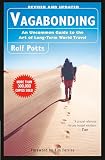
Rolf Potts (born 1970) is an American travel writer who spent years travelling extensively through Asia, the Middle East, and the Americas before writing Vagabonding as a practical and philosophical account of long-term independent travel. The book was published in 2003 and became an influential text in the location-independent lifestyle movement, cited by Tim Ferriss in The 4-Hour Work Week as a foundational influence. What distinguishes Vagabonding from the large category of travel inspiration books is that Potts makes a rigorous argument rather than simply depicting travel as wonderful and leaving the reader to figure out the logistics.
Where to Start: Vagabonding (2003)
The essential Rolf Potts — and the most useful book about long-term independent travel written in the past several decades. Vagabonding begins with an observation that cuts against the romanticisation common to most travel writing: the reason most people who want to travel don’t travel is not money. It is the consumer commitments that keep them in place, and the conviction — usually false — that those commitments are necessary.
The central argument is precise and deliberately demystifying. Potts calculates — with specific numbers that have aged somewhat but remain directionally accurate — that a person earning an ordinary salary in a developed country can fund six months of travel through Southeast Asia or Central America by working with intention for a year, eliminating discretionary spending, and simplifying their life before departure. The maths is less important than the psychological claim beneath it: most people have chosen consumer commitments that prevent them from doing what they actually want to do, and they have convinced themselves the commitments are unavoidable when they are not.
The preparation chapters are where the book provides its most unusual value. Most travel books say nothing about how to live before you leave; Vagabonding treats the pre-departure period as the foundation of the travel itself. The advice here is specific and honest: pay off debts, reduce possessions to what fits in a bag, cancel subscriptions, have the difficult conversation with people who think you are making a mistake, arrange finances so they require minimal attention while you are away. The simplification is not just logistical — it is the beginning of the shift in values that makes long-term travel different from a holiday.
The philosophy of slow travel runs through the book’s second half. Potts argues against the itinerary-driven approach to travel — the rush from city to city, monument to monument, checking off a list — in favour of staying in one place long enough to understand it. This is not only more rewarding; it is, counterintuitively, cheaper. Fixed-cost travel (accommodation that charges you whether you stay or go, flights booked in advance to cover more ground) costs more per day than slow travel. The person who stays in a small town for a month and learns some of the language is paying less and experiencing more than the person who passes through on a bus tour.
The literary tradition Potts situates himself in — Whitman, Thoreau, Twain, Kerouac — is invoked without romanticisation. He is honest about loneliness, about the frustrations of budget travel and unreliable transport, about the difficulty of returning to ordinary life after months of total freedom. Vagabonding is not a book that promises transformation and leaves the reader to discover the hard parts. It describes them in advance, and makes the case that they are worth bearing.
Why Vagabonding Is the Ideal First Book
For a reader new to Rolf Potts, Vagabonding is the ideal first book because it is his best-known work and the fullest expression of his distinctive philosophy of long-term, independent travel as a way of life and a path to freedom. Vagabonding is Potts’s classic guide to taking extended time to travel the world on one’s own terms, blending practical advice with a deeper philosophy of travel, simplicity, and living deliberately. As an entry point it is ideal, for it is his defining book and a clear statement of his travel philosophy. It welcomes the newcomer with its practical guidance, its inspiring philosophy, and its accessible style, drawing the reader into the idea of long-term, independent travel. It is his most important work and the one that best represents his thinking, so the new reader encounters Potts’s approach directly. For the newcomer drawn to travel, then, Vagabonding is the natural and ideal starting point.
What to Expect as a New Reader
As a new reader, you can expect Vagabonding to be a practical, inspiring, and philosophical guide to long-term travel. You can expect a central idea, vagabonding, taking extended time to travel the world independently and on one’s own terms. You can expect practical guidance, for Potts offers advice on planning, funding, and sustaining long-term travel. You can expect a deeper philosophy, for the book frames travel as a way of life, a path to freedom, simplicity, and living deliberately. You can expect wisdom drawn from Potts’s own travels and from many travelers and thinkers. You can expect an emphasis on the inner experience of travel as much as the logistics. You can expect an inspiring, thoughtful, and accessible style. Expect, in short, a practical, inspiring, and philosophical guide to long-term travel, a fine introduction to Potts’s thinking.
Going Deeper After Your First Book
Once Vagabonding has introduced you to Potts’s travel philosophy, the reader who wishes to go deeper can explore his other work and the wider literature of travel and independent living to which his writing belongs. His other books include his collections of travel essays and stories, which display his thoughtful, literary approach to travel, while the broad world of travel writing offers many further perspectives on journeying, place, and the meaning of travel that the reader is well prepared to explore. Reading more widely deepens your engagement with Potts’s distinctive philosophy of long-term, independent travel. His characteristic emphasis on travel as a deliberate, freeing way of life runs through his work. Building your reading journey from Vagabonding is a matter of following its philosophy into his other books and the wider travel literature. The reader who begins here will have an inspiring and practical foundation for thinking about travel and a freer way of living.
Reading Rolf Potts
Vagabonding is Potts’s essential and most widely read book. It stands alone. Readers who want to continue with Potts should seek out his long-form travel essays, which apply the same philosophy to specific places and journeys.
For the full Rolf Potts bibliography, reviews, and biography, visit the Rolf Potts author page on Editors Reads.
Affiliate disclosure: Links to Amazon on this page are affiliate links. We earn a small commission at no extra cost to you.
Frequently Asked Questions
Where should I start with Rolf Potts?
Vagabonding: An Uncommon Guide to the Art of Long-Term World Travel (2003) is Potts's essential book — a practical and philosophical guide to extended independent travel that makes the case that long-term travel is not a luxury available only to the wealthy or the unattached, but a choice available to most people in developed countries who are willing to examine their assumptions about money, time, and consumer culture. Tim Ferriss credited it as a foundational influence in The 4-Hour Work Week, which brought it a large readership beyond the backpacker audience for which it was initially written.
What is Vagabonding about?
Vagabonding argues that the primary obstacle to extended independent travel is not money but the consumer commitments — mortgages, car payments, subscriptions, possessions — that keep most people in place, and the belief that these commitments are necessary rather than chosen. Potts calculates that a person on an ordinary salary can fund six months of travel by working with intention for a year and eliminating discretionary spending. The book covers both the preparation (simplifying your life, managing finances and relationships) and the travel itself, advocating slow travel — staying long enough to understand a place — over itinerary-driven tourism.
Is Vagabonding practical or mainly inspirational?
Both, in equal measure — which is what distinguishes it from most travel books. Most travel writing is aspirational and vague about logistics; most travel guidebooks are logistical and say nothing about why. Vagabonding addresses both the philosophical case (why do it, what it requires you to change about your values) and the practical preparation (simplifying possessions, managing finances, dealing with people who think you are making a mistake). Some practical details have dated since the 2003 publication, but the argument is as current as it was when Potts first made it.
What should I read after Vagabonding?
After Vagabonding, Jon Krakauer's Into the Wild is the most powerful account of what happens when the impulse to escape ordinary life is pursued without Potts's careful preparation — a cautionary companion to the inspiration. Alain de Botton's The Art of Travel provides the philosophical account of why travel affects us the way it does. For the practical logistics of location-independent work that enables long-term travel, Timothy Ferriss's The 4-Hour Work Week covers the financial architecture that makes extended travel sustainable.