Where to Start with Robert Cialdini: A Reading Guide
Where to start with Robert Cialdini — whether to begin with Influence or Pre-Suasion. A complete reading guide to the world's leading social psychologist on persuasion.
By Marcus Webb
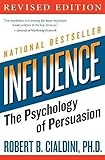
Robert Cialdini (born 1945) is the American social psychologist and author whose work on the science of influence and compliance has become some of the most widely read and most widely applied social science of the twentieth century. His landmark study Influence: The Psychology of Persuasion (1984), based on three years of participant observation in sales, marketing, and fundraising combined with decades of laboratory research, identified the universal principles underlying why people say yes. Cialdini is Regents’ Professor Emeritus of Psychology and Marketing at Arizona State University; his books have sold over twelve million copies worldwide and are foundational reading in marketing, business, law, medicine, and public policy.
Where to Start: Influence (1984/2021)
The essential Cialdini — and one of the most practically significant non-fiction books of the past fifty years. Influence identifies six universal principles that determine compliance: reciprocity (the obligation to return favours), commitment and consistency (the drive to behave consistently with prior positions), social proof (using others’ behaviour as a guide), authority (deference to credible experts), liking (persuasion by those we like), and scarcity (heightened value of rare things). The 2021 edition adds a seventh: unity, the principle that we are most influenced by those we perceive as part of our in-group — family, tribe, nation.
Cialdini’s methodology is unusual for social psychology: he spent three years working undercover in sales, advertising, and fundraising organisations to observe compliance techniques in the wild, then returned to the laboratory to test what he found. The result is a book that bridges scientific research and practical application in a way that most academic psychology does not.
The book is organised as a set of case studies for each principle — how it works, what the research shows, and how it is deployed by what Cialdini calls ‘compliance professionals’. Critically, each chapter also describes how to recognise and resist the principle when it is being used against you. Influence is both a manual and a defence.
Pre-Suasion (2016)
Cialdini’s second major book — an account of what happens in the moments before a persuasion attempt that determine whether it will succeed. The central argument: effective persuaders prime their audience by directing attention toward concepts that make their subsequent message more resonant. The moment immediately before a message is delivered is uniquely powerful; those who control that moment can dramatically increase the message’s effect without changing the message at all. A rigorous and counterintuitive extension of the Influence framework. Best read after Influence.
Why Influence Is the Ideal First Book
For a reader new to Robert Cialdini, Influence is the ideal and essential first book because it is his landmark work, one of the most important books ever written on the psychology of persuasion, and the fullest expression of his influential research. Influence presents Cialdini’s famous analysis of the principles of persuasion, the key psychological levers, such as reciprocity, scarcity, authority, and social proof, by which people are influenced to say yes, drawing on extensive research to explain how persuasion works and how to recognize and resist it. As an entry point, it is the essential and natural place to begin, for it is Cialdini’s landmark and defining work, the comprehensive and authoritative account of the principles of persuasion. It welcomes the newcomer with its fascinating subject, its clear principles, and its practical relevance, both for understanding how to influence others and for recognizing when one is being influenced. It is his most important book and the one that best represents his research, so that the new reader encounters Cialdini’s central principles directly. For the newcomer, then, Influence is the natural and ideal starting point.
What to Expect as a New Reader
As a new reader, you can expect Influence to be a fascinating, research-based, and practically valuable analysis of the psychology of persuasion. You can expect Cialdini’s famous principles, the key psychological levers by which people are influenced to comply and say yes, such as reciprocity, commitment and consistency, social proof, authority, liking, and scarcity. You can expect research-based insight, for Cialdini grounds his principles in extensive psychological research and vivid real-world examples, explaining how and why each principle works. You can expect practical relevance from two perspectives, both for understanding how to influence others ethically and for recognizing and resisting the persuasion techniques used on you. You can expect an engaging and accessible style that makes the psychology of persuasion both illuminating and useful. You can expect knowledge that applies widely, in business, marketing, relationships, and everyday life. Expect, in short, a fascinating, research-based, and practically valuable analysis of the psychology of persuasion, the essential introduction to Cialdini’s principles.
Going Deeper After Your First Book
Once Influence has introduced you to Cialdini’s principles of persuasion, the reader who wishes to go deeper can explore his other work, which extends his research into related dimensions of persuasion, particularly the crucial matter of the moment before a message is delivered. His subsequent work examines what he calls pre-suasion, the ways that the moment and context before a message can prime and prepare people to be persuaded, extending his research into a further dimension of influence. Reading this after Influence deepens your engagement with Cialdini’s distinctive research, the psychology of persuasion and the principles and techniques by which people are influenced. His characteristic combination of rigorous research and practical insight runs through his work, and the reader who has found Influence valuable will find the same illuminating analysis in his other writing. Building your reading journey through Cialdini’s work is a matter of following his research on persuasion from the foundational principles into the further dimension of pre-suasion. The reader who begins with Influence and continues through his work will find a consistently illuminating guide to the psychology of persuasion and how to recognize and resist it.
Reading Robert Cialdini
Begin with Influence — it is both the foundation and the most practically applicable of his work, and the 2021 revised edition is the definitive version. Read Pre-Suasion immediately after for the temporal dimension the earlier book doesn’t address. Cialdini’s work is best approached as a field guide to the psychology of everyday life rather than a business manual; the principles operate everywhere, all the time, on everyone.
Frequently Asked Questions
Where should I start with Robert Cialdini?
Influence: The Psychology of Persuasion (1984; revised 2021) is the only starting point — the book that established Cialdini as the world's leading authority on the science of compliance and made his work foundational reading in marketing, sales, negotiation, and social psychology. Influence identifies six (expanded to seven in the 2021 revision) universal principles that cause people to say yes — reciprocity, commitment and consistency, social proof, authority, liking, scarcity, and (new) unity. The framework is so widely taught and so empirically grounded that it has become the standard reference for anyone working in persuasion.
What are Cialdini's seven principles of influence?
Cialdini's seven principles of influence are: (1) Reciprocity — we feel obligated to return favours; (2) Commitment and Consistency — we want to behave consistently with our stated positions; (3) Social Proof — we look to others' behaviour to guide our own in uncertain situations; (4) Authority — we defer to credible experts; (5) Liking — we are more easily persuaded by people we like; (6) Scarcity — we value things more when they are rare or diminishing; and (7) Unity (added in the 2021 edition) — we are most influenced by those we consider part of our in-group. The principles are universal across cultures and contexts; Cialdini documents them with both laboratory research and field observation.
What is Pre-Suasion about?
Pre-Suasion (2016) addresses what happens before a persuasion attempt: how the framing, timing, and context established immediately before a message determine how it is received. Cialdini's core argument is that the most effective persuaders don't just craft better messages — they change the state of the audience before the message arrives, directing attention toward concepts that make their message more persuasive. Pre-Suasion is best read after Influence; it extends rather than replaces the earlier framework.
Are Cialdini's books suitable for non-business readers?
Cialdini's primary audience is professionals — salespeople, marketers, fundraisers, negotiators — but his books are explicitly written for a general audience and require no technical background. He frames the principles as both offensive (how to use them) and defensive (how to recognise and resist them when used on you), making the books valuable to anyone who wants to understand how influence works in everyday life. The 2021 revision of Influence is the definitive edition; it includes updated research and a new chapter on the Unity principle.