Where to Start with Richard Thaler: A Reading Guide
Where to start with Richard Thaler — how to approach Misbehaving, his inside account of how behavioral economics upended the rational-actor model that defines classical economics. A complete reading guide.
By Marcus Webb

Richard Thaler is an American economist and Professor at the University of Chicago Booth School of Business who received the Nobel Memorial Prize in Economic Sciences in 2017. He is widely regarded as one of the founding figures of behavioral economics — the field that incorporates psychological insights about how people actually make decisions into economic models that had previously assumed rational, utility-maximising behaviour. Misbehaving: The Making of Behavioral Economics (2015) was published by W. W. Norton and became an immediate bestseller, offering both an intellectual history of the field and a memoir of the career that built it.
Where to Start: Misbehaving (2015)
The essential Richard Thaler — and the best account of behavioral economics by the person most responsible for it. Misbehaving begins with the organising distinction that defined Thaler’s career: the difference between Econs — the perfectly rational, utility-maximising agents of classical economic theory — and Humans — the actual people who make decisions the theory says are impossible.
Classical economics is built on a model of human behaviour that is mathematically tractable and internally consistent: rational agents maximise their expected utility, update their beliefs according to probability theory, and make decisions that are independent of how options are framed. This model produces clean predictions and has produced useful tools. It also has a problem that Thaler spent his career documenting: people do not behave this way.
The anomalies are not random errors or edge cases but systematic, predictable, reproducible patterns that the rational model cannot explain:
Loss aversion: people are more sensitive to losses than to equivalent gains — the pain of losing $100 is felt more strongly than the pleasure of gaining $100, by a factor that research consistently measures at roughly 2 to 1. This is not rational by the model’s terms, but it is consistent and powerful, driving decisions from investment behaviour to contract negotiations.
Mental accounting: people treat money differently depending on its source, its label, or its perceived category. A tax refund is treated as found money and spent more freely than equivalent income; a gambling win is more likely to be reinvested than an equivalent salary; money in a “vacation fund” jar is not easily borrowed for rent even at zero interest. The theory says money is fungible; people behave as though it is not.
The endowment effect: once a person owns something, they value it more highly than they did before they owned it. People demand significantly more to sell a mug they have been given than they would pay to buy an identical mug. This is also not rational — ownership should not change the value of an object — but it is consistent and has substantial implications for negotiations, for public goods decisions, and for the design of default options.
Present bias: people systematically overweight present consumption relative to future consumption in ways that are inconsistent with their stated preferences. The person who sincerely intends to start saving next month never starts; the dieter who genuinely intends to eat well tomorrow eats the dessert today. Thaler’s early work on self-control — leading eventually to his development of mental accounts as commitment devices — provided the framework for understanding and addressing this pattern.
The book’s intellectual history is what distinguishes it from other behavioral economics texts. Thaler was present for many of the key conversations — his early work with Daniel Kahneman and Amos Tversky, the reception of behavioral economics by mainstream economic departments, the battles to get papers accepted in journals that reviewed them as categorically confused, the gradual turn of institutional consensus. The resistance from rational-choice economists was not merely academic disagreement; it was something closer to methodological warfare, and Thaler’s account of surviving it is genuinely engaging.
Why Misbehaving Is an Ideal First Book
For a reader new to Richard Thaler, the Nobel Prize-winning economist, Misbehaving is an ideal first book because it is among his most engaging works and a fine expression of his distinctive contribution, the founding and championing of behavioral economics, the study of how real people actually behave. Misbehaving tells the story of the rise of behavioral economics, blending Thaler’s own intellectual journey with an accessible account of the ideas that challenged the assumption that people are perfectly rational. As an entry point it is ideal, for it is one of his most engaging books and a clear, personal introduction to behavioral economics. It welcomes the newcomer with its engaging story, its accessible ideas, and its wit, drawing the reader into the world of behavioral economics. It is among his major works and a fine representation of his thinking, so the new reader encounters Thaler at his most characteristic. For the newcomer, then, Misbehaving is an excellent starting point.
What to Expect as a New Reader
As a new reader, you can expect Misbehaving to be an engaging, accessible, and witty account of behavioral economics. You can expect a central subject, behavioral economics, the study of how real people, who are not perfectly rational, actually behave. You can expect a personal narrative, for Thaler tells the story of the rise of the field through his own intellectual journey. You can expect accessible ideas, for Thaler explains the insights of behavioral economics, the biases and quirks that shape our decisions, in clear, engaging terms. You can expect wit and good humor, for Thaler writes with a light, entertaining touch. You can expect insight into economics, psychology, and decision-making. You can expect a blend of memoir and ideas. Expect, in short, an engaging, accessible, and witty account of behavioral economics, a fine introduction to Thaler’s contribution.
Going Deeper After Your First Book
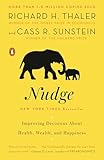
Once Misbehaving has introduced you to Thaler’s contribution, the reader who wishes to go deeper can explore his other work and the wider literature of behavioral economics and decision-making. His influential book written with Cass Sunstein explores how the design of choices, what they call choice architecture, can nudge people toward better decisions, applying behavioral insights to policy and life. The broad field of behavioral economics and the psychology of decision-making, including the work of the psychologists who inspired Thaler, offers many further perspectives the reader is well prepared to explore. Reading more widely deepens your engagement with Thaler’s distinctive contribution, the study of how real people behave. His characteristic insight runs through his work, and the reader who has enjoyed Misbehaving will find it across the field. Building your reading journey from Misbehaving is a matter of following its ideas into his other work and the wider behavioral-economics literature. The reader who begins here will have an engaging foundation in behavioral economics.
Reading Richard Thaler
Misbehaving is Thaler’s essential solo book. It stands alone and requires no prior economics background.
For the full Richard Thaler bibliography, reviews, and biography, visit the Richard Thaler author page on Editors Reads.
Affiliate disclosure: Links to Amazon on this page are affiliate links. We earn a small commission at no extra cost to you.
Frequently Asked Questions
Where should I start with Richard Thaler?
Misbehaving: The Making of Behavioral Economics (2015) is Thaler's essential solo book — an intellectual memoir and history of the field he helped create, written with self-deprecating wit by the economist whose decades of work documenting the gap between how people are supposed to behave and how they actually do earned him the 2017 Nobel Prize in Economics. The best account of behavioral economics by the person most responsible for it.
What is Misbehaving about?
Misbehaving tells the inside story of behavioral economics from its origins as a heterodox challenge to classical economic theory through its eventual recognition by the Nobel committee. Thaler describes the development of the field's key concepts — loss aversion, mental accounting, the endowment effect, present bias — through the research that established each one, the institutional resistance from mainstream economists, and the eventual application of behavioral insights to real-world policy through nudge theory and choice architecture.
How does Misbehaving differ from Nudge, which Thaler co-authored with Cass Sunstein?
Nudge is a policy and application book — it describes how choice architecture can improve real-world decisions and argues for libertarian paternalism as a governing philosophy. Misbehaving is the intellectual history behind it: the research, the arguments, the academic battles, and the biographical journey that produced the ideas Nudge applies. Misbehaving contains more depth on the academic foundations; Nudge contains more practical policy applications. Both are accessible and work well as companions.
What should I read after Misbehaving?
After Misbehaving, Nudge by Thaler and Cass Sunstein provides the policy applications of the behavioral insights described in Misbehaving — the practical framework built on the academic foundation. Daniel Kahneman's Thinking, Fast and Slow provides the cognitive science foundation that underlies behavioral economics — the two-system model of thinking that explains why people make the predictably irrational choices that Thaler spent his career documenting.