Where to Start with Philip Tetlock: A Reading Guide
Where to start with Philip Tetlock — how to approach Superforecasting, his account of the ordinary people who consistently outperform intelligence analysts at prediction. A complete reading guide.
By Lena Fischer
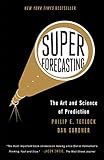
Philip E. Tetlock (born 1954) is an American psychologist at the University of Pennsylvania who has spent decades studying expert prediction and political judgment. His first major work, Expert Political Judgment (2005), established one of the most inconvenient findings in social science: that expert forecasters — political scientists, economists, intelligence analysts — are on average barely more accurate than chance at predicting complex world events, and that the experts with the highest public profiles and most confident communication styles are often the least accurate. Superforecasting: The Art and Science of Prediction (2015), co-written with science journalist Dan Gardner, reports on what he discovered when he ran the largest forecasting study in history and found the people who were actually good at it.
Where to Start: Superforecasting (2015)
The essential Philip Tetlock — and one of the most practically important books in applied epistemology of the past twenty years. Superforecasting begins by summarising the uncomfortable finding of Tetlock’s earlier research: when political scientists, economists, and intelligence analysts make predictions about complex world events, they perform no better than chance on average — and the experts who appear most often on television and in government briefings, the ones with the most confident grand theories, are systematically worse than the more cautious, uncertain, foxlike thinkers.
The Good Judgement Project is what came next. Tetlock ran a massive forecasting tournament in which thousands of volunteers competed over several years to make accurate probabilistic predictions about geopolitical events — elections, conflicts, economic indicators — against a common set of questions with verifiable outcomes. The striking finding: a small subset of volunteers, whom Tetlock called superforecasters, consistently outperformed intelligence analysts with access to classified information. These were not especially educated or credentialed people. They were exceptional thinkers.
The characteristics of superforecasters are the book’s practical core. They are intellectually humble — they begin from the recognition that they might be wrong, rather than from the assumption that their current model is correct. They think in probabilities: instead of “I think this will happen,” they say “I think there’s a 65% chance this will happen,” and they track those percentages against outcomes over many predictions to measure their calibration. They actively seek disconfirming evidence — information that might make them less confident — rather than confirming evidence that reinforces what they already believe. And they update their forecasts promptly when new information arrives, without treating the update as an admission of failure.
The fox and hedgehog distinction — drawn from Isaiah Berlin’s famous essay on Tolstoy — is the book’s most vivid conceptual frame. Hedgehogs know one big thing deeply: they have a grand unified theory of the world and process information through it. Foxes know many things: they draw on multiple frameworks and hold their current beliefs with appropriate uncertainty. The hedgehog experts Tetlock studied were more coherent and more compelling to media and governments. They were worse forecasters. The foxes — less certain, less quotable, more willing to say “it depends” — were better.
The outside view is the single most actionable practice in the book. Before reasoning from the specifics of a situation, ask: what is the base rate? How often does this type of event occur? This reference-class reasoning — starting with the statistical frequency of similar events before adding case-specific information — systematically outperforms the intuitive tendency to treat every situation as unique. Superforecasters start from the outside view and update toward the inside view; most experts do the reverse.
Why Superforecasting Is the Ideal First Book
For a reader new to Philip Tetlock, Superforecasting is the ideal first book because it is his most popular and accessible work and the fullest expression of his distinctive contribution, the science of prediction and what makes some people remarkably good at it. Superforecasting, written with Dan Gardner, draws on Tetlock’s research to show that forecasting is a skill that can be studied and improved, identifying the habits of mind that distinguish the best forecasters. As an entry point it is ideal, for it is his best-known book and a clear statement of the ideas for which he is known. It welcomes the newcomer with its fascinating subject, its research-grounded insights, and its accessible style, drawing the reader into the science of prediction and good judgment. It is among his major works and a fine representation of his thinking, so the new reader encounters Tetlock’s research directly. For the newcomer interested in forecasting and judgment, then, Superforecasting is the natural and ideal starting point.
What to Expect as a New Reader
As a new reader, you can expect Superforecasting to be a fascinating, research-grounded, and accessible book about the science of prediction. You can expect a central finding, that forecasting is a skill that can be studied, measured, and improved, not a mysterious gift. You can expect the idea of superforecasters, the ordinary people who prove remarkably accurate at predicting world events. You can expect the habits of mind that distinguish them, including open-mindedness, careful probabilistic thinking, and willingness to update beliefs. You can expect grounding in research, for the book draws on Tetlock’s large-scale forecasting studies. You can expect practical lessons for thinking and predicting better. You can expect a clear, engaging style. Expect, in short, a fascinating, research-grounded, and accessible book about the science of prediction, a fine introduction to Tetlock’s work.
Going Deeper After Your First Book
Once Superforecasting has introduced you to Tetlock’s work, the reader who wishes to go deeper can explore his other writing and the wider literature on judgment, decision-making, and prediction to which his research belongs. His earlier, more academic work on expert political judgment lays the research foundations for Superforecasting, examining how poorly many experts actually predict, while the broad field of writing on judgment, probability, and decision-making, including the work of the psychologists who shaped it, offers many further perspectives the reader is well prepared to explore. Reading more widely deepens your engagement with Tetlock’s distinctive contribution, the science of prediction and good judgment. His characteristic emphasis on measurable, improvable forecasting runs through his work. Building your reading journey from Superforecasting is a matter of following its ideas into his earlier work and the wider literature on judgment and decision-making. The reader who begins here will have a research-grounded foundation for thinking about prediction and good judgment.
Reading Philip Tetlock
Superforecasting is Tetlock’s essential book for general readers. Expert Political Judgment (2005) is his earlier, more academic work for readers who want the full research foundation.
For the full Philip Tetlock bibliography, reviews, and biography, visit the Philip Tetlock author page on Editors Reads.
Affiliate disclosure: Links to Amazon on this page are affiliate links. We earn a small commission at no extra cost to you.
Frequently Asked Questions
Where should I start with Philip Tetlock?
Superforecasting: The Art and Science of Prediction (2015), co-written with Dan Gardner, is Tetlock's essential book for general readers — a report on the Good Judgement Project, a massive forecasting tournament in which ordinary volunteers consistently outperformed professional intelligence analysts with access to classified information. The book explains what superforecasters do differently and provides a practical framework for improving prediction accuracy that applies to any domain requiring judgement under uncertainty.
What is Superforecasting about?
Superforecasting reports on Tetlock's follow-up to his earlier research showing that expert forecasters are, on average, barely better than chance. In the Good Judgement Project, Tetlock ran a forecasting tournament with thousands of volunteers and found that a subset — superforecasters — consistently outperformed professionals. What distinguished them was not credentials but thinking habits: intellectual humility, probabilistic thinking (expressing beliefs as percentages rather than directional claims), active search for disconfirming evidence, willingness to update beliefs promptly, and use of base rates (the outside view) before case-specific reasoning.
Is Superforecasting only relevant to political or geopolitical forecasting?
No — the framework applies to any domain requiring prediction under uncertainty. The specific examples are geopolitical because that is what the Good Judgement Project measured, but the thinking habits Tetlock identifies (calibrated uncertainty, outside view reasoning, belief updating, fox vs. hedgehog cognitive style) are directly applicable to business forecasting, strategic planning, hiring decisions, product launches, and personal decisions. The most useful habit the book teaches is expressing predictions as specific probabilities rather than directional assertions, which enables tracking and improving accuracy over time.
What should I read after Superforecasting?
After Superforecasting, Annie Duke's Thinking in Bets applies similar probabilistic thinking specifically to decision-making — the complementary skill to forecasting. Daniel Kahneman's Thinking, Fast and Slow is the foundational academic account of the cognitive biases that Tetlock's superforecasters systematically overcome. Kahneman's later Noise covers the problem of judgment variability in organisational contexts, with Tetlock's framework as background context.