Where to Start with Peter Thiel: A Reading Guide
Where to start with Peter Thiel — how to approach Zero to One, his contrarian framework for building startups that create genuine value rather than copying what already works. A complete reading guide.
By Marcus Webb
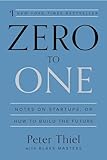
Peter Thiel is an American entrepreneur, venture capitalist, and co-founder of PayPal who made the first outside investment in Facebook and is widely regarded as one of the most influential figures in Silicon Valley. Zero to One: Notes on Startups, or How to Build the Future (2014) was assembled by Blake Masters from notes he took during Thiel’s Stanford University class on startups and published by Crown Business. It became one of the bestselling business books of the decade and the most widely read text in startup culture after The Lean Startup.
Where to Start: Zero to One (2014)
The essential Peter Thiel — and one of the most intellectually distinctive business books of the past decade. Zero to One opens with a question that Thiel used to open his Stanford class: what important truth do few people agree with you on? Most people, he notes, struggle to answer it. They give responses that are not actually controversial — “our education system is failing” — or that are merely their preferred side of a known debate. A genuine answer to the question requires thinking for yourself rather than adopting and defending a consensus position.
This question is not rhetorical throat-clearing. It is the book’s central thesis: the people and companies that create genuine value are those who see something that others have not yet seen. The company built on a genuinely contrarian insight — one that turns out to be right — creates something new. The company built on consensus assumptions creates something similar to what already exists.
The 0 to 1 / 1 to n distinction names this difference. Copying something that works, improving it, distributing it more efficiently — this is horizontal progress, going from 1 to n. It is valuable but not transformative. Creating something that did not previously exist — a new technology, a new market, a new paradigm — is vertical progress, going from 0 to 1. The companies that change the world operate vertically. Most businesses operate horizontally.
Competition is for losers is the book’s most provocative claim. MBA education celebrates competitive markets; economists describe perfect competition as efficient and desirable; conventional wisdom treats market competition as healthy. Thiel inverts this: perfect competition drives margins to zero and makes every player miserable. Airlines serve billions of people and collectively barely break even; Google has operated as a near-monopoly for two decades and earns extraordinary returns.
The lesson Thiel draws is not that companies should pursue anti-competitive behaviour but that the goal of starting a company should be to create something so much better at something specific that competition becomes secondary. This requires starting small — finding a market you can genuinely dominate rather than entering a large market where you will be one of many — and then expanding from that monopoly position. Amazon began with books. Facebook began with Harvard. PayPal began with eBay power sellers who needed a way to accept digital payments quickly.
The secret is Thiel’s most generative concept. Every great business is built on a belief about the world that most people do not yet hold — a truth that is not yet obvious. PayPal’s secret was that people would trust digital money. Airbnb’s secret was that people would pay to stay in strangers’ homes. These ideas looked crazy until they looked inevitable. The question Thiel challenges every founder to answer honestly is: what is the secret this business is built on? If the honest answer is “nothing” — if the business is simply a better version of something that already exists in a crowded market — there may not be a genuine business.
The seven questions framework at the book’s close is its most compact practical tool: what engineering advantage does the company have; what is the timing; what is the monopoly position; what is the quality of the team; what is the distribution plan; what is the durability; and what is the secret? Companies that cannot answer all seven have gaps in their thesis.
Zero to One is deliberately provocative. Some arguments overstate their case; the Silicon Valley perspective is inescapable; and Thiel’s own history makes some of the prescriptions require evaluation rather than adoption. But the core ideas — on competition, monopoly, secrets, and the nature of genuine value creation — are among the most clarifying in the startup literature.
Why Zero to One Is the Ideal First Book
For a reader new to Peter Thiel, Zero to One is the ideal first book because it is his best-known work and the fullest expression of his distinctive, contrarian thinking on startups, innovation, and building the future. Zero to One, based on his lectures and written with Blake Masters, presents Thiel’s provocative ideas about how to build valuable new companies, arguing that true progress comes from creating something genuinely new, going from zero to one, rather than copying what works. As an entry point it is ideal, for it is his defining book and a clear statement of his contrarian ideas. It welcomes the newcomer with its provocative arguments, its memorable ideas, and its accessible style, drawing the reader into his thinking on startups and innovation. Readers will encounter a strong, contrarian point of view, and are wise to engage thoughtfully. It is his most important book, so the new reader encounters Thiel’s ideas directly. For the newcomer interested in startups and innovation, then, Zero to One is the natural and ideal starting point.
What to Expect as a New Reader
As a new reader, you can expect Zero to One to be a provocative, contrarian, and idea-rich book about startups and innovation. You can expect a central idea, that true progress comes from creating something genuinely new, going from zero to one, rather than copying or incrementally improving what exists. You can expect contrarian thinking, for Thiel delights in challenging conventional wisdom about competition, monopoly, and the future. You can expect memorable ideas about building valuable companies, including his thoughts on monopoly, secrets, and the importance of a bold vision. You can expect an accessible, aphoristic style drawn from his lectures. You can expect a strong, opinionated point of view, which the thoughtful reader weighs critically. You can expect a focus on ambition, innovation, and building the future. Expect, in short, a provocative, contrarian, and idea-rich book about startups and innovation, a fine introduction to Thiel’s thinking.
Going Deeper After Your First Book
Once Zero to One has introduced you to Thiel’s thinking, the reader who wishes to go deeper can carry its ideas into the wider literature of startups, innovation, and business strategy to which it contributes, while continuing to read critically. Since Zero to One is his central book, the natural next step is outward, into the broad field of writing on startups, innovation, and building companies, where the reader can compare Thiel’s contrarian ideas with other perspectives and weigh which apply. The reader can also engage thoughtfully with the wider conversation about and around Thiel, a prominent and at times controversial figure, from a range of viewpoints. Reading more widely deepens your engagement with the questions about innovation and building the future that his book raises. His characteristic contrarian thinking points toward a rich and debated field. Building your reading journey from Zero to One is a matter of carrying its ideas into the wider startup and innovation literature. The reader who begins here will have encountered a provocative and influential set of ideas about startups and innovation.
Reading Peter Thiel
Zero to One is Thiel’s essential and most widely read book. It stands alone and requires no prior business or startup knowledge.
For the full Peter Thiel bibliography, reviews, and biography, visit the Peter Thiel author page on Editors Reads.
Affiliate disclosure: Links to Amazon on this page are affiliate links. We earn a small commission at no extra cost to you.
Frequently Asked Questions
Where should I start with Peter Thiel?
Zero to One: Notes on Startups, or How to Build the Future (2014) is Thiel's essential book — a contrarian framework for building startups assembled from his Stanford course notes by Blake Masters. At 224 pages with no filler, it is one of the most intellectually dense business books of the past decade, built around the central distinction between horizontal progress (copying what works) and vertical progress (creating something genuinely new). Essential for founders, investors, and anyone building something in technology.
What is Zero to One about?
Zero to One argues that genuine progress requires creating something new — going from 0 to 1 — rather than copying what already exists, which is merely going from 1 to n. The book builds a framework around this distinction: competition is for losers (monopolies outperform); every great business is built on a secret (an important truth most people don't yet believe); the best startups begin with a small monopoly and expand; and founders must be able to answer what important truth few people agree with them on. Deliberately provocative and worth engaging with critically.
Is Zero to One's argument that competition is bad?
Thiel's argument is more specific: competition in perfect markets drives returns to zero, while monopoly positions — companies so much better at something that competition becomes irrelevant — generate the margins that allow investment and long-term planning. The lesson is not to pursue anti-competitive behaviour but to choose markets where your product creates enough distinctive value that competition becomes secondary. Amazon, Google, and Facebook all began with small, defensible monopoly positions before expanding.
What should I read after Zero to One?
After Zero to One, Ben Horowitz's The Hard Thing About Hard Things covers the operational reality of building startups that Zero to One describes at the strategic level — how to manage people, make impossible decisions, and survive as a founder. Eric Ries's The Lean Startup provides a methodology for the early-stage discovery process that happens before the monopoly position described in Zero to One is achieved. Phil Knight's Shoe Dog provides the narrative version of what the contrarian approach looks like over decades.