Where to Start with Percival Everett: A Reading Guide
Where to start with Percival Everett — whether to begin with James, Erasure, or The Trees. A complete reading guide to the Pulitzer Prize-winning American novelist.
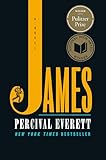
Percival Everett (born 1956) is the American novelist whose James (2024) — a reimagining of Adventures of Huckleberry Finn from the perspective of the enslaved man Jim — won both the Pulitzer Prize for Fiction and the Booker Prize, making him at once the most acclaimed literary author in the United States and an international figure. Everett had been writing and publishing serious, formally diverse literary fiction since 1983 without achieving mainstream recognition; his late career breakthrough demonstrates both the quality of his work and the lag with which literary institutions sometimes discover it. His fiction is characterised by formal intelligence, satirical wit, and a consistent preoccupation with American race, identity, and the construction of Black selfhood in a culture that reduces it.
Where to Start: James (2024)
The essential Everett — and the novel that brought him to a mass audience after four decades of serious literary work. Mark Twain’s Adventures of Huckleberry Finn is one of the canonical American novels; it is also a novel in which the Black character Jim — whose desire for freedom drives the plot — barely speaks and is largely an object of the narrative rather than a subject. Everett asks: what does this story look like from inside Jim’s consciousness?
Jim speaks in dialect to white people because he has been taught that white people are frightened by the intelligence of enslaved men. When Jim is alone with other enslaved people, or in his own thoughts, he speaks and reasons with full sophistication. The novel follows the river journey of the original book while completely transforming its moral centre: this is not a story about a white boy’s growth, but about a Black man’s profound, dangerous, and ultimately triumphant assertion of his own humanity.
The novel is also formally inventive: Everett engages with the philosophical questions of language, performance, and identity that the premise opens — what it means to have a private language and a public one, and how that split constitutes both a survival strategy and a kind of violence. James won the Pulitzer Prize and the Booker Prize in 2024.
Erasure (2001)
Everett’s satirical masterwork — a furious, funny examination of what the publishing industry demands from Black writers. Thelonious Monk Ellison writes serious literary fiction that is ignored; when he writes a parody of the degrading stereotype he’s been told is what Black readers want, it becomes a phenomenon. One of the most precise examinations of racial capitalism in the literary world ever written.
The Trees (2021)
Everett’s genre-subversion novel — a satirical horror thriller in which white men in Mississippi begin dying in ways that echo the murder of Emmett Till. Darkly funny and genuinely disturbing; his most explicit engagement with American racial violence and its impossibility of resolution.
I Am Not Sidney Poitier (2009)
A comic novel about a man literally named Not Sidney Poitier who is the spitting image of Sidney Poitier and keeps accidentally replicating scenes from his films. Everett’s most purely playful work; an excellent introduction to his satirical register.
Why James Is the Ideal First Book
For a reader new to Percival Everett, James is the ideal first book because it is among his most acclaimed and widely read novels and a fine expression of his distinctive gifts, the sharp intelligence, the formal daring, and the powerful, often satirical engagement with race and American history. James retells the story of Mark Twain’s Adventures of Huckleberry Finn from the perspective of Jim, the enslaved man, reclaiming his voice, his intelligence, and his humanity in a brilliant and moving reimagining. As an entry point it is ideal, for it is one of his most celebrated and accessible novels and a perfect example of his inventive, intelligent, and incisive fiction. It welcomes the newcomer with its compelling premise, its powerful voice, and its blend of intelligence, humor, and feeling, drawing the reader into his distinctive vision. It is among his most famous works and a fine representation of his gifts, so the new reader encounters Everett at his most characteristic. For the newcomer, then, James is an excellent starting point.
What to Expect as a New Reader
As a new reader, you can expect James to be an intelligent, inventive, and powerful reimagining of a classic. You can expect a bold premise, for the novel retells the story of Huckleberry Finn from the perspective of Jim, the enslaved man, reclaiming his voice and humanity. You can expect a powerful central voice, for Everett gives James intelligence, interiority, and agency long denied the character. You can expect sharp intelligence and wit, for Everett brings irony, humor, and incisive thought to his engagement with race and American history. You can expect emotional and moral power, for the novel is moving as well as clever. You can expect formal daring and a fresh angle on a familiar story. You should be prepared for the brutal realities of slavery, handled with seriousness. Expect, in short, an intelligent, inventive, and powerful reimagining of a classic, a superb introduction to Everett’s gifts.
Going Deeper After Your First Book
Once James has introduced you to Everett’s gifts, the reader who wishes to go deeper can explore his large, varied, and inventive body of work, which ranges widely in form and subject while remaining marked by his intelligence, his formal daring, and his incisive engagement with race and American life. His other acclaimed novels include sharp satires of the literary and academic worlds, genre-bending experiments, and powerful, often darkly comic explorations of race, identity, and violence in America. Reading these after James deepens your appreciation of Everett’s distinctive gifts, the sharp intelligence, the formal inventiveness, and the powerful engagement with race and history. His characteristic qualities run through his prolific and varied work. Building your reading journey through Everett is a matter of following his fiction from James into his other novels. The reader who begins here and continues will find one of the most inventive, intelligent, and acclaimed novelists in contemporary American literature.
Reading Percival Everett
Begin with James — it is his most accessible and most fully realised novel, and the best demonstration of what makes his fiction exceptional. Read Erasure for his satirical mode; The Trees for his genre-subversion work. All his books are standalone.
For the full Percival Everett bibliography, reviews, and biography, visit the Percival Everett author page on Editors Reads.
Affiliate disclosure: Links to Amazon on this page are affiliate links. We earn a small commission at no extra cost to you.
Frequently Asked Questions
Where should I start with Percival Everett?
James (2024) is the most widely recommended starting point — Everett's retelling of Adventures of Huckleberry Finn from the perspective of Jim, the enslaved man, revealing what Twain's classic looks like when its silent centre finally speaks. James won the Pulitzer Prize for Fiction and the Booker Prize, became an international bestseller, and is the most accessible demonstration of Everett's method: using literary-historical material as a vehicle for examining American race and identity with precision and wit. Erasure is the alternative for readers who want his earlier satirical mode.
What is Erasure about?
Erasure (2001) is Everett's satirical novel about Thelonious Monk Ellison, a serious literary novelist who is ignored by publishers because his work is 'too white' — not sufficiently Black in the way the market wants Black fiction to be. In desperation, he writes a parody of a stereotypical 'street fiction' novel he considers degrading; it immediately becomes a bestseller. Erasure is a furious, funny, and precise examination of the publishing industry's construction of Black identity and what it demands from Black writers.
What is The Trees about?
The Trees (2021) is a satirical horror novel — in a small Mississippi town, white men begin turning up dead with a Black man's corpse beside them, seemingly echoing the murder of Emmett Till. A novel about American racial violence and the ghosts it creates, written in a genre-pastiche mode that makes the horror both funny and genuinely disturbing. Everett uses the structure of a detective thriller to examine the impossibility of justice for racial crimes in America.
What distinguishes Everett's style?
Everett is a formally diverse writer whose work spans literary realism, satire, genre pastiche, and experimental fiction. His consistent concerns are American race, identity, the relationship between Black writers and their market, and the philosophical questions of language and consciousness. He writes with wit and economy; his novels are typically short and dense rather than expansive. James is his most recent and accessible book; Erasure shows his earlier satirical mode; The Trees demonstrates his genre-subversion approach.


