Where to Start with Paulo Coelho: A Reading Guide
Where to start with Paulo Coelho — whether to begin with The Alchemist, Veronika Decides to Die, or By the River Piedra I Sat Down and Wept. A complete reading guide.
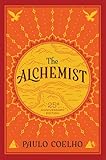
Paulo Coelho (born 1947) is the Brazilian novelist whose works — translated into more than eighty languages and sold in more than 150 countries — have made him one of the bestselling authors in the history of publishing. The Alchemist alone has sold more than 65 million copies. His fiction belongs to a distinctive tradition: philosophical allegory rendered in accessible, parable-like prose, preoccupied with questions of spiritual purpose, personal destiny, and the cost of choosing safety over authentic living. His novels have been dismissed as self-help dressed in fictional clothing and celebrated as modern wisdom literature; they occupy a unique space in world literature, appealing to readers across languages, cultures, and backgrounds in a way that few contemporary authors have achieved.
Where to Start: The Alchemist (1988)
The essential Paulo Coelho — and one of the most widely read novels ever written. Santiago, a young shepherd from Andalusia, has a recurring dream of treasure buried near the Egyptian pyramids. He sells his flock, crosses into Africa, travels through Tangier and across the Sahara, and follows a series of guides and omens toward the alchemist who may teach him to transform lead into gold. The real transformation, of course, is Santiago himself.
The novel is structured as a fable: the prose is plain and the symbols are transparent, and Coelho’s thesis — that the universe conspires to help those who follow their ‘Personal Legend,’ their unique calling — is stated explicitly as often as it is dramatised. The result is a book that works differently for different readers: some find its optimism naïve, others find it liberating. As an introduction to Coelho’s characteristic blend of spiritual philosophy and accessible storytelling, nothing else compares.
Veronika Decides to Die (1998)
Coelho’s most psychologically grounded novel — set in Villete, a psychiatric clinic in Ljubljana where Veronika, a twenty-four-year-old woman, has been admitted after a suicide attempt. She is told that she has only a few days to live due to heart damage from the overdose. Rather than spending those days in fear, she begins — for the first time — to live as she actually wants.
The novel is less allegorical than The Alchemist and more interested in the specific psychology of why people choose safety over authentic existence. The patients Veronika meets in the clinic are people who have been labelled mad for refusing the terms their world offers them; the clinic itself becomes an image of a society that pathologises deviation from norm. Coelho’s most readable novel for readers who prefer their philosophy embedded in realistic situation.
By the River Piedra I Sat Down and Wept (1994)
The first book of Coelho’s loosely connected ‘On the Seventh Day’ trilogy — narrated by Pilar, a Spanish woman who reconnects with a childhood friend who has become a charismatic spiritual teacher and who may be capable of performing miracles. The novel follows their journey through the Pyrenees and Pilar’s struggle between the ordered life she has built and the passionate, uncertain life that following him would require.
It is Coelho’s most explicitly romantic novel — the love story at the centre is intense and its emotional stakes are high — and the one that engages most directly with questions of faith, femininity, and the sacred feminine tradition in Catholicism. Less allegorical than The Alchemist; more emotionally direct.
Eleven Minutes (2003)
Coelho’s most controversial novel — following Maria, a young Brazilian woman who travels to Geneva on the promise of a modelling career and finds herself working as a prostitute. The novel traces her years in Geneva, her growing understanding of the economics of desire, and her eventual encounter with a painter who disrupts her plans. The title refers to the duration of physical intercourse — the novel’s argument that sex without love is not enough is made with Coelho’s characteristic directness.
His most commercial and most accessible novel after The Alchemist; somewhat more explicit and more directly contemporary in its concerns than his earlier work.
The Zahir (2005)
A more personal novel — narrated by a successful novelist whose wife, a war correspondent named Esther, has disappeared without explanation. The ‘zahir’ of the title is a concept from Borges and from Islamic mysticism: an object or person so obsessively present in the mind that it crowds everything else out. The narrator’s search for Esther becomes a meditation on obsessive love, on what marriage requires, and on the difference between possession and genuine connection.
Coelho’s most autobiographical novel and his most meditative; longer and less tightly plotted than The Alchemist but containing some of his finest writing about love and loss.
Why The Alchemist Is the Ideal First Book
For a reader new to Paulo Coelho, The Alchemist is the ideal first book because it is his most famous and beloved work, one of the best-selling books of all time, and the fullest expression of his distinctive gifts, the simple, fable-like storytelling, the inspirational message, and the engagement with dreams, destiny, and the search for meaning. The Alchemist follows a young shepherd’s journey in pursuit of a treasure and his dream, learning along the way to follow his heart and his personal legend, in a simple, allegorical, and inspirational tale. As an entry point it is ideal, for it is his best-known book and a perfect example of his simple, fable-like, inspirational fiction. It welcomes the newcomer with its simple storytelling, its inspirational message, and its allegorical depth, drawing the reader into his distinctive vision. It is his most famous work and the one that best represents his gifts, so the new reader encounters Coelho at his most characteristic. For the newcomer, then, The Alchemist is the natural and ideal starting point.
What to Expect as a New Reader
As a new reader, you can expect The Alchemist to be a simple, allegorical, and inspirational tale. You can expect simple, fable-like storytelling, for Coelho writes in a clear, simple, parable-like style. You can expect an inspirational message, for the book is designed to inspire and encourage the reader to follow their dreams. You can expect a journey, for the novel follows a young shepherd’s pursuit of a treasure and his dream. You can expect engagement with dreams, destiny, and meaning, for the book explores following one’s heart and personal legend. You can expect allegory and gentle wisdom rather than complex realism. You can expect a short, accessible, and uplifting read. You can expect a book that has inspired millions of readers around the world. Expect, in short, a simple, allegorical, and inspirational tale, a fine introduction to Coelho’s gifts.
Going Deeper After Your First Book
Once The Alchemist has introduced you to Coelho’s gifts, the reader who wishes to go deeper can explore his other books, which continue his simple, fable-like storytelling, his inspirational message, and his engagement with dreams, spirituality, and the search for meaning. His many novels explore spiritual journeys, love, faith, and self-discovery, often through allegory and parable, each marked by his accessible, inspirational style. Reading these after The Alchemist deepens your appreciation of Coelho’s distinctive gifts, the simple, fable-like storytelling, the inspirational message, and the engagement with dreams, destiny, and meaning. His characteristic style runs through his work, and the reader who has connected with The Alchemist will find it across his books. Building your reading journey through Coelho is a matter of following his fiction from The Alchemist into his other novels. The reader who begins here and continues will find one of the most popular and inspirational storytellers in the world to follow.
Reading Paulo Coelho
Coelho’s fiction is unified by a consistent philosophical argument: that each person has a ‘Personal Legend’ — a unique purpose or calling — and that the primary obstacle to fulfilling it is not circumstance but fear. His prose is deliberately simple, his symbols are transparent, and his plots are allegorical rather than realistic. These qualities are both his strength (his universality, his accessibility across cultures) and what makes him a divisive literary figure. Begin with The Alchemist for the most essential and the most celebrated; read Veronika Decides to Die for the most psychologically specific; approach By the River Piedra for the most directly romantic.
Frequently Asked Questions
Where should I start with Paulo Coelho?
The Alchemist (1988, English translation 1993) is the essential starting point — the novel that made Coelho one of the bestselling novelists in history. Santiago, an Andalusian shepherd boy, follows a recurring dream across the desert to Egypt, encountering a series of guides who teach him to read omens and listen to his heart. It is Coelho's most economical, most emblematic, and most widely translated novel — an extended fable about following one's 'Personal Legend' that has resonated with millions of readers. Veronika Decides to Die is the best alternative for readers who want Coelho in a more psychologically grounded register.
What is The Alchemist about?
The Alchemist (1988) follows Santiago, a young shepherd from Andalusia, who has a recurring dream of treasure hidden at the foot of the Egyptian pyramids. He sells his flock and travels across the Strait of Gibraltar, through the markets of Tangier, across the Sahara to an oasis, and finally into the desert in search of an alchemist who can teach him the secrets of transformation. The novel is an allegorical fable about pursuing one's 'Personal Legend' — the unique purpose that each person is born to fulfil — and about the way the universe conspires to help those who follow their calling. It is the kind of book that different readers take differently: some find it profoundly inspiring, others find its philosophy too simple; almost all find it compelling.
What is Veronika Decides to Die about?
Veronika Decides to Die (1998) is set in a psychiatric clinic in Ljubljana, Slovenia, and follows Veronika, a twenty-four-year-old who attempts suicide and, surviving, is told she has only days to live due to heart damage. The novel traces her days in the clinic and her encounters with the other patients, one of whom is destroying his recovery by choice. It is Coelho's most psychologically specific novel — less allegorical than The Alchemist, more grounded in questions of sanity, conformity, and what it means to live the life one actually wants rather than the life one is expected to live.
Are Paulo Coelho's novels connected?
Paulo Coelho's novels are standalone — each tells a complete story with its own characters and setting, and they can be read in any order. Some share thematic preoccupations (the importance of following one's Personal Legend, the language of omens and signs, love as a transformative force, the tension between security and adventure), but no character recurs across books. The Alchemist, Veronika Decides to Die, and By the River Piedra I Sat Down and Wept are his three most celebrated and most accessible novels; Eleven Minutes and The Zahir are longer and more varied in tone.