Where to Start with Paul Auster: A Reading Guide
Where to start with Paul Auster — whether to begin with The New York Trilogy, Moon Palace, or Oracle Night. A complete reading guide to Auster's postmodern fiction.

Paul Auster (1947–2024) was one of the most significant American postmodern novelists — a writer whose New York Trilogy brought European existentialist and metafictional techniques to the American detective novel tradition and created some of the most formally innovative fiction in American literature of the 1980s. His characteristic subjects — identity, chance, coincidence, the storytelling impulse, New York City — recur across more than twenty novels and established him as one of the most consistent and original American voices of his generation.
Where to Start: The New York Trilogy (1987)
The essential Auster — and the work that established his international reputation. Three novellas united by their use of the detective story as a formal frame and their investigation of what happens when you follow someone else so closely that you lose yourself. City of Glass is the finest of the three; Ghosts is the most stripped down; The Locked Room is the most personal. Together they constitute one of the most ambitious and successful attempts in American literature to use genre fiction as a vehicle for genuinely philosophical investigation.
Read as a trilogy for the full experience; begin with City of Glass alone if you want to test whether Auster’s sensibility works for you.
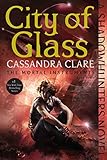
City of Glass (1985)
The first and finest of The New York Trilogy novellas — entirely readable as a standalone. Daniel Quinn, a writer of detective fiction, receives a midnight phone call for a private detective named Paul Auster. On impulse, he takes the case: he is to follow Peter Stillman, who has spent nine years in prison after locking his son in a dark room to test whether language could be unlearned. Stillman walks through Manhattan in patterns that Quinn begins to map and interpret, becoming so absorbed in the case that his own life gradually dissolves.
The novel is Auster’s most concentrated achievement: a detective story in which the investigation leads nowhere that detective stories are supposed to lead, and a meditation on identity, obsession, and the relationship between the observer and the observed.
Moon Palace (1989)
Auster’s most accessible and most emotionally satisfying novel — a picaresque following Marco Stanley Fogg from his arrival at Columbia University through the loss of everything he has, his rescue, and his involvement with an old man named Thomas Effing whose past is connected to Marco’s in ways neither initially understands. The novel is structured around coincidence and inheritance — the way lives echo each other across generations — and it is warmer and more conventionally novelistic than the Trilogy. The best entry point for readers who find the Trilogy’s postmodern framework initially off-putting.
Oracle Night (2003)
One of Auster’s later, more personal novels — set in Brooklyn, where a writer recovering from a serious illness buys a blue Portuguese notebook and finds himself writing a story that begins to feel dangerously real. The novel-within-the-novel, the writer’s relationship with his wife, and the story of a mysterious Polish notebook manufacturer weave together in ways that are characteristically Austerian: coincidence, the power of stories to shape reality, the unstable boundary between fiction and life. More intimate and emotionally direct than his earlier work.
Why The New York Trilogy Is the Ideal First Book
For a reader new to Paul Auster, The New York Trilogy is the ideal first book because it is his breakthrough work and the fullest expression of his distinctive gifts, the inventive, metafictional play, the existential depth, and the haunting reinvention of the detective story. The New York Trilogy gathers three interconnected stories that take the form of detective fiction but spiral into meditations on identity, language, chance, and the search for meaning. As an entry point it is ideal, for it is his best-known work and a perfect example of his cerebral, inventive, and existential fiction. It welcomes the newcomer with its compelling, mysterious surface, its inventive play, and its existential depth, drawing the reader into his distinctive vision. It is among his major works and the one that best represents his gifts, so the new reader encounters Auster at his most characteristic. For the newcomer, then, The New York Trilogy is the natural and ideal starting point.
What to Expect as a New Reader
As a new reader, you can expect The New York Trilogy to be an inventive, cerebral, and existential reinvention of the detective story. You can expect three interconnected stories, each taking the form of detective fiction. You can expect metafictional play, for Auster plays with the conventions of the detective story, with identity, authorship, and the act of writing. You can expect existential depth, for the stories spiral into meditations on identity, language, chance, isolation, and the search for meaning. You can expect a compelling, mysterious surface that draws the reader in even as it subverts expectations. You can expect spare, controlled prose and an atmosphere of unease and obsession. You should expect a novel that withholds the resolutions a conventional mystery would offer. Expect, in short, an inventive, cerebral, and existential reinvention of the detective story, a striking introduction to Auster’s gifts.
Going Deeper After Your First Book
Once The New York Trilogy has introduced you to Auster’s gifts, the reader who wishes to go deeper can explore his many other novels, which continue his inventive play, his existential depth, and his fascination with chance, identity, and storytelling. His other acclaimed works explore coincidence, fate, and the lives of his characters with the same blend of compelling narrative and philosophical depth, often turning on chance encounters and the mysteries of identity, while his memoirs reveal the personal sources of his preoccupations. Reading these after The New York Trilogy deepens your appreciation of Auster’s distinctive gifts, the inventive metafiction, the existential depth, and the fascination with chance and identity. His characteristic concerns run through his work. Building your reading journey through Auster is a matter of following his fiction from The New York Trilogy into his other novels and memoirs. The reader who begins here and continues will find one of the most inventive and cerebral of contemporary American novelists.
Reading Paul Auster
Auster’s characteristic pleasures are formal: the way he deploys coincidence as a structural principle, the way his characters become obsessed with stories or investigations that consume them, and the way New York City functions as a labyrinthine space in which identity can be lost and found. Begin with City of Glass for the most concentrated formal experience; with Moon Palace for the most conventionally novelistic; with the full Trilogy for the most ambitious. His fiction rewards readers who are interested in what fiction does and how it does it as much as in what it says.
Frequently Asked Questions
Where should I start with Paul Auster?
The New York Trilogy (1987) — comprising City of Glass, Ghosts, and The Locked Room — is the essential starting point and Auster's most widely read work. It takes the detective novel format and strips it of its satisfying resolutions, creating a trio of mystery stories in which the investigators gradually lose themselves in their investigations. City of Glass is the best of the three and can be read independently. Moon Palace is the best alternative for readers who prefer a more conventional narrative structure with Auster's characteristic metafictional touches.
What is The New York Trilogy about?
The New York Trilogy consists of three novellas: City of Glass (1985), in which a mystery novelist mistakenly receives a call meant for a private detective and begins playing one, tracking a sinister man through Manhattan; Ghosts (1986), a stripped-down detective story in which a detective named Blue is hired to watch a man named Black; and The Locked Room (1986), in which a man tries to account for a missing writer. All three use the detective story as a vehicle for exploring identity, surveillance, and the impossibility of truly knowing another person. They can be read independently or as a trilogy.
What is City of Glass about?
City of Glass (1985), the first and best of The New York Trilogy, follows Daniel Quinn, a writer of detective novels under a pseudonym, who receives a late-night phone call from someone asking for a detective named Paul Auster. Quinn, on an impulse, takes on the case: he is to follow Peter Stillman Sr., a man just released from nine years in prison after locking his son in a dark room for years to test whether he could develop a prelapsarian language. As Quinn follows Stillman through Manhattan, he becomes increasingly absorbed in the case and increasingly unsure of his own identity. A masterpiece of postmodern fiction.
What is Moon Palace about?
Moon Palace (1989) follows Marco Stanley Fogg, a young man who arrives in New York to attend Columbia University and gradually loses everything — his inheritance, his apartment, his sanity — before being rescued and involved in a complex, multigenerational story involving an old man named Effing, his wheelchair, and a secret history connecting three generations of American men. The novel is Auster's most conventionally novelistic and his most emotionally accessible — a picaresque about coincidence, inheritance, and what we receive from and owe to those who came before us.