Where to Start with Patrick Radden Keefe: A Reading Guide
Where to start with Patrick Radden Keefe — whether to begin with Say Nothing, Empire of Pain, or Rogues. A complete reading guide to the narrative non-fiction journalist.
By Natalie Osei

Patrick Radden Keefe (born 1976) is the American journalist and staff writer at The New Yorker whose long-form investigations — collected in books including Say Nothing (2019) and Empire of Pain (2021) — have established him as the finest narrative non-fiction writer of his generation. Keefe’s work combines years of meticulous reporting with the structural instincts of a thriller writer; his subjects range from the Northern Ireland Troubles to the opioid epidemic to the criminal underground of the art world and the drug trade. He writes about power and its abuses with a moral clarity that never becomes simplistic — his books make complex histories comprehensible through intimate individual stories and create an understanding of institutional evil that systemic analysis alone cannot achieve.
Where to Start: Say Nothing (2019)
The essential Keefe — and the book that most clearly demonstrates why he has been described as the best long-form journalist working today. On 27 December 1972, Jean McConville, a widowed mother of ten, was dragged from her Belfast home by members of the IRA and never seen alive again. Her children were not told what had happened to her for decades.
Keefe uses McConville’s disappearance as the thread that draws together a comprehensive account of the Troubles — told primarily through the lives of Dolours Price, an IRA operative involved in some of the conflict’s most significant operations, and Brendan Hughes, another IRA commander. The book is about violence and its long aftermath: how the people who committed it aged, how they justified it to themselves, and how the peace that eventually came to Northern Ireland required a particular collective forgetting that some survivors found impossible to accept.
Keefe renders the moral complexity of the conflict without false equivalence. His portrait of Price — idealistic, brutal, eventually broken — is one of the finest character studies in recent non-fiction. The book reads with the pace of a thriller because the story it tells is genuinely gripping; it achieves the effect while grounding every detail in documented fact.
Empire of Pain (2021)
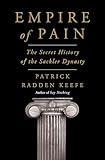
Keefe’s most expansive book — a multi-generational history of the Sackler family and their role in the opioid epidemic. Beginning with Arthur Sackler’s revolutionary approach to pharmaceutical marketing in the 1950s and tracing the family through the development and aggressive promotion of OxyContin, Keefe shows how a dynasty built its respectability through philanthropy while its business practices helped create the worst public health crisis in American history. Required reading for understanding American healthcare, pharmaceutical regulation, and the relationship between wealth and institutional accountability.
Rogues (2022)
Keefe’s collection of New Yorker pieces — an ideal sampler of his range and method. The subjects include a Burgundy wine fraud that fooled the most knowledgeable collectors in the world, a woman who became the cartel hitwoman for El Chapo, and a private investigator who worked both sides of corporate intelligence. Every piece demonstrates the signature Keefe combination: intimate access, structural elegance, and moral intelligence.
Why Say Nothing Is the Ideal First Book
For a reader new to Patrick Radden Keefe, Say Nothing is the ideal first book because it is among his most acclaimed works and the fullest expression of his distinctive gifts, the deep reporting, the gripping narrative, and the illumination of large subjects through individual human stories. Say Nothing tells the story of the Troubles in Northern Ireland through a notorious disappearance and the lives caught up in the conflict, weaving meticulous reporting into a propulsive, novelistic narrative. As an entry point it is ideal, for it is one of his most celebrated books and a perfect example of his masterful narrative nonfiction. It welcomes the newcomer with its gripping story, its deep reporting, and its emotional and moral depth, drawing the reader into one of the finest works of recent narrative nonfiction. It is among his most famous works and a fine representation of his gifts, so the new reader encounters Keefe at his most characteristic. For the newcomer, then, Say Nothing is the natural and ideal starting point.
What to Expect as a New Reader
As a new reader, you can expect Say Nothing to be a gripping, deeply reported, and novelistic work of narrative nonfiction. You can expect deep reporting, for Keefe grounds his book in extensive research, interviews, and investigation. You can expect a gripping narrative, for he tells the story with the momentum, tension, and structure of a novel. You can expect illumination of a large subject through individual lives, for Keefe explores the Troubles in Northern Ireland through a notorious disappearance and the people caught up in the conflict. You can expect emotional and moral depth, for the book confronts violence, loyalty, memory, and the long aftermath of conflict. You can expect vivid characters and a powerful sense of place and history. You should be prepared for some difficult and violent material. Expect, in short, a gripping, deeply reported, and novelistic work of narrative nonfiction, a superb introduction to Keefe’s gifts.
Going Deeper After Your First Book
Once Say Nothing has introduced you to Keefe’s gifts, the reader who wishes to go deeper can explore his other books and writing, which continue his deep reporting, his gripping narrative, and his illumination of large subjects through individual stories. His acclaimed book on a pharmaceutical dynasty and its role in the opioid crisis applies the same masterful reporting and storytelling to a different American tragedy, while his collection of long-form pieces showcases the range of his reporting on crime, power, and human character. Reading these after Say Nothing deepens your appreciation of Keefe’s distinctive gifts, the deep reporting, the gripping narrative, and the human illumination of large subjects. His characteristic strengths run through his work, and the reader gripped by Say Nothing will find them across it. Building your reading journey through Keefe is a matter of following his narrative nonfiction from Say Nothing into his other books. The reader who begins here and continues will find one of the finest narrative-nonfiction writers working today.
Reading Patrick Radden Keefe
Begin with Say Nothing — it is his masterwork and the most complete demonstration of his method. Read Empire of Pain for his most ambitious reporting; Rogues to sample his journalism in its original magazine form. All three can be read in any order, though Say Nothing first gives the richest appreciation of what makes his work exceptional.
For the full Patrick Radden Keefe bibliography, reviews, and biography, visit the Patrick Radden Keefe author page on Editors Reads.
Affiliate disclosure: Links to Amazon on this page are affiliate links. We earn a small commission at no extra cost to you.
Frequently Asked Questions
Where should I start with Patrick Radden Keefe?
Say Nothing: A True Story of Murder and Memory in Northern Ireland (2019) is the essential starting point — Keefe's account of the Troubles, told through the abduction and murder of Jean McConville in 1972 and the lives of the IRA members involved, is the finest work of narrative non-fiction published in the last decade. It combines meticulous reporting, human intimacy, and historical scope in a book that reads with the tension of a thriller. Empire of Pain is the alternative for readers more interested in corporate and institutional accountability.
What is Empire of Pain about?
Empire of Pain: The Secret History of the Sackler Dynasty (2021) is Keefe's most ambitious book — a multi-generational history of the Sackler family, the pharmaceutical dynasty that built its fortune through OxyContin and whose aggressive marketing helped create the American opioid epidemic. Keefe traces the family from its origins to the present, showing how respectability and philanthropy were systematically used to obscure accountability. Longer and more complex than Say Nothing; among the most important works of American investigative journalism of recent years.
What is Rogues about?
Rogues: True Stories of Grifters, Killers, Rebels and Crooks (2022) is a collection of long-form journalism from The New Yorker — pieces on a wine fraud artist, a drug lord's hitwoman, a whistleblower, a con artist, and other people who exist outside or at the edges of the law. Each piece demonstrates Keefe's signature ability to earn trust from difficult subjects and translate their inner lives to the page. An excellent entry point for readers who want to sample his voice before committing to a full book.
What makes Keefe's journalism distinctive?
Keefe's defining quality is his combination of impeccable reporting (he has spent years on single subjects) and a novelistic instinct for scene, character, and narrative structure. He is particularly skilled at humanising people involved in terrible events without excusing them — his subjects are simultaneously comprehensible as human beings and fully accountable for what they did. He writes about power, crime, and institutions with a moral intelligence that never becomes moralising.