Where to Start with Neal Stephenson: A Reading Guide
Where to start with Neal Stephenson — whether to begin with Snow Crash, Cryptonomicon, or Seveneves. A complete reading guide to the cyberpunk and speculative fiction novelist.
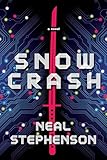
Neal Stephenson (born 1959) is the American speculative fiction novelist whose work — beginning with the cyberpunk satire Snow Crash (1992) — established him as one of the most original and most intellectually ambitious fiction writers of the past thirty years. His novels engage with cryptography, nanotechnology, baroque mathematics, quantum mechanics, linguistics, and the history of science, presented in a fiction that moves between thriller momentum and scholarly density. Stephenson coined the term ‘metaverse’ in Snow Crash; his novel Cryptonomicon influenced the development of cryptocurrency; The Diamond Age anticipated many features of contemporary e-learning. He is among the most widely read serious science fiction writers working today.
Where to Start: Snow Crash (1992)
The essential Stephenson — and one of the foundational texts of cyberpunk fiction. Set in a near-future America where the federal government has effectively dissolved and the country is governed by private franchise-states (the Mafia runs the best pizza delivery service), Snow Crash follows Hiro Protagonist — freelance hacker, pizza delivery driver, and one of the best swordfighters in the metaverse — as he investigates a new drug-cum-computer-virus called Snow Crash that infects both virtual reality avatars and human brains.
The novel is propulsive, satirical, and wildly inventive. Stephenson’s America is an extrapolation of late-1980s cultural logic carried to absurdist extremes; the metaverse (a shared virtual reality he invented for this novel) is described in operational detail that reads as eerily prescient. The Snow Crash virus connects to a theory about the neurological basis of ancient Sumerian religion that is either brilliantly inventive or completely unhinged — and Stephenson makes it work as thriller.
Snow Crash is Stephenson at his most entertaining and most readable. It moves fast, it’s funny, and it contains more interesting ideas per chapter than most novels contain in their entirety.
Cryptonomicon (1999)
Stephenson’s most widely loved novel — a 900-page dual-timeline thriller about World War II codebreaking and 1990s internet cryptography. The WWII strand follows Lawrence Waterhouse, a mathematical genius working with Alan Turing’s team to exploit German naval codes; the contemporary strand follows his grandson Randy Waterhouse and a group of internet entrepreneurs establishing a data haven in the Philippines. The two timelines are connected by a buried cache of gold, a mystery, and the mathematics of secrecy.
Cryptonomicon is richer and more emotionally satisfying than Snow Crash; the characters are more developed, the historical research is extraordinary, and the engagement with actual cryptographic mathematics (including a genuine cryptographic protocol in an appendix) gives the novel intellectual depth that most thrillers don’t reach. The length requires patience — but Stephenson earns it.
The Diamond Age (1995)
Stephenson’s most emotionally affecting early novel — set in a near-future of nanotechnology and neo-Victorian social hierarchy, following a Shanghai girl named Nell whose life is transformed by an interactive book (the Young Lady’s Illustrated Primer) designed to educate an aristocrat’s daughter. The novel explores how technology shapes — and fails to shape — human development. Less propulsive than Snow Crash but more moving; the relationship between Nell and her Primer is among the more interesting parent-child relationships in contemporary fiction.
Seveneves (2015)
Stephenson’s most scientifically rigorous novel — and one of the most demanding. When the moon is destroyed, humanity has two years to prepare for a catastrophic bombardment that will sterilise the Earth’s surface. The first two-thirds of the novel are a detailed, technically rigorous account of what survival in space would actually require; the final third jumps 5,000 years forward to show what the surviving descendants of a seven-woman population rebuilt. Seveneves requires patience for the technical density but rewards it with genuine intellectual force.
Anathem (2008)
Stephenson’s most philosophically ambitious novel — set on a world whose academics are cloistered in monasteries called ‘maths’, separated from secular society, engaging in mathematics and philosophy across centuries. The novel is a sustained inquiry into Platonic philosophy, quantum mechanics, and the nature of consciousness, disguised as speculative fiction. Stephenson invents an entire parallel vocabulary (new words for familiar concepts that force the reader to think without prior associations). Demanding, brilliant, and best approached after the earlier novels.
Why Snow Crash Is an Ideal First Book
For a reader new to Neal Stephenson, Snow Crash is an ideal first book because it is among his most famous and accessible novels and a fine expression of his distinctive gifts, the dazzling inventiveness, the intellectual energy, and the blend of cyberpunk, satire, and big ideas. Snow Crash is set in a wild near-future of corporate enclaves and a virtual world called the Metaverse, and follows a hacker and pizza-delivering samurai drawn into a strange and dangerous conspiracy, in an inventive, fast-paced, idea-packed novel. As an entry point it is ideal, for it is among his most accessible and energetic works and a perfect example of his inventive, intellectually playful science fiction. It welcomes the newcomer with its dazzling invention, its energy, and its big ideas, drawing the reader into his distinctive vision. It is among his major works and a fine representation of his gifts, so the new reader encounters Stephenson at his most characteristic. For the newcomer, then, Snow Crash is an excellent starting point.
What to Expect as a New Reader
As a new reader, you can expect Snow Crash to be a dazzling, energetic, and idea-packed work of science fiction. You can expect dazzling inventiveness, for Stephenson overflows with inventive ideas, including his famous early vision of a virtual world, the Metaverse. You can expect intellectual energy, for the novel is packed with ideas about language, religion, technology, and society. You can expect a blend of cyberpunk and satire, for the novel is both a wild cyberpunk adventure and a sharp, often funny satire of its near-future world. You can expect a fast-paced, propulsive plot, following a hacker and pizza-delivering samurai into a strange conspiracy. You can expect a maximalist, exuberant, and entertaining style. You can expect big ideas delivered with energy and wit. Expect, in short, a dazzling, energetic, and idea-packed work of science fiction, a fine introduction to Stephenson’s gifts.
Going Deeper After Your First Book
Once Snow Crash has introduced you to Stephenson’s gifts, the reader who wishes to go deeper can explore his other novels, which continue his dazzling inventiveness, his intellectual energy, and his ambitious blend of story and ideas, often on a vast scale. His acclaimed works range across a sweeping novel of cryptography and code, a vast historical trilogy of science and finance, and ambitious novels of technology, society, and the future, each marked by his inventiveness, his intellectual ambition, and his sometimes immense scope. Reading these after Snow Crash deepens your appreciation of Stephenson’s distinctive gifts, the dazzling inventiveness, the intellectual energy, and the blend of story and big ideas. His characteristic ambition runs through his work, though some of it is very long and demanding. Building your reading journey through Stephenson is a matter of following his fiction from Snow Crash into his other novels. The reader who begins here and continues will find one of the most inventive and intellectually ambitious writers in contemporary science fiction to follow.
Reading Neal Stephenson
Begin with Snow Crash for the most accessible and most entertaining entry point; read Cryptonomicon as the natural second step. The Diamond Age is the best follow-up for readers who want something more emotionally grounded. Seveneves and Anathem are for committed readers who want Stephenson at his most technically ambitious. All his books reward patience — he writes long because he thinks long.
Frequently Asked Questions
Where should I start with Neal Stephenson?
Snow Crash (1992) is the most widely recommended starting point — a propulsive, satirical cyberpunk novel set in a near-future America where the United States has fragmented into private franchise-states and the most dangerous weapon is a computer virus that also infects human brains. Snow Crash introduced the concept of the metaverse (the word was coined here) and remains the most accessible entry point into Stephenson's fiction. For readers who want something more immediately grounded in contemporary technology, Cryptonomicon (1999) is the alternative: a dual-timeline thriller about WWII codebreaking and 1990s internet cryptography.
What is Cryptonomicon about?
Cryptonomicon (1999) alternates between two timelines: 1940s codebreakers working on Axis naval communications (including a fictionalised Alan Turing), and 1990s internet entrepreneurs trying to establish a data haven in Southeast Asia. The novel is deeply engaged with the history and mathematics of cryptography; Stephenson includes actual cryptographic content. At 900 pages, it is one of the most ambitious techno-thrillers ever written. Many readers consider it Stephenson's best work; it is best read after Snow Crash.
What is The Diamond Age about?
The Diamond Age (1995) is set in a near-future world of nanotechnology and neo-Victorian social structures, following a young girl in Shanghai who acquires an interactive book — the Primer — designed to raise a young aristocrat but instead found by a girl from the lower class. The novel explores how technology shapes human development and the limits of programmed education. It is somewhat slower than Snow Crash and more concerned with social structures; many readers consider it Stephenson's most emotionally resonant early work.
How long are Stephenson's books?
Stephenson is known for extremely long novels. Snow Crash (440 pages) is among his shortest; Cryptonomicon (900 pages), The Baroque Cycle (three volumes totalling 2,700 pages), Anathem (937 pages), Seveneves (880 pages), and Fall (880 pages) are all substantial undertakings. Stephenson's length is a feature rather than a flaw — his novels are exploratory, digressive, and intellectually dense, built around ideas rather than plot efficiency. Readers who want shorter, faster fiction should begin with Snow Crash and assess their appetite before committing to the longer works.