Where to Start with Nassim Nicholas Taleb: A Reading Guide
Where to start with Nassim Nicholas Taleb — whether to begin with The Black Swan, Antifragile, or Fooled by Randomness. A complete reading guide to the Incerto.
Nassim Nicholas Taleb (born 1960) is the Lebanese-American essayist, former derivatives trader, and mathematical statistician who — with The Black Swan (2007) — produced one of the most cited and most influential works of popular philosophy of the twenty-first century. His five-book Incerto series addresses the human relationship with uncertainty, probability, and rare events, arguing that our models and institutions are systematically fragile because they are optimised for normal conditions and blind to extreme events. He is a Distinguished Professor of Risk Engineering at New York University and a provocateur in the tradition of intellectual combat.
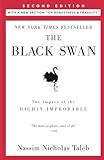
Where to Start: The Black Swan (2007)
The essential Taleb — and the most widely read starting point. A Black Swan is an event characterised by three attributes: it is an outlier (outside normal expectations), it has extreme impact, and after the fact, humans construct explanations that make it seem predictable in retrospect. Taleb argues that history is made not by the normal distribution of events but by rare, extreme events that our models exclude by definition — the First World War, the rise of Hitler, the internet, 9/11, the 2008 financial crisis — and that human beings are systematically prone to ignoring them.
The argument operates at several levels. Psychologically: we are wired to ignore evidence that doesn’t fit our existing models (the Narrative Fallacy) and to explain randomness as causation (the Ludic Fallacy). Epistemologically: we cannot learn from history because history is the record of survivors, not of those who failed (the Turkey Problem — the turkey who receives food every day from the farmer concludes the farmer is benevolent; just before Thanksgiving). Economically: financial models based on the normal distribution catastrophically underestimate extreme risk.
Taleb’s style is unusual for popular philosophy: combative, anecdote-rich, frequently personal in its contempt for specific intellectual targets. Readers who find this engaging will discover a genuinely original thinker; readers who find intellectual arrogance difficult may struggle with the tone.
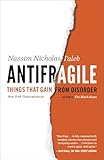
Antifragile (2012)
Taleb’s most constructive book — and the one that develops the full positive argument the Black Swan implies. Taleb defines three categories of response to volatility: fragile (damaged by shocks), robust (survives shocks unchanged), and antifragile (improves from shocks). Antifragility is his prescriptive response to the world described in The Black Swan: instead of trying to predict extreme events, build systems that benefit from them. The argument is applied to biology, finance, personal life, politics, and technology. His most practically useful book.
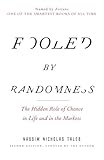
Fooled by Randomness (2001)
Taleb’s first major book — less polished than The Black Swan but the origin of many of its central ideas. The argument: successful people who attribute their success to skill rather than luck are being fooled by randomness. The financial markets provide the clearest examples, but the argument applies to any domain where outcomes are partially determined by chance. Best read after The Black Swan.
Skin in the Game (2018)
The fourth Incerto — an argument that ethical and intellectual responsibility requires having something to lose from the outcomes of your recommendations. Doctors, bankers, and consultants who give advice without consequences for being wrong systematically produce worse outcomes than those who bear risk themselves. The principle that those who benefit from upside should also bear downside is applied across multiple domains. His most directly political book.
Why The Black Swan Is the Ideal First Book
For a reader new to Nassim Nicholas Taleb, The Black Swan is the ideal first book because it is his most famous and influential work and a full expression of his distinctive thinking about uncertainty, randomness, and the limits of prediction. The Black Swan argues that rare, unpredictable, high-impact events, which he calls black swans, shape history far more than we acknowledge, and that we systematically underestimate them and overestimate our ability to predict. As an entry point it is ideal, for it is his best-known book and a clear statement of the influential ideas for which he is known. It welcomes the newcomer with its provocative central idea, its wide-ranging argument, and its distinctive voice, drawing the reader into his way of thinking about uncertainty. Readers will encounter a strong, opinionated, sometimes combative style, and are wise to engage thoughtfully. It is among his major works and a fine representation of his thinking, so the new reader encounters Taleb directly. For the newcomer, then, The Black Swan is an excellent starting point.
What to Expect as a New Reader
As a new reader, you can expect The Black Swan to be a provocative, wide-ranging, and opinionated book about uncertainty and prediction. You can expect a central idea, that rare, unpredictable, high-impact events, black swans, shape history far more than we acknowledge. You can expect a critique of prediction, for Taleb argues that we systematically underestimate these events and overestimate our ability to forecast. You can expect wide-ranging argument, drawing on philosophy, history, finance, and probability. You can expect a distinctive, opinionated, and sometimes combative voice. You can expect practical implications for how to think about risk and uncertainty. You can expect challenging, stimulating ideas that the thoughtful reader weighs critically. You can expect a digressive, idiosyncratic style. Expect, in short, a provocative, wide-ranging, and opinionated book about uncertainty and prediction, a fine introduction to Taleb’s thinking.
Going Deeper After Your First Book
Once The Black Swan has introduced you to Taleb’s thinking, the reader who wishes to go deeper can explore his other books, which together form his multi-volume work on uncertainty, risk, and how to live with them. His earlier book explores the role of chance and our tendency to mistake luck for skill, while his later works develop his ideas on robustness and gaining from disorder, and on having a stake in the outcomes of one’s decisions, each in his distinctive, opinionated style. Reading these after The Black Swan deepens your engagement with Taleb’s distinctive thinking about uncertainty, randomness, and risk. His characteristic ideas and voice run through his work, which the thoughtful reader engages critically. Building your reading journey through Taleb is a matter of following his thought from The Black Swan across his multi-volume work on uncertainty. The reader who begins here and continues will encounter one of the most provocative and influential contemporary thinkers on risk and uncertainty.
Reading Nassim Nicholas Taleb
Begin with The Black Swan for the central argument in its most accessible form; read Antifragile immediately after for the constructive response. The Incerto reads as a single sustained argument across five books, but each can be read independently. Approach Taleb’s style — combative, digressive, contemptuous of conventional wisdom — as part of his argument that comfortable consensus is precisely the problem.
Frequently Asked Questions
Where should I start with Nassim Nicholas Taleb?
The Black Swan (2007) is the most widely recommended starting point — Taleb's account of rare, high-impact, unpredictable events (Black Swans) and the ways human cognition systematically fails to account for them. The argument that extreme events in history, finance, and personal life are far more likely and far more consequential than our models suggest has been enormously influential. Antifragile is the best follow-up — Taleb's most constructive and most positively argued book, about how to build systems that benefit from volatility rather than merely surviving it.
What is the Incerto?
The Incerto is Taleb's collective name for his five books on uncertainty, probability, and the human relationship to randomness: Fooled by Randomness, The Black Swan, The Bed of Procrustes (aphorisms), Antifragile, and Skin in the Game. Each book can be read independently, though they form a coherent philosophical argument across their full arc. The central thesis: human beings systematically underestimate the role of randomness and rare events in life and markets, overestimate their ability to predict the future, and build systems optimised for normal conditions that are catastrophically fragile when extremes occur.
What is the difference between The Black Swan and Antifragile?
The Black Swan is primarily critical — it demonstrates how human cognition fails to account for rare events, how our models systematically exclude outliers, and how history is made by the events we didn't predict. Antifragile is constructive — it argues that instead of simply trying to be robust (surviving shocks) or resilient (recovering from them), we should build systems that actively benefit from disorder and volatility. Antifragile is Taleb's most practically actionable book; The Black Swan is his most widely read and most cited. Both are essential to the full argument.
Is Taleb's writing difficult to read?
Taleb writes in an unusual style: combative, personal, rich with literary and philosophical references, and frequently digressive. He writes with considerable intellectual arrogance and is openly contemptuous of academic economists, journalists, and other targets he refers to as 'empty suits' or 'fragilistas'. Readers who find this style engaging will find his books among the most stimulating non-fiction available; readers who find it irritating may struggle with the tone. The intellectual content is accessible without technical background in probability theory; the specific arguments are stated clearly enough that non-specialists can follow them.