Where to Start with Miguel de Cervantes: A Reading Guide
Where to start with Miguel de Cervantes — how to approach Don Quixote, the first modern novel and the founding text of the Western literary tradition. A complete reading guide.
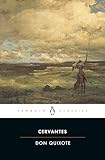
Miguel de Cervantes (1547–1616) was a Spanish novelist, poet, and playwright whose life was defined by adventure and misfortune: he was wounded at the Battle of Lepanto, captured by Barbary pirates, held as a slave in Algiers for five years, and imprisoned twice in Spain for financial irregularities. He began writing Don Quixote in prison. Part I was published in 1605 and became an immediate success across Europe; Part II followed in 1615, the year before Cervantes’s death. Shakespeare died on the same date — April 23, 1616 — as Cervantes, by the different calendar systems then in use.
Where to Start: Don Quixote (1605/1615)
The essential Miguel de Cervantes — and the founding text of the Western novel. Don Quixote was born as satire and became something much larger: the book that taught every subsequent novelist what a novel could do. Cervantes set out to mock the chivalric romances that were the popular fiction of his day — the endless tales of knights-errant, enchanted castles, and noble ladies in distress — by imagining a reader so addicted to them that he became one. What he produced was the first sustained exploration of what it means to live inside a fiction, and the first serious treatment of the gap between imagination and reality as a subject worthy of literary attention.
Alonso Quijano — who renames himself Don Quixote of La Mancha, takes up rusted armour, and sets out on his old horse Rocinante to right wrongs across the plains of Castile — is simultaneously ridiculous and magnificent. He tilts at windmills believing them giants; he mistakes inns for castles and flocks of sheep for armies; he pursues a peasant girl he has transformed in his imagination into the peerless noblewoman Dulcinea del Toboso. He is beaten, humiliated, and made miserable by the gap between the world he inhabits and the world that actually exists. And none of it touches his dignity, because within the fiction he has chosen — or that has chosen him — his actions are entirely coherent and genuinely heroic.
Sancho Panza is the other half of what the book is doing. The fat, practical, proverb-reciting peasant who follows Don Quixote for promised rewards is not simply comic counterpoint — he is the philosophical opposite who gradually becomes something more than opposite. Sancho believes and does not believe simultaneously. He knows his master is mad; he also finds himself, against all evidence and self-interest, infected by the vision. The Quixote-Sancho relationship is the prototype of every odd couple in subsequent literature, but it is also a dialogue about the claims of imagination and reality on a human life — conducted in slapstick and proverbs.
Part II (1615) is, separately, one of the great achievements in literary history. Between the two parts, a writer using the pseudonym Alonso Fernández de Avellaneda published a spurious continuation of Part I. Cervantes incorporated this into his own continuation: in the real Part II, characters have read Part I. They know who Don Quixote is; they have opinions about the book; they stage situations for him, having a theatrical nobleman entertain him with scenarios from chivalric romance. The knight moves through a world that has been shaped by his fictional existence — anticipating metafiction, the novel-about-the-novel, and postmodernist self-consciousness by three and a half centuries.
The ending is the book’s most desolating moment. On his deathbed, Don Quixote recovers his sanity. Alonso Quijano returns from the knight’s long adventure and renounces the chivalric romances that created him. The recovery of reason is also the loss of everything that made his life significant. Cervantes, who had invented the novel as a critique of fiction, ends by suggesting that the fiction was the most real thing in it.
Why Don Quixote Is the Essential First Book
For a reader new to Miguel de Cervantes, Don Quixote is the essential first book because it is his masterpiece, often called the first modern novel and one of the greatest works in all of literature, and the fullest expression of his distinctive gifts, the rich comedy, the deep humanity, and the inexhaustible inventiveness. Don Quixote follows an aging gentleman who, his mind addled by tales of chivalry, sets out as a knight-errant with his earthy squire Sancho Panza, in a vast, comic, and profound adventure. As an entry point it is both natural and essential, for it is his defining work and the foundation of his immortal reputation. It welcomes the newcomer with its rich comedy, its beloved characters, and its profound humanity, drawing the reader into one of the supreme achievements of world literature. It is his masterpiece, so the new reader encounters Cervantes at his finest. For the newcomer, then, Don Quixote is the natural and essential starting point, ideally in a good modern translation.
What to Expect as a New Reader
As a new reader, you can expect Don Quixote to be a rich, comic, and profoundly human masterpiece. You can expect rich comedy, for the novel is full of humor, absurdity, and delight, as the deluded knight mistakes windmills for giants and inns for castles. You can expect beloved characters, for the idealistic Don Quixote and his earthy, loyal squire Sancho Panza are among the most beloved in all literature. You can expect deep humanity, for beneath the comedy lies profound feeling, pathos, and insight into idealism and reality. You can expect inexhaustible inventiveness, for the vast novel overflows with stories, characters, and incident. You can expect the foundations of the modern novel. You should expect a long, episodic masterpiece, ideally in a good modern translation. Expect, in short, a rich, comic, and profoundly human masterpiece, the essential introduction to Cervantes.
Going Deeper After Your First Book
Once Don Quixote has introduced you to Cervantes’s gifts, the reader who wishes to go deeper can explore his other works, which reveal further dimensions of his genius beyond his immortal masterpiece. His collection of exemplary novels gathers shorter fiction that displays his storytelling range, his humor, and his humanity, while his other writings reflect the breadth of his literary career. The reader can also place Don Quixote in the context of its time and of the literary tradition it founded, deepening appreciation of its originality and influence. Reading more widely deepens your appreciation of Cervantes’s distinctive gifts, the rich comedy, the deep humanity, and the inexhaustible inventiveness. His characteristic genius runs above all through Don Quixote. Building your reading journey through Cervantes is a matter of following him from Don Quixote into his shorter fiction. The reader who begins here will have encountered one of the supreme achievements of world literature and the foundational figure of the modern novel.
Reading Miguel de Cervantes
Don Quixote is Cervantes’s essential and only major novel. It is strongly recommended to read it in a modern translation — Edith Grossman’s (2003) is the most widely praised.
For the full Miguel de Cervantes bibliography, reviews, and biography, visit the Miguel de Cervantes author page on Editors Reads.
Affiliate disclosure: Links to Amazon on this page are affiliate links. We earn a small commission at no extra cost to you.
Frequently Asked Questions
Where should I start with Miguel de Cervantes?
Don Quixote (1605/1615) is Cervantes's essential work — the first modern novel and still one of the greatest. Published in two parts a decade apart, it follows the deluded knight Alonso Quijano (who believes himself the knight-errant Don Quixote) and his earthy squire Sancho Panza across the plains of La Mancha. Both comic masterpiece and profound meditation on imagination, idealism, and the relationship between fiction and reality, it is the ancestor of every novel written since.
What is Don Quixote about?
Don Quixote follows an aging Spanish gentleman who has read so many chivalric romances that he loses his mind and decides to become a knight-errant, complete with armour, a horse, a squire (the peasant Sancho Panza), and a noblewoman to worship (the peasant girl he imagines as Dulcinea del Toboso). He tilts at windmills thinking them giants, frees galley slaves, and suffers endless beatings and humiliations — all with unshakeable dignity within the fiction he inhabits. Part II (1615) is a metafictional masterpiece in which characters have read Part I and stage situations for him.
Which translation of Don Quixote should I read?
The most praised recent translations are Edith Grossman's (2003, Ecco Press) and Tom Lathrop's (2005). Grossman's is the more widely recommended: it captures both the comedy and the poetry of the original Spanish with exceptional fluency and has been praised by critics across languages. The Tobias Smollett translation (1755) is historically interesting but dated. The John Ormsby translation is in the public domain and freely available but lacks the fluency of modern versions. For a first reading, Grossman is the clear recommendation.
What should I read after Don Quixote?
After Don Quixote, Gustave Flaubert's Madame Bovary takes the Quixote problem — the person who believes themselves to be living in a novel — in a tragic rather than comic direction. Laurence Sterne's Tristram Shandy pushes the metafictional experiments of Part II further into formal self-consciousness. For readers interested in Spanish literature more broadly, Gabriel García Márquez's One Hundred Years of Solitude is the major work of the tradition Cervantes founded.


