Where to Start with Michael Lewis: A Reading Guide
Where to start with Michael Lewis — whether to begin with The Big Short, Moneyball, or Liar's Poker. A complete reading guide to the master of narrative non-fiction.
By Marcus Webb

Michael Lewis (born 1960) is the American journalist and author who — beginning with Liar’s Poker (1989), a memoir of his years as a bond salesman at Salomon Brothers — established himself as the foremost writer of narrative non-fiction about finance, economics, and the culture of Wall Street. His books are distinguished by his ability to explain complex financial and quantitative subjects through vivid character portraiture, making the mechanics of hedge funds, algorithmic trading, and statistical baseball analysis accessible and genuinely thrilling to general readers. The Big Short and Moneyball have both been adapted as celebrated films. He is the most widely read financial journalist in the world.
Where to Start: The Big Short (2010)
The essential Lewis — and the most important piece of financial journalism of the twenty-first century. In the early 2000s, a small number of investors noticed that the US housing market was built on fraudulent mortgage loans packaged into securities given fraudulently high credit ratings. They found instruments to bet against this market: if the mortgage securities failed, they would profit. The rest of the financial world — banks, rating agencies, regulators, politicians — was either complicit or oblivious.
Lewis follows four separate groups of investors who arrived at this insight through different means: Dr. Michael Burry, a one-eyed neurologist turned money manager who read every mortgage prospectus; Steve Eisman, a money manager whose contempt for Wall Street was at least as motivating as his analysis; Greg Lippmann, a Deutsche Bank trader; and the young investment fund FrontPoint Partners. Their paths cross; the market crashes; their bets pay off; and the people who caused the crisis are, for the most part, not held responsible.
Lewis makes mortgage-backed securities, CDOs, and credit default swaps comprehensible without oversimplification — the financial mechanics are accurate and the human portraits are vivid. The resulting book is simultaneously a financial education, a character study, and a story of genuine outrage.
Moneyball (2003)
Lewis’s sports book — and one of the most influential business books of its era despite not being about business. Billy Beane, general manager of the Oakland Athletics, has to compete with teams who spend three times what Oakland can spend. His solution: use statistical analysis to identify qualities that conventional baseball wisdom undervalues, hire players with those qualities, and ignore the qualities that conventional wisdom overvalues. The book is about the specific resistance of expert intuition to evidence, and about what it costs to challenge conventional wisdom in any professional context.
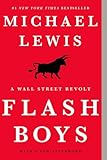
Flash Boys (2014)
Lewis’s high-frequency trading book — the story of Brad Katsuyama, a Royal Bank of Canada trader who discovers that his trades are being front-run by high-frequency traders operating from servers positioned within microseconds of the stock exchanges. The investigation reveals a market structure rigged against ordinary investors by people with faster machines. Less comprehensively reported than The Big Short but as readable.
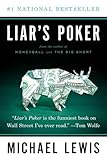
Liar’s Poker (1989)
Lewis’s Wall Street memoir — and still one of the finest accounts of investment banking culture in American publishing. Fresh from Princeton and the London School of Economics, Lewis took a job as a bond salesman at Salomon Brothers in 1985 and spent three years learning the culture from the inside. The culture portrait — the hazing, the contempt for clients, the relationship between financial performance and human decency — is vivid and specific. Best read after the later books, which extend and deepen the portrait.
Why The Big Short Is the Ideal First Book
For a reader new to Michael Lewis, The Big Short is the ideal first book because it is among his most acclaimed and gripping works and the fullest expression of his distinctive gifts, the masterful storytelling, the vivid characters, and the genius for making complex subjects clear and compelling. The Big Short tells the story of the handful of outsiders who foresaw the financial crisis and bet against the housing market, illuminating the crisis through their vivid, often eccentric stories. As an entry point it is ideal, for it is one of his best-known books and a perfect example of his gift for turning complex true stories into page-turning narrative. It welcomes the newcomer with its gripping story, its vivid characters, and its clear explanation of a complex subject, drawing the reader into his distinctive storytelling. It is among his major works and a fine representation of his gifts, so the new reader encounters Lewis at his most characteristic. For the newcomer, then, The Big Short is the natural and ideal starting point.
What to Expect as a New Reader
As a new reader, you can expect The Big Short to be a gripping, clear, and vividly characterized work of narrative nonfiction. You can expect masterful storytelling, for Lewis turns the complex story of the financial crisis into a page-turning narrative. You can expect vivid characters, for the book follows a handful of eccentric outsiders who foresaw the crisis and bet against the housing market. You can expect clear explanation, for Lewis has a genius for making complex subjects, here the financial instruments behind the crisis, clear and compelling. You can expect a focus on people and stories, for Lewis illuminates big subjects through individual characters. You can expect wit, drama, and momentum. You can expect insight into finance, human folly, and the crisis. Expect, in short, a gripping, clear, and vividly characterized work of narrative nonfiction, a superb introduction to Lewis’s gifts.
Going Deeper After Your First Book
Once The Big Short has introduced you to Lewis’s gifts, the reader who wishes to go deeper can explore his many other books, which apply the same masterful storytelling, vivid characterization, and gift for clarity to a wide range of subjects. His other acclaimed works illuminate baseball and the power of data, the world of high-frequency trading, the friendship between two psychologists who reshaped our understanding of the mind, the workings of government, and his own Wall Street beginnings, each marked by his gift for finding the human story in a complex subject. Reading these after The Big Short deepens your appreciation of Lewis’s distinctive gifts, the masterful storytelling, the vivid characters, and the genius for clarity. His characteristic strengths run through his work, and the reader who has enjoyed The Big Short will find them across his books. Building your reading journey through Lewis is a matter of following his nonfiction from The Big Short into his other books. The reader who begins here and continues will find one of the finest and most entertaining narrative-nonfiction writers working today.
Reading Michael Lewis
Lewis’s books are united by a single method: find a small number of unusual people who understand something important about a complex system, follow them through the period when that understanding is tested, and explain the system through the story of the people. Begin with The Big Short for the fullest expression of this method; read Moneyball for its application to an entirely different domain.
Frequently Asked Questions
Where should I start with Michael Lewis?
The Big Short (2010) is the most common recommendation — Lewis's account of the small group of investors who saw the 2008 financial crisis coming and bet against the mortgage-backed securities market. It is the clearest expression of Lewis's gift: explaining complex financial instruments through vivid character portraits, making the mechanics of an economic catastrophe comprehensible and genuinely thrilling. Moneyball is the best alternative for readers not interested in finance — a book ostensibly about baseball statistics that is actually about how intuition and conventional wisdom resist quantitative challenge. Both books demonstrate why Lewis is the foremost narrative non-fiction writer of his generation.
What is The Big Short about?
The Big Short (2010) follows four groups of investors who, through different combinations of analysis and contrarianism, recognised that the US mortgage market in the mid-2000s was built on fraudulent loans packaged into securities that were mis-rated. They found ways to bet against these securities and profited enormously when the market collapsed in 2008. Lewis uses these investors as guides through the opaque mechanics of mortgage-backed securities, collateralised debt obligations, and credit default swaps — making one of the most consequential and least understood economic events in modern American history accessible and urgently readable. Adam McKay's 2015 film is excellent.
What is Moneyball about?
Moneyball (2003) follows Billy Beane, the general manager of the Oakland Athletics, who — working with limited resources — used statistical analysis to identify undervalued players and compete with far wealthier teams. The book is ostensibly about baseball but is actually about the resistance of expert intuition to quantitative challenge: the scouts, coaches, and conventional wisdom of professional baseball resisted the statistical evidence that certain qualities they valued were overpriced and certain qualities they ignored were undervalued. The story applies as directly to any industry where conventional wisdom has calcified into assumption. Brad Pitt's film adaptation is faithful and well-made.
Do Michael Lewis's books need to be read in order?
All of Michael Lewis's books are entirely standalone — they cover different subjects and different casts of characters, and there is no series structure or required reading order. Liar's Poker (1989), his memoir of his years at Salomon Brothers, is the earliest and most personally autobiographical; The Big Short can be read as a sequel of sorts, as it covers the same Wall Street culture twenty years later. Flash Boys and Going Infinite are the most recent major works. Readers can begin with whichever subject interests them most.