Where to Start with Margot Lee Shetterly: A Reading Guide
Where to start with Margot Lee Shetterly — how to approach Hidden Figures, her history of the Black female mathematicians whose calculations helped launch America into space. A complete reading guide.
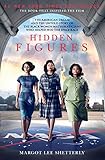
Margot Lee Shetterly (born 1969) is an American author who grew up in Hampton, Virginia, near NASA’s Langley Research Center, and who knew some of the book’s subjects as members of her family’s social circle before she understood the historical significance of their work. She spent years in archives, conducting interviews, and reconstructing a world that had been essentially erased from the official record before Hidden Figures: The American Dream and the Untold Story of the Black Women Mathematicians Who Helped Win the Space Race was published by William Morrow in 2016. The book became a bestseller and was adapted into an Academy Award-nominated film the same year.
Where to Start: Hidden Figures (2016)
The essential Margot Lee Shetterly — and one of the most significant historical recoveries in recent American nonfiction. Hidden Figures begins with a premise that is genuinely shocking to readers unfamiliar with the history: at NASA’s Langley Research Center, the term “computer” referred for decades to a person — specifically, to the teams of women, segregated by race, who performed the mathematical calculations that engineers needed. Among the Black women in these rooms were mathematicians of extraordinary ability whose work was essential to American aviation and space research, and who were almost entirely absent from the historical record.
The three women who anchor the narrative represent different ways of navigating an institution built with multiple structural reasons to render them invisible.
Katherine Johnson had a mathematical intuition that her colleagues recognised as unusual — the ability to work in the three-dimensional geometry of orbital mechanics with a facility that the machines of her era could not match for reliability. Her work on the trajectory for Alan Shepard’s 1961 Mercury flight and her calculation of the orbital mechanics for John Glenn’s 1962 trip around the Earth were essential to those missions. Glenn’s insistence, before his flight, that Katherine Johnson personally verify the IBM computer’s calculations — “get the girl to check the numbers” — is the most famous moment in a career of many such moments, each of which should have been celebrated and none of which was, until decades later.
Dorothy Vaughan understood early that the transition from human to electronic computers represented both a threat and an opportunity. She taught herself FORTRAN — the programming language used by the IBM computers that would replace her team — and then taught the entire team she supervised, ensuring that the Black women in her unit would be equipped for the new regime rather than made redundant by it. She became NASA’s first Black supervisor in 1949, a fact that was not officially acknowledged for years.
Mary Jackson navigated the specific obstacle of the segregated school system in Virginia, which maintained separate facilities that determined who could take the advanced engineering courses that professional advancement required. She petitioned — successfully — to attend the segregated courses, and became the first Black female engineer at NASA. Her subsequent work on the pressurised wind tunnels used in aircraft testing was cited in multiple published reports, with her name attached, in the pattern the book documents: acknowledged in technical literature while invisible in the cultural narrative of American achievement.
The double burden that Shetterly documents throughout is not abstracted to systemic analysis but rendered in the specific texture of daily life: the segregated bathroom in the main building, the separate cafeteria, the “Colored Computers” designation, the navigation required to be taken seriously in rooms that had every institutional reason not to take you seriously. These women did not succeed despite their circumstances; they succeeded by understanding their circumstances completely and finding specific, intelligent strategies for doing what they needed to do within them.
Shetterly’s research is the foundation of everything. She spent years recovering a history that had been essentially invisible, locating documents, interviewing surviving subjects and their families, and reconstructing a world that the official record had omitted. The book is the result of that recovery work, and its historical precision is inseparable from its moral significance.
Why Hidden Figures Is the Essential First Book
For a reader new to Margot Lee Shetterly, Hidden Figures is the essential first book because it is her acclaimed bestseller and, as her major book, the full expression of her distinctive gifts, the deep research, the engaging storytelling, and the recovery of an overlooked history. Hidden Figures tells the true story of the Black women mathematicians whose work was essential to the American space program, and whose contributions were long overlooked, in a fascinating and inspiring work of history. As an entry point it is both natural and essential, for it is her defining book and a perfect example of her engaging, well-researched, history-recovering nonfiction. It welcomes the newcomer with its fascinating true story, its engaging storytelling, and its recovery of overlooked history, drawing the reader into a remarkable and inspiring account. It is her major work, so the new reader encounters Shetterly at her most characteristic. For the newcomer, then, Hidden Figures is the natural and essential starting point.
What to Expect as a New Reader
As a new reader, you can expect Hidden Figures to be a fascinating, engaging, and inspiring work of history. You can expect a remarkable true story, for the book tells of the Black women mathematicians whose work was essential to the American space program. You can expect the recovery of an overlooked history, for the book brings long-overlooked contributions to light. You can expect engaging storytelling, for Shetterly renders the history with narrative skill and human interest. You can expect deep research, for the book is grounded in careful investigation. You can expect engagement with race, gender, and the history of science and the space race. You can expect inspiring portraits of remarkable women who overcame great obstacles. You can expect an accessible, illuminating, and uplifting read. Expect, in short, a fascinating, engaging, and inspiring work of history, an essential introduction to Shetterly’s gifts.
Going Deeper After Your First Book
Once Hidden Figures has introduced you to Shetterly’s gifts, the reader who wishes to go deeper can carry its themes into the wider literature of overlooked history, the space program, and the experiences of Black Americans and women in science to which her work contributes. Since Hidden Figures is her major book, the natural next step is outward, into the broad field of writing that recovers overlooked histories and explores the history of science, the space race, and the contributions of women and people of color, where the reader can extend the understanding her book provides. Reading more widely deepens your engagement with the themes and the history her book illuminates. Her characteristic gift for recovering overlooked history points toward a rich field of further reading. Building your reading journey from Hidden Figures is a matter of carrying its themes into the wider literature of overlooked history and the space program. The reader who begins here will have encountered a fascinating and inspiring recovery of an overlooked history.
Reading Margot Lee Shetterly
Hidden Figures is Shetterly’s essential and most widely read book. It stands alone and requires no prior knowledge of the Space Race or the history of NASA.
For the full Margot Lee Shetterly bibliography, reviews, and biography, visit the Margot Lee Shetterly author page on Editors Reads.
Affiliate disclosure: Links to Amazon on this page are affiliate links. We earn a small commission at no extra cost to you.
Frequently Asked Questions
Where should I start with Margot Lee Shetterly?
Hidden Figures: The American Dream and the Untold Story of the Black Women Mathematicians Who Helped Win the Space Race (2016) is Shetterly's essential book — a meticulously researched history that recovers the stories of Katherine Johnson, Dorothy Vaughan, Mary Jackson, and the other Black female mathematicians at NASA's Langley Research Center whose indispensable contributions to American space exploration had been obscured by both racism and sexism for decades.
What is Hidden Figures about?
Hidden Figures tells the story of the Black women who worked as 'human computers' at NASA's Langley Research Center in Hampton, Virginia, from the early days of the agency through the Space Race. These mathematicians performed the calculations that made American aviation and space flight possible — including Katherine Johnson, whose orbital mechanics work John Glenn personally requested be verified before his 1962 flight; Dorothy Vaughan, who became NASA's first Black supervisor and taught herself FORTRAN to ensure her team's survival as electronic computers replaced human ones; and Mary Jackson, who became the first Black female engineer at NASA.
How does the book differ from the 2016 film adaptation?
The 2016 film, starring Taraji P. Henson, Octavia Spencer, and Janelle Monáe, introduces the broad story of these women to a popular audience with necessarily dramatised and simplified narrative. Shetterly's book contains far greater historical detail: a larger cast of characters, a more thorough treatment of the women's institutional experience under segregation, and a fuller account of the mathematical and engineering work they performed. The film streamlines the history into a more conventional narrative arc; the book recovers the full complexity of lives lived at the intersection of multiple systems of exclusion.
What should I read after Hidden Figures?
After Hidden Figures, Rebecca Skloot's The Immortal Life of Henrietta Lacks covers comparable territory — a Black woman's contribution to science rendered invisible by systemic racism — with a different kind of narrative structure. Ta-Nehisi Coates's Between the World and Me provides a direct and personal account of living in America as a Black person, from a different angle than Shetterly's historical reconstruction. Michelle Obama's Becoming shares the theme of navigating institutions built for someone else with intelligence and ambition.