Where to Start with Laurie Halse Anderson: A Reading Guide
Where to start with Laurie Halse Anderson — how to approach Speak, her debut novel and landmark of YA literature about a ninth-grader rendered mute by an assault she cannot yet name, written in a fragmented first-person voice that mirrors trauma with precision. A complete reading guide.
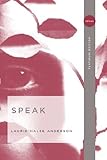
Laurie Halse Anderson (born 1961 in Potsdam, New York) is an American author of young adult and middle-grade fiction who has written more than thirty books across historical fiction, memoir, and contemporary realism. Speak (1999) was her debut novel and the book that established her as one of the most important voices in YA literature: a first-person account of rape and its aftermath that has been praised for its honesty and challenged for that same honesty in school libraries across the United States. Anderson has spoken publicly about her own experience of sexual assault and about her commitment to writing for young readers who cannot find their experiences reflected elsewhere.
Where to Start: Speak (1999)
The essential Laurie Halse Anderson — and one of the most formally precise novels in YA literature. Speak is built around a structural impossibility: a narrator who cannot tell us what we need to know because she cannot yet tell herself. Melinda Sordino begins ninth grade as a social pariah, shunned by her former friends for reasons she understands and cannot explain. The understanding is the problem. To explain what happened at the party would require naming it, and naming it would require a kind of acknowledgement she is not yet capable of.
The fragmented narrative form is the novel’s first and most important formal decision. Anderson writes in short sections — some a paragraph, some a page — that capture the dissociative quality of trauma: the way awareness contracts, the way time becomes unreliable, the way a person can observe themselves from outside their own experience as a survival mechanism. Melinda describes her school year with a dark, sardonic intelligence that constantly contradicts her apparent passivity — she sees everything clearly, she registers the absurdity and cruelty of her social situation with precision — but the seeing and the speaking remain disconnected.
The art class arc is the novel’s engine. Melinda is assigned a yearlong project in which she must explore a single subject through her art. She is assigned a tree — a subject she initially finds meaningless — and the work of trying to draw a tree with honesty, over months of failure and gradual understanding, becomes the pathway back to language. Anderson does not present art as magic or therapy as simple; the process is slow, nonlinear, and marked by reversals. What art provides is not a shortcut but a practice: a way of translating inner experience into a form that can be looked at, revised, and eventually shared.
The sexual assault is never directly named until late in the novel, which is formally exact: the delay mirrors Melinda’s own inability to name what happened, and when the name finally appears it arrives not as revelation but as recognition. Anderson has described writing the novel as the hardest and most necessary thing she has ever done, and that necessity is audible throughout.
Why Speak Is the Ideal First Book
For a reader new to Laurie Halse Anderson, Speak is the ideal first book because it is her landmark, acclaimed novel and the fullest expression of her distinctive gifts, the unflinching honesty, the powerful voice, and the compassionate treatment of difficult subjects in the lives of young people. Speak tells the story of a teenage girl who becomes withdrawn and nearly silent after a traumatic experience, and her slow, painful journey toward finding her voice. As an entry point it is ideal, for it is her most famous and influential work and a powerful example of her honest, important young-adult fiction. It welcomes the newcomer with its compelling and authentic voice, its emotional power, and its compassionate seriousness, drawing the reader into a novel that has meant a great deal to many readers. It is her defining work and the one that best represents her gifts, so the new reader encounters Anderson at her most characteristic. For the newcomer, then, Speak is the natural and ideal starting point, though readers should know it deals with difficult subject matter.
What to Expect as a New Reader
As a new reader, you can expect Speak to be a powerful, honest, and compassionate young-adult novel about trauma and recovery. You can expect a compelling voice, for the novel is told in the vivid, wry, wounded first-person voice of its teenage narrator. You can expect difficult subject matter, for the novel deals with sexual assault and its aftermath, handled with seriousness, sensitivity, and care rather than sensationalism. You can expect a focus on silence and voice, for the story follows a girl who withdraws into near-silence and her slow journey toward speaking her truth. You can expect emotional power and authenticity, for Anderson renders her narrator’s isolation, pain, and resilience with unflinching honesty. You can expect a story that has offered recognition and comfort to many readers. You should be prepared for painful material handled with care. Expect, in short, a powerful, honest, and compassionate young-adult novel, an important introduction to Anderson’s gifts.
Going Deeper After Your First Book
Once Speak has introduced you to Anderson’s gifts, the reader who wishes to go deeper can explore her other novels, which continue her unflinching honesty and her compassionate engagement with the difficult realities of young people’s lives. Her other contemporary novels confront subjects such as eating disorders, trauma, and the struggles of adolescence with the same seriousness and care, while her acclaimed historical fiction brings her honest, powerful storytelling to the past, including the experience of slavery and the American Revolution. Reading these after Speak deepens your appreciation of Anderson’s distinctive gifts, the honesty, the powerful voice, and the compassionate treatment of hard subjects. Her characteristic strengths run through her work, and the reader moved by Speak will find them across her novels. Building your reading journey through Anderson is a matter of following her honest storytelling from Speak into her other contemporary and historical fiction. The reader who begins here and continues will find one of the most honest and important voices in young-adult literature.
Reading Laurie Halse Anderson
Speak is Anderson’s essential and most widely read book. Readers who want to continue should look at Wintergirls (2009), which covers anorexia and grief with the same unflinching first-person voice, and Shout (2019), her verse memoir about the assault that inspired Speak.
For the full Laurie Halse Anderson bibliography, reviews, and biography, visit the Laurie Halse Anderson author page on Editors Reads.
Affiliate disclosure: Links to Amazon on this page are affiliate links. We earn a small commission at no extra cost to you.
Frequently Asked Questions
Where should I start with Laurie Halse Anderson?
Speak (1999) is Anderson's essential book — her debut novel and one of the most important works in YA literature. Melinda Sordino begins ninth grade as a social pariah after calling the police at an end-of-summer party. She is shunned by her former friends, barely functional in her classes, and increasingly isolated — because to explain what happened that night would require speaking about something she has not yet found words for. Anderson renders Melinda's first year of high school in short, fragmented chapters that capture the dissociation of trauma with clinical precision: she observes herself from outside, retreats into an abandoned supply closet, and progressively loses the ability to speak in public.
What is Speak about?
Speak is about rape and its aftermath — specifically, the way sexual assault can make speech itself feel impossible and dangerous. Melinda was raped at the party; she called the police; the party was broken up; everyone hates her for it, not knowing why she called. The assault is never directly named until late in the novel, which is formally exact: it mirrors Melinda's own inability to name what happened. The book traces her slow, nonlinear recovery, in which art class — and the assignment to spend a year exploring a single subject through her art — provides the pathway back to language and eventually to the ability to speak. Anderson based the novel on her own experience of assault and has said it was the most difficult thing she has ever written.
Why has Speak been banned and challenged so frequently?
Speak has been one of the most frequently challenged books in American school libraries since its publication, targeted primarily for its depiction of sexual assault and its frank rendering of a teenage girl's psychological state in its aftermath. The challenges have occasionally been led by parents or community members who argued the content was inappropriate for young readers. Anderson and many librarians, educators, and survivors have pushed back consistently: Speak is not inappropriate for young readers; it is necessary for them. The book has been credited by thousands of readers — primarily young women — with helping them name and process their own experiences. The banning attempts have consistently increased its readership.
What should I read after Speak?
After Speak, Laurie Halse Anderson's Wintergirls (2009) covers anorexia and grief with the same unflinching voice, and Shout (2019) is her verse memoir that tells her own story of the assault that inspired Speak. For other YA novels that deal with trauma with comparable seriousness, Ellen Hopkins's Identical covers sexual abuse in verse form, and Emily M. Danforth's The Miseducation of Cameron Post covers a different kind of institutional response to adolescent experience. For adult fiction on similar themes, Roxane Gay's memoir Hunger or Toni Morrison's The Bluest Eye cover the long aftermath of assault with comparable depth.