Where to Start with Kim Stanley Robinson: A Reading Guide
Where to start with Kim Stanley Robinson — whether to begin with Red Mars, The Ministry for the Future, or The Years of Rice and Salt. A complete reading guide.
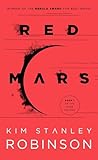
Kim Stanley Robinson (born 1952) is the American science fiction novelist who — with the Mars Trilogy (1992–1996) — produced the most scientifically detailed and politically serious account of planetary colonisation in the genre’s history, and who — with the Science in the Capital trilogy (2004–2007) and The Ministry for the Future (2020) — established himself as the foremost writer of climate fiction. His fiction is characterised by extraordinary scientific research, eco-socialist political thought, and a sustained argument that human civilisation can reorganise itself around sustainability if the political will exists. He has won three Hugo Awards and four Nebula Awards. He is the most important utopian writer in contemporary science fiction.
Where to Start: Red Mars (1992)
The essential Robinson — and one of the great science fiction novels of the twentieth century. One hundred scientists and engineers — the First Hundred — land on Mars in 2026 to establish humanity’s first permanent settlement. The novel follows their first generation: the engineers who build the colony, the scientists who study the planet, and the conflict that begins almost immediately between those who want to terraform Mars and those who believe it should be preserved.
Robinson’s scientific detail is extraordinary. The geology, the atmospheric science, the engineering of habitats and transport, the biology of cold-adapted life — all are rendered with the specificity of genuine research, and the result is a Mars that feels inhabited rather than imagined. The political argument is as carefully constructed as the science: the terraforming debate is a thought experiment about development ethics, about what human societies owe to the environments they enter, about whether the human drive to make planets Earth-like is civilisation or conquest.
The First Hundred are a carefully composed cast: Ann Clayborne, the radical red; Sax Russell, the terraforming advocate; Nadia Chernevsky, the practical engineer; Hiroko Ai, the ecological visionary. Their conflicts play out across decades, on a world that is being transformed as they age and argue.
Green Mars (1993)
The second volume — the planet is warming; the second generation is arriving; the political conflict between reds, greens, and corporate interests has sharpened into something approaching civil war. Robinson’s political imagination is at its most fully developed here. The scientific detail of biological transformation — lichen, simple plants, atmosphere — is as meticulous as the geological detail of the first book.
Blue Mars (1996)
The concluding volume — oceans are forming; the transformation is complete; the First Hundred survivors are old and facing the specific challenges of extreme longevity in a changed world. The political question shifts from terraforming to governance: how does a transformed planet organise itself? Robinson’s most explicitly utopian volume, and the most formally experimental in its structure.
The Ministry for the Future (2020)
Robinson’s most accessible novel and his most urgent — a near-future account of humanity’s response to catastrophic climate change, following the fictional Ministry for the Future (a UN body representing future generations) and a range of characters across the political and social spectrum. More immediately readable than the Mars Trilogy; less scientifically dense but more directly applicable to the present. The best entry point for readers who want Robinson without the commitment of a three-volume series.
Why Red Mars Is the Ideal First Book
For a reader new to Kim Stanley Robinson, Red Mars is an ideal first book because it is the opening of his acclaimed Mars trilogy and a fine expression of his distinctive gifts, the rigorous scientific imagination, the political and ecological depth, and the ambitious vision of humanity’s future. Red Mars tells the story of the first colonists of Mars and their efforts to settle, terraform, and build a society on the red planet, exploring the science, politics, and human drama of founding a new world. As an entry point it is ideal, for it is among his most celebrated works and a perfect example of his thoughtful, ambitious, hard science fiction. It welcomes the newcomer with its grand vision, its scientific richness, and its political and human depth, drawing the reader into his distinctive imagination. It is among his major works and a fine representation of his gifts, so the new reader encounters Robinson at his most characteristic. For the newcomer, then, Red Mars is an excellent starting point.
What to Expect as a New Reader
As a new reader, you can expect Red Mars to be an ambitious, scientifically rich, and politically thoughtful work of hard science fiction. You can expect rigorous scientific imagination, for Robinson grounds his story in detailed, plausible science of settling and terraforming Mars. You can expect a grand vision, for the novel follows the first colonists and the founding of a new world. You can expect political and social depth, for Robinson explores the ideologies, conflicts, and choices involved in building a new society. You can expect ecological themes, for terraforming and humanity’s relationship to a planet are central. You can expect a large cast and an ambitious, immersive scope. You should expect a substantial, idea-rich novel that prizes science, politics, and human drama over fast action. Expect, in short, an ambitious, scientifically rich, and politically thoughtful work of hard science fiction, a fine introduction to Robinson’s gifts.
Going Deeper After Your First Book
Once Red Mars has introduced you to Robinson’s gifts, the natural next step is to continue the Mars trilogy, following the settling and transformation of Mars across its subsequent volumes as the society, the science, and the conflicts develop over generations. The trilogy is best read in order, for it tells a single, sweeping story of a world transformed. Beyond the Mars trilogy, the reader who has enjoyed Robinson’s gifts can explore his many other novels, which bring the same rigorous imagination and political and ecological depth to subjects such as climate change and humanity’s future, including his acclaimed near-future climate fiction. His characteristic strengths, the scientific imagination, the political and ecological depth, and the ambitious vision, run throughout. Building your reading journey through Robinson is a matter of completing the Mars trilogy and exploring his other novels. The reader who begins here will find one of the most ambitious and thoughtful writers of hard science fiction to follow.
Reading Kim Stanley Robinson
Robinson’s fiction requires patience — he is a writer of ideas, and his ideas require space. The Mars Trilogy is the fullest expression of his gifts: scientific rigour, political seriousness, and a genuine vision of what human civilisation could become if it chose to. Begin with Red Mars and commit to the trilogy; it is one of the great achievements of American science fiction. Read The Ministry for the Future for a shorter, more contemporary, and more immediately applicable version of his argument.
Frequently Asked Questions
Where should I start with Kim Stanley Robinson?
Red Mars (1992) is the essential starting point — Robinson's masterwork and the first volume of the Mars Trilogy, which remains the most detailed and most politically serious account of human colonisation of another planet in science fiction literature. One hundred scientists are the first permanent settlers on Mars; the novel follows their conflicts over whether and how to terraform the planet across decades. The scientific detail is extraordinary; the political and ethical argument — about development, ecology, and what it means to transform a world — is even more extraordinary. The Ministry for the Future is the best alternative for readers who want a standalone, contemporary-set climate fiction novel.
What is the Mars Trilogy about?
The Mars Trilogy (Red Mars, Green Mars, Blue Mars) follows the colonisation and terraforming of Mars across approximately two centuries, from the arrival of the first hundred settlers in 2026 through the political and ecological transformation of the planet. The central conflict is between reds (who want Mars preserved in its original state) and greens (who want to terraform it for human habitation), but this conflict is embedded in a broader political argument about capitalism, sustainability, and what human societies owe to the environments they inhabit. Robinson uses Mars as a thought experiment for Earth: what choices would humans make, given the chance to build a society from scratch on an empty world?
Is Red Mars slow to read?
Red Mars is a demanding read — it is dense in scientific detail (geology, ecology, atmospheric science, materials engineering), long (over 500 pages), and interested in ideas and political argument as much as in narrative plot. Robinson is not a thriller writer; the pacing is deliberate and the descriptive passages of Mars's landscapes are extensive. Readers who approach it expecting thriller pace will be frustrated; readers who approach it as a vast, serious, scientifically rigorous exploration of a premise will find it one of the most rewarding experiences in science fiction. The consensus recommendation is to give it 100 pages before deciding.
What is The Ministry for the Future about?
The Ministry for the Future (2020) is Robinson's most accessible and most urgently contemporary novel — a near-future political thriller about the global institutions and political movements that might actually respond effectively to climate change. The Ministry for the Future is a UN body established to represent future generations in climate negotiations; its work, and the broader political and social response to catastrophic climate events, is followed through multiple POV characters across decades. Robinson writes it as a hybrid of thriller, documentary fiction, and policy proposal. It requires no knowledge of his other work and is his most immediately readable novel.


