Where to Start with Joseph Heller: A Reading Guide
Where to start with Joseph Heller — whether to begin with Catch-22, Something Happened, or Good as Gold. A complete reading guide to Heller's satirical novels.
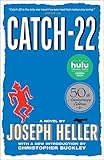
Joseph Heller (1923–1999) is the author of Catch-22 — one of the great American comic novels and the definitive satire of military bureaucracy in the English language. His career was dominated by that one extraordinary first novel, which took eight years to write and eventually sold ten million copies; his subsequent novels — particularly Something Happened (1974) — are better than their reputation suggests, but they have lived permanently in Catch-22’s shadow. He is essential reading for anyone who wants to understand American dark comedy and the literature of war.
Where to Start: Catch-22 (1961)
The essential Heller — and one of the great American novels of its century. Yossarian is a bombardier on the fictional island of Pianosa in the Mediterranean, flying combat missions in World War Two and desperately trying to survive. He is surrounded by institutional absurdity: Colonel Cathcart keeps raising the number of missions required before a man can be discharged; Milo Minderbinder runs a syndicate that trades with both sides; Major Major Major Major refuses to see anyone who wants to see him except when he’s out. The catch that names the novel — the rule that proves you’re crazy if you want to avoid combat, therefore sane, therefore required to fly — is the most perfect formulation of institutional logic’s self-sealing absurdity.
The novel is non-linear and initially disorienting, but the comedy is so consistently excellent that readers carry themselves through. Begin it and do not stop.
Something Happened (1974)
The most underrated Heller — and the one that reveals most fully what he could do beyond satire. Bob Slocum, a middle-aged New York corporate executive, narrates his life in long, repetitive, anxious monologues: his fear at work, his distance from his wife, his inability to love his children as he knows they need to be loved, the son who is different in ways he cannot acknowledge, the son who is ‘normal’ in ways that bore him. The novel is Heller’s most psychologically acute and his darkest: a portrait of a successful American man who is hollow inside, and who knows it, and who cannot do anything about it.
It ends with an event of genuine devastation that changes the meaning of everything that came before.
Good as Gold (1979)
Heller’s most satirical Washington novel — following Bruce Gold, a Jewish academic from Brooklyn who is offered an unspecified government position by a friend in Washington and spends the novel navigating the absurdity of both his family and his political ambitions. The novel is a comedy of Jewish American family life (the best Heller wrote) and a satire of the Washington political world — the non-jobs, the non-sentences, the bureaucratic meaninglessness — that draws on Heller’s own experience observing the Nixon administration.
Why Catch-22 Is the Ideal First Book
For a reader new to Joseph Heller, Catch-22 is the ideal first book because it is his masterpiece, one of the great novels of the twentieth century, and the fullest expression of his distinctive gifts, the savage satire, the absurd comedy, and the deep moral seriousness beneath the laughter. Catch-22 follows a bombardier named Yossarian and his fellow airmen during the Second World War, in a darkly comic vision of the madness, bureaucracy, and absurdity of war, built around the famous paradox that gives the novel its name. As an entry point it is ideal, for it is his defining work and a perfect example of his satirical genius. It welcomes the newcomer with its outrageous humor, its memorable characters, and its biting critique of war and bureaucracy, drawing the reader into one of the funniest and most serious of modern novels. It is his most celebrated work and the one that best represents his gifts, so the new reader encounters Heller at his finest. For the newcomer, then, Catch-22 is the natural and ideal starting point.
What to Expect as a New Reader
As a new reader, you can expect Catch-22 to be a savagely funny, absurd, and deeply serious satire of war and bureaucracy. You can expect dark comedy, for Heller mines the madness of war for outrageous, surreal, and often hilarious humor. You can expect the famous paradox, the catch-22 itself, the circular, self-defeating logic that traps the characters and has entered the language. You can expect a sprawling cast and a non-linear, repetitive, circling structure that mirrors the absurdity it depicts. You can expect moral seriousness beneath the comedy, for the novel is finally a powerful protest against the horror, waste, and insanity of war. You can expect satire of bureaucracy, profiteering, and the abuse of power. You should be prepared for sudden shifts from farce to horror. Expect, in short, a savagely funny, absurd, and deeply serious satire, a brilliant introduction to Heller’s gifts.
Going Deeper After Your First Book
Once Catch-22 has introduced you to Heller’s gifts, the reader who wishes to go deeper can explore his other novels, recognizing that his reputation rests overwhelmingly on his masterpiece. Something Happened, his bleak and acclaimed second novel, turns his satirical eye on corporate life and middle-class anxiety in a very different, more interior key, while Good as Gold and his later fiction continue his satirical engagement with American life and politics. Reading these after Catch-22 deepens your appreciation of Heller’s distinctive gifts, the satire, the dark comedy, and the moral seriousness, while revealing his range beyond his most famous book. His characteristic concerns run through his work, even as none has matched the impact of Catch-22. Building your reading journey through Heller is a matter of following his satire from Catch-22 into his other novels. The reader who begins here will have encountered one of the great satirical novels of the twentieth century.
Reading Joseph Heller
Heller’s primary quality is his comic timing — the long setup and the devastating punchline, the accumulation of absurd detail and the sudden clarifying moment. He is at his best when his comedy is most systematically directed at institutional stupidity (Catch-22) and at his most penetrating when he abandons comedy altogether (Something Happened). Begin with Catch-22: it is the work for which he will always be remembered, and rightly so, because it is one of the most original and sustained comic performances in American literature. Read Something Happened to discover what else he could do. Both are essential.
Frequently Asked Questions
Where should I start with Joseph Heller?
Catch-22 (1961) is the only correct starting point — one of the most celebrated American novels of the twentieth century and one of the funniest and most devastating satires of war and institutional logic ever written. Yossarian, a bombardier in the Mediterranean theater of World War Two, wants only to survive, but the regulations of military life (culminating in the titular Catch-22: the rule that proves you're sane if you want to avoid combat, which proves you're sane, which means you can't avoid combat) make survival impossible through legitimate means. Begin here and begin nothing else until you've finished it.
What is Catch-22 about?
Catch-22 (1961) follows Yossarian, an American bombardier on a Mediterranean island during World War Two, who is certain that everyone is trying to kill him (his own side, the Germans, everyone) and wants only to survive. The novel is structured non-linearly — jumping between time periods, characters, and tonal registers — and satirises military bureaucracy, institutional logic, the relationship between authority and sanity, and the ways that large organisations dehumanise the individuals within them. The 'catch' itself — that only crazy people fly combat missions, and that anyone who objects to flying is clearly sane, therefore must fly — is one of the most precise formulations of institutional absurdity in fiction.
What is Something Happened about?
Something Happened (1974) is Heller's second novel — entirely unlike Catch-22 in tone and method. Bob Slocum, a middle-aged corporate executive in New York, narrates his family life and business life in long, obsessively repetitive monologues that circle around his anxieties, his failures, his small triumphs, and his profound inability to connect with the people around him — including his wife, his children, and his colleagues. The novel is Heller's darkest work: a portrait of suburban American life so saturated with dread and disengagement that it becomes genuinely harrowing. Hugely underrated in comparison with Catch-22.
Is Catch-22 too long and too complex to read?
Catch-22 is long (450+ pages), non-linear, and structurally complex — but it is also extremely funny, and the comedy carries readers through the complexity. The novel's initial disorientation (who is who, when is when) resolves itself within the first hundred pages, and the emotional momentum builds powerfully toward its dark final sections. It is not a difficult read in the sense of demanding close stylistic attention; it demands patience with its structural eccentricities and tolerance for dark comedy about death. Most readers who start it finish it; the comedy is a sufficient reward for the patience it requires.