Where to Start with Jonathan Franzen: A Reading Guide
Where to start with Jonathan Franzen — whether to begin with The Corrections, Freedom, or Purity. A complete reading guide to Franzen's major novels.

Jonathan Franzen (born 1959) is the most celebrated — and most contentious — American novelist of his generation, whose two major novels The Corrections (2001) and Freedom (2010) are among the most discussed works in contemporary American fiction. His subject is the American family as the site where social, political, and individual forces meet and conflict; his method is the nineteenth-century social novel, adapted for an America defined by consumer culture, political polarization, and the gap between American ideals and American reality. His prose is controlled, his psychology is acute, and his ambition is among the largest in American letters.
Where to Start: The Corrections (2001)
The essential Franzen — and one of the defining American novels of its decade. The Lambert family: Alfred, a retired railroad engineer whose Parkinson’s disease is advancing and whose emotional unavailability has shaped his children’s lives; Enid, his wife, who has spent her marriage managing Alfred’s bleakness and now wants one final family Christmas in St. Jude, Missouri; Chip, the failed academic in New York; Gary, the depressed Philadelphia banker waging psychological warfare with his wife; and Denise, the celebrated chef whose personal life is in ruins.
The novel is a complete portrait of an American family — its loves, failures, resentments, and the ways children are damaged by parents who meant well and could not deliver. Franzen’s comedy is dark but very funny; his psychological precision is extraordinary; his account of Alfred’s mental deterioration is one of the most difficult and most honest accounts of dementia in American fiction.
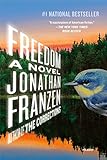
Freedom (2010)
Franzen’s second major novel — larger in scope than The Corrections, spanning three decades and engaging more directly with the political landscape of post-9/11 America. Walter Berglund, an idealistic Minnesota environmentalist who goes to work for a coal company as a means of funding bird conservation; Patty, his wife, a former college basketball star whose limited suburban life is suffused with unfulfilled desire; their son Joey, who breaks away and makes his own moral compromises; and Richard Katz, the rock musician whose presence disrupts the Berglund marriage.
The novel is narrated partly through Patty’s own memoir — a formal device Franzen uses to create distance and irony between how Patty presents herself and how she actually behaved — and its 640 pages encompass war profiteering, environmental catastrophe, and the full range of failures that a generation of liberal Americans made with their freedom. A magnificent novel.
Purity (2015)
Franzen’s most recent major novel — more plotty and more globally ambitious than its predecessors, following Pip Tyler, a young American woman burdened by student debt and ignorance of her father’s identity, who becomes involved with a Julian Assange-like figure running an online transparency organisation in Bolivia. The novel’s multiple narratives span Cold War East Germany, contemporary Bolivia, and the American Midwest, and its themes — secrecy, idealism, the ethics of transparency — are Franzen’s most explicitly political. Less focused than The Corrections but more ambitious in scope; the best Franzen for readers who want something genuinely global.
Why The Corrections Is the Ideal First Book
For a reader new to Jonathan Franzen, The Corrections is the ideal first book because it is his breakout masterpiece and the fullest expression of his distinctive gifts, the sweeping yet intimate family drama, the sharp social observation, and the blend of comedy, satire, and deep emotional truth. The Corrections follows the members of a Midwestern family as their aging parents and adult children navigate their disappointments, failures, and hopes, in a rich, ambitious novel of American life at the turn of the millennium. As an entry point it is ideal, for it is his most celebrated work and a perfect example of his expansive, socially acute, and emotionally rich fiction. It welcomes the newcomer with its vivid characters, its sharp social comedy, and its emotional depth, drawing the reader into his distinctive vision. It is among his major works and the one that best represents his gifts, so the new reader encounters Franzen at his finest. For the newcomer, then, The Corrections is the natural and ideal starting point.
What to Expect as a New Reader
As a new reader, you can expect The Corrections to be a rich, ambitious, and emotionally acute family novel. You can expect a sweeping yet intimate family drama, for the novel follows the members of a Midwestern family, their aging parents and adult children, through their disappointments, failures, and hopes. You can expect sharp social observation, for Franzen anatomizes American life, consumerism, and culture at the turn of the millennium with satirical precision. You can expect a blend of comedy and emotional truth, for the novel is both funny and deeply moving. You can expect vivid, fully realized characters whose inner lives Franzen renders with great depth. You can expect ambitious scope alongside intimate feeling. You should expect a substantial, densely textured novel that rewards attention. Expect, in short, a rich, ambitious, and emotionally acute family novel, a superb introduction to Franzen’s gifts.
Going Deeper After Your First Book
Once The Corrections has introduced you to Franzen’s gifts, the reader who wishes to go deeper can explore his other novels, which continue his sweeping yet intimate family dramas, his sharp social observation, and his blend of comedy, satire, and emotional depth. His later novels turn his expansive, socially acute vision on freedom, family, and American life in new ways, building on the achievement of The Corrections, while his essays reveal the ideas and preoccupations behind his fiction. Reading these after The Corrections deepens your appreciation of Franzen’s distinctive gifts, the family drama, the social observation, and the emotional richness. His characteristic concerns run through his work. Building your reading journey through Franzen is a matter of following his fiction from The Corrections into his other novels and essays. The reader who begins here and continues will find one of the most ambitious and acclaimed American novelists of his generation.
Reading Jonathan Franzen
Franzen’s novels are long, dense, and richly rewarding — he is a writer who believes that fiction can do what the nineteenth-century novel did, which is to map a society’s contradictions through the intimate experience of families. His comedy is sharp and his psychology is precise; his political awareness is significant but never overwhelms the human stories at the centre. Begin with The Corrections: it is his most perfectly controlled novel and the best demonstration of his particular gifts. Continue with Freedom for the larger canvas; continue with Purity for the most international perspective.
Frequently Asked Questions
Where should I start with Jonathan Franzen?
The Corrections (2001) is both the most widely read and the best starting point — the novel that made Franzen famous and that is widely considered one of the greatest American novels of the past twenty-five years. It follows the Lambert family across a single year as the adult children — Chip, Gary, and Denise — navigate their own failures while their parents' marriage and Alfred's mental health deteriorate. Freedom is the best alternative for readers who want something more recent and more expansive; The Corrections is the better single novel.
What is The Corrections about?
The Corrections (2001) follows the Lambert family across a final Christmas: Alfred, a retired railroad engineer whose Parkinson's disease and mental deterioration are progressing, and his wife Enid, who desperately wants one last family Christmas; their son Chip, who has just lost his professor's job after an affair with a student and is fleeing to Lithuania; their son Gary, a Philadelphia banker fighting depression and an ongoing battle of wills with his wife; and their daughter Denise, a celebrated chef whose personal life is in chaos. The novel is a complete portrait of an American family and its individual failures.
What is Freedom by Jonathan Franzen about?
Freedom (2010) follows the Berglund family across three decades — Walter, an idealistic environmentalist; Patty, a former college basketball star turned suburban housewife; their son Joey, who goes his own way; and Richard Katz, Walter's best friend and rock musician, whose relationship with Patty is central to the novel. The novel is Franzen's most politically engaged — war profiteering, environmental destruction, and political polarization all appear — and his most structurally ambitious, spanning thirty years of American life and narrating large sections from Patty's own autobiographical memoir-within-the-novel.
Is Jonathan Franzen controversial?
Jonathan Franzen is one of the most discussed and most controversial literary figures in contemporary American fiction. He is celebrated as the author of great novels in the tradition of the nineteenth-century social novel; he is also criticized for his public statements about the 'Great American Novel,' his ambivalent relationship with Oprah's book club, his views on literary versus genre fiction, and his essays on topics ranging from social media to environmentalism. The controversy around the public figure has sometimes overshadowed the novels, which are more nuanced and more self-critical than his public reputation suggests.