Where to Start with Joe Abercrombie: A Reading Guide
Where to start with Joe Abercrombie — whether to begin with The Blade Itself, Best Served Cold, or A Little Hatred. A complete reading guide to the grimdark fantasy master.
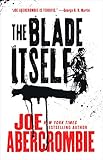
Joe Abercrombie (born 1974) is the British fantasy novelist who — beginning with The Blade Itself (2006) — established grimdark fantasy as a distinct and serious subgenre. His First Law trilogy introduced three of modern fantasy’s most celebrated antiheroes and constructed an epic narrative that simultaneously fulfilled and systematically dismantled the genre’s conventions. He has since expanded the First Law World through three standalones and a second trilogy, and produced the separate Shattered Sea young adult fantasy trilogy. He is the most important British fantasy writer of the twenty-first century.
Where to Start: The Blade Itself (2006)
The essential Abercrombie — and the founding text of grimdark fantasy. Three protagonists. Logen Ninefingers, a barbarian from the frozen north with a reputation for extraordinary violence and a private horror at what that violence has made him. Jezal dan Luthar, a nobleman officer in the Union army whose ambition is principally to win a fencing competition and impress a woman. Sand dan Glokta, a former military hero who was captured, tortured for two years, and returned a cripple — and who is now the Union’s most effective Inquisitor, using on others what was once used on him.
The novel assembles these three characters under the influence of Bayaz, the First Mage, who has plans that none of them fully understand. What appears to be the setup for a conventional fantasy epic turns out to be something considerably darker: an examination of what violence and power actually do to people, rendered through three characters each of whom is among the most original in modern fantasy. Glokta in particular — bitter, brilliant, physically destroyed, and entirely honest about the relationship between power and cruelty — is one of the great literary creations of twenty-first-century genre fiction.
Best Served Cold (2009)
The best entry point for readers who want a standalone. Monza Murcatto, the most feared mercenary general in Styria, is thrown off a mountain by the Duke she has served for years. She survives. She spends the rest of the novel taking systematic revenge on the seven men responsible. A revenge thriller structured around seven targets, told with Abercrombie’s characteristic moral complexity — the revenge is satisfying in the moment and hollow in the consequence, and every character, including Monza, turns out to be more complicated than their initial role suggests.
Set in the First Law World after the events of the original trilogy and featuring several returning characters. Entirely self-contained.
A Little Hatred (2019)
The first book of the Age of Madness trilogy — set a generation after the First Law trilogy, with a new cast navigating a world where industrialisation is beginning to transform the Union. Less purely grimdark than the original trilogy, more concerned with political and economic change, and Abercrombie’s most formally ambitious work. His best writing, and the beginning of his most fully realised trilogy. The Age of Madness can be read without knowledge of the First Law trilogy, though it rewards it.
Half a King (2014)
Abercrombie’s young adult departure — and a genuinely excellent standalone fantasy. Prince Yarvi, born with a withered hand, is expected to be counsellor to his brother’s throne rather than king. When his father and brother are murdered, Yarvi is forced to take the throne he has never wanted — and immediately betrayed. The novel is a survival and revenge story set in a Viking-inflected world, written with Abercrombie’s characteristic interest in what power actually costs. The first of three Shattered Sea novels; each stands reasonably well alone.
Why The Blade Itself Is the Ideal First Book
For a reader new to Joe Abercrombie, The Blade Itself is the ideal first book because it is the opening of his acclaimed First Law trilogy and the fullest introduction to his distinctive gifts, the gritty realism, the sharp wit, and the morally complex, vividly drawn characters. The Blade Itself introduces a memorable cast, a barbarian, a crippled torturer, a vain swordsman, and others, in a gritty, witty, and character-driven fantasy that subverts the conventions of the genre. As an entry point it is the natural place to begin, for it launches his celebrated grimdark fantasy and a perfect introduction to his sharp, gritty, character-rich fiction. It welcomes the newcomer with its vivid characters, its sharp wit, and its gritty realism, drawing the reader into his distinctive vision. It begins his best-known work, so the new reader meets his world where it begins. For the newcomer, then, The Blade Itself is the natural and ideal starting point, on dark and violent subject matter.
What to Expect as a New Reader
As a new reader, you can expect The Blade Itself to be a gritty, witty, and character-driven fantasy. You can expect vivid characters, for the novel introduces a memorable cast, including a barbarian, a crippled torturer, and a vain swordsman, each sharply and complexly drawn. You can expect gritty realism, for Abercrombie’s fantasy is dark, brutal, and unromantic, a leading example of grimdark fantasy. You can expect sharp wit, for the novel is genuinely funny, with cynical, biting humor. You can expect moral complexity, for the characters are flawed, ambiguous, and human rather than simple heroes and villains. You can expect subversion of fantasy conventions. You can expect a character-driven first volume that sets up a larger story. You should be prepared for violence, grimness, and dark themes. Expect, in short, a gritty, witty, and character-driven fantasy, a sharp introduction to Abercrombie’s gifts.
Going Deeper After Your First Book
Once The Blade Itself has introduced you to Abercrombie’s gifts, the natural next step is to continue the First Law trilogy, following its memorable characters through the subsequent volumes as the story, the intrigue, and the dark drama develop toward its conclusion. The trilogy is best read in order. Beyond it, Abercrombie has written a series of acclaimed standalone novels and a further trilogy set in the same world, which continue his gritty realism, his sharp wit, and his morally complex characters, expanding the world and its history. His characteristic strengths, the gritty realism, the sharp wit, and the morally complex characters, run through his work. The reader gripped by The Blade Itself will find a rich, interconnected body of grimdark fantasy to explore. Building your reading journey through Abercrombie is a matter of completing the First Law trilogy and continuing into his standalones and later trilogy. The reader who begins here will find one of the leading authors of gritty, character-driven fantasy to follow.
Reading Joe Abercrombie
Abercrombie’s fiction is united by a single argument: that fantasy’s conventional moral architecture — the clear hero, the comprehensible evil, the triumph of virtue — is a lie, and that honest fiction about power, violence, and human nature must refuse it. His grimdark is not nihilism; it is scepticism about heroism’s self-serving narratives, rendered through characters who are genuinely interesting precisely because they cannot be sorted into categories. Begin with The Blade Itself for the most important work and the most fully characterised world; read Best Served Cold if you want a standalone test of the flavour first.
Frequently Asked Questions
Where should I start with Joe Abercrombie?
The Blade Itself (2006) is the essential starting point — the first book of the First Law trilogy, which introduced grimdark fantasy's most celebrated antiheroes. A crippled barbarian, a self-loathing royal torturer, and a vain nobleman who slowly discovers something resembling courage: the three protagonists are among the most original character studies in modern fantasy. Abercrombie established an entire subgenre with this debut. Best Served Cold is the best standalone alternative for readers who want a single novel without committing to the trilogy first.
What is the First Law trilogy about?
The First Law trilogy (The Blade Itself, Before They Are Hanged, Last Argument of Kings) follows three central characters across a war-torn empire: Logen Ninefingers (a barbarian with a violent past), Jezal dan Luthar (a nobleman soldier whose self-regard is his primary character trait), and Sand dan Glokta (a crippled Inquisitor who uses torture and has been tortured, and whose bitter intelligence provides the trilogy's moral and satirical centre). The trilogy is simultaneously a fantasy epic and a sustained deconstruction of fantasy tropes — its resolution is deliberately, pointedly unlike what fantasy readers have been trained to expect.
Do I need to read the First Law trilogy before the standalones?
The First Law World standalones — Best Served Cold, The Heroes, Red Country — are set in the same world after the events of the trilogy and can be read independently. However, they are significantly enriched by knowledge of the trilogy, as they revisit characters and consequences from the original three books. Most readers recommend reading the trilogy first. The Age of Madness trilogy (A Little Hatred, The Trouble with Peace, The Wisdom of Crowds) is set a generation later and functions more independently, though it too rewards knowledge of the earlier books. Half a King is an entirely separate series and can be read at any point.
What makes Abercrombie's fantasy different from other epic fantasy?
Abercrombie writes grimdark fantasy — a subgenre defined by moral ambiguity, unsentimental violence, and a refusal of heroic conventions. His protagonists are flawed, sometimes monstrous; his villains are comprehensible; his world does not reward virtue reliably. The First Law trilogy specifically dismantles the structural promises of classic epic fantasy: the mentor, the prophecy, the hero's journey. What makes Abercrombie more than merely cynical is the genuine human insight beneath the darkness — his characters are not nihilistically worthless, but recognisably, painfully human.