Where to Start with J.K. Rowling: A Reading Guide
Where to start with J.K. Rowling — why to begin with Harry Potter and the Sorcerer's Stone and what to expect from the seven-book series. A complete reading guide.
J.K. Rowling (born 1965) is the British novelist who — with Harry Potter and the Philosopher’s Stone (1997) — created the most widely read children’s and young adult fantasy series in publishing history. The Harry Potter series has sold over five hundred million copies in eighty languages, spawned eight films, a stage play, theme parks, and an extended fictional universe, and introduced an entire generation to the pleasures of reading. Rowling’s achievement is not merely commercial; the Harry Potter books are carefully constructed, emotionally serious, and consistently surprising in their plotting — qualities that have made them beloved by multiple generations of readers across all ages.
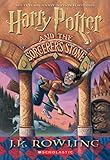
Where to Start: Harry Potter and the Sorcerer’s Stone (1997)
The only starting point — and the beginning of one of the most richly imagined fantasy worlds ever constructed. Harry Potter, eleven, lives in a cupboard under the stairs of his aunt and uncle’s home in Surrey; his parents died in a car accident when he was a baby. On his eleventh birthday, a giant named Hagrid breaks through the door and tells Harry the truth: his parents were a witch and a wizard, killed by the dark lord Voldemort; Harry survived because of a protection he doesn’t yet understand; and Harry is enrolled to begin his education at Hogwarts School of Witchcraft and Wizardry.
Rowling introduces her world with extraordinary economy: Diagon Alley, Platform Nine and Three-Quarters, the Hogwarts Express, the Sorting Hat, the four Houses, Quidditch — all the elements of what will become a vast, internally consistent secondary world are present in this first book. The mystery plot (who is trying to steal the Philosopher’s Stone?) is perfectly calibrated to the book’s age range while planting seeds whose significance is only understood in retrospect. The tone is comic and warm; the darkness is present but manageable.
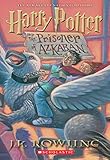
Harry Potter and the Prisoner of Azkaban (1999)
The third book — and for many readers the finest in the series. A mass murderer has escaped from Azkaban prison; Dementors, soul-sucking creatures that force their victims to relive their worst memories, are stationed around Hogwarts as protection. Two new teachers (Remus Lupin, the most genuinely effective DADA teacher in the series; Professor Trelawney, the Divination professor) expand the world significantly. The time-turner plot is Rowling’s most intricately constructed mystery; the ending has a structural elegance that rewards re-reading. The point at which Rowling’s plotting is most purely brilliant.
Harry Potter and the Goblet of Fire (2000)
The fourth book — and the series’ turning point. The Triwizard Tournament, a dangerous inter-school competition, frames a plot that ends with Voldemort’s return to a physical body. The first half (the tournament chapters) is the most fun Rowling ever wrote; the second half (everything after the graveyard) is the most terrifying. The shift in tone is absolute and permanent.
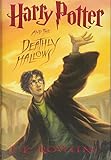
Harry Potter and the Deathly Hallows (2007)
The seventh and final book — and the most ambitious in scope. Harry, Ron, and Hermione leave Hogwarts to hunt and destroy the Horcruxes that preserve Voldemort’s immortality. The book is a sustained adventure outside the school structure; the Battle of Hogwarts is the series’ narrative and emotional climax. The ending is complete and satisfying. The epilogue is widely debated.
Reading J.K. Rowling
The Harry Potter series must be read from Book 1 to Book 7, in order, without exception. There is no entry point, no shortcut, and no alternative. The world-building and character development are cumulative; Rowling plants details in early books that only become significant books later; and the emotional impact of the later books depends entirely on the reader’s investment in the characters built across the whole series. Begin with the first book, allow the early books to establish what matters, and trust that the series builds toward something genuinely worth reaching.
Frequently Asked Questions
Where should I start with J.K. Rowling?
Harry Potter and the Sorcerer's Stone (1997; UK title: Philosopher's Stone) is the only starting point — the first Harry Potter novel and the beginning of one of the most beloved and most widely read series in publishing history. Harry Potter, eleven, discovers he is a wizard and is admitted to Hogwarts School of Witchcraft and Wizardry. The world is introduced in this book; the series must be read from the beginning in order. No entry point other than the first book makes sense for the Harry Potter series.
What is the Harry Potter series about?
The Harry Potter series follows Harry Potter, orphaned as a baby when the dark wizard Voldemort killed his parents and was defeated by an unknown power, across seven years at Hogwarts School of Witchcraft and Wizardry. The series is a coming-of-age story set in a magical world: Harry navigates school friendships and rivalries, discovers the full truth about his parents and the night Voldemort was defeated, and ultimately must confront Voldemort himself. The books grow progressively darker and more complex as Harry ages; the later books (Order of the Phoenix through Deathly Hallows) are substantially more serious in tone than the first three.
At what age is Harry Potter appropriate to read?
Rowling designed the series to grow with its audience: Sorcerer's Stone was written for readers aged eight to twelve; the later books, particularly Order of the Phoenix, Half-Blood Prince, and Deathly Hallows, deal with death, loss, betrayal, and political oppression at a level appropriate for young adult and adult readers. Most families find the series appropriate to read aloud beginning around age seven to eight; children reading independently typically begin around nine to ten. Adult readers who come to the series for the first time find it genuinely engaging — the later books in particular are complex and emotionally serious enough to reward adult reading.
Which is the best Harry Potter book?
Opinions vary, but The Prisoner of Azkaban (Book 3) and The Goblet of Fire (Book 4) are most consistently cited by readers as the series' peak. Prisoner of Azkaban introduces the time-turner, Sirius Black, Remus Lupin, and the Dementors, and is regarded as the point where Rowling's plotting reaches its full intricacy and where the world gains its most affecting emotional depth. Goblet of Fire is the series' turning point — the moment when Voldemort returns and the series' tone shifts definitively toward darkness. Order of the Phoenix (Book 5) is the longest and most structurally complex; Deathly Hallows (Book 7) provides the most complete resolution.