Where to Start with Jeannette Walls: A Reading Guide
Where to start with Jeannette Walls — how to approach The Glass Castle, her essential memoir about an extraordinary nomadic childhood. A complete reading guide.
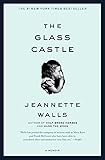
Jeannette Walls (born 1960) is an American journalist and author who worked as a celebrity gossip columnist for New York magazine before publishing The Glass Castle (2005) — a memoir about her nomadic, impoverished, unconventional childhood that became one of the best-selling memoirs of the past two decades. The book spent over two hundred weeks on the New York Times bestseller list and was adapted into a 2017 film.
Where to Start: The Glass Castle (2005)
The essential Walls — and one of the finest memoirs of the twenty-first century. The opening image sets the book’s terms precisely: Walls, now a successful New York journalist, is in a taxi when she spots her mother going through a dumpster in Midtown Manhattan. She ducks down in the taxi to avoid being seen. This moment of shame — and the question it raises about what she owes her parents, what she has taken from them, and what she has fled — is the emotional engine of everything that follows.
The Walls children — Jeannette, her sister Lori, her brother Brian, and eventually little sister Maureen — grow up in the care of two parents who are, in their different ways, impossible. Rex Walls is a visionary engineer and dreamer, a brilliantly entertaining man who teaches his children astronomy and physics and tells them stories with the confidence of a man who has never been defeated by reality — except that he has been defeated by it repeatedly, most often by alcohol. Rose Mary Walls is an artist who believes that adversity builds character and that the state’s interest in children’s nutrition and education is an infringement on parental liberty. Together, they move the family constantly — West Virginia, Arizona, California, West Virginia again — living in houses without heat or running water, eating ketchup sandwiches, burning the Christmas tree for warmth.
Walls writes about this with a directness and precision that refuses sentimentality in both directions. She does not present her childhood as uniformly miserable — there are genuinely wonderful things about Rex and Rose Mary, moments of adventure and learning and fierce love that she is honest about alongside the deprivation. She also does not soften what was harmful: the hunger, the cold, the specific cruelties that came from parents who needed their children to need them in particular ways.
The memoir’s structural achievement is to leave the parents in full contradiction — brilliant and damaging, loved and genuinely unable to love in ways that protected their children — without resolving that contradiction into a lesson. Walls arrived at this restraint not through detachment but through decades of reckoning.
Why The Glass Castle Is the Ideal First Book
For a reader new to Jeannette Walls, The Glass Castle is the ideal first book because it is her celebrated memoir, a phenomenon that reached a vast readership, and the fullest expression of her gifts, the rendering of an extraordinary and difficult childhood with honesty, vividness, and a remarkable absence of self-pity. The Glass Castle recounts Walls’s unconventional, nomadic, and often deeply difficult upbringing with brilliant but deeply flawed parents, rendering both the hardship and the strange wonder of her childhood with candor and grace. As an entry point, it offers the fullest expression of Walls’s gifts, the honest and vivid memoir, the complex portrait of a difficult family, and the resilience and grace with which she tells her story. It welcomes the newcomer with its compelling story, its honesty, and its emotional power, drawing the reader into an extraordinary and affecting memoir. It is her best-known book and the one that best represents her gifts, so that the new reader encounters Walls at her most characteristic. For the newcomer, then, The Glass Castle is the natural and ideal starting point.
What to Expect as a New Reader
As a new reader, you can expect The Glass Castle to be an honest, vivid, and emotionally powerful memoir of an extraordinary and difficult childhood. You can expect a compelling story, for the memoir recounts Walls’s unconventional, nomadic, and often deeply difficult upbringing with brilliant but profoundly flawed parents, marked by poverty, instability, and hardship. You can expect honesty and a remarkable absence of self-pity, for Walls tells her difficult story with candor and grace, neither sensationalizing nor sentimentalizing her experience. You can expect a complex portrait of family, for the memoir renders her parents in all their contradiction, their charm and brilliance alongside their failures and the harm they caused, with a striking lack of bitterness. You can expect resilience and a kind of grace, for the memoir is ultimately a testament to survival, endurance, and the complicated love within a difficult family. You should be aware that the memoir confronts hardship, neglect, and difficult family realities. Expect, in short, an honest, vivid, and emotionally powerful memoir of a difficult childhood told with grace, a moving introduction to Walls’s gifts.
Going Deeper After Your First Book
Once The Glass Castle has introduced you to Walls’s gifts, the reader who wishes to go deeper can explore her other work, which continues her engagement with family, hardship, and resilience across memoir and fiction. Her other books include further exploration of her family’s history and fiction that draws on the same themes of hardship, survival, and the lives of resilient women, rendered with the same honesty and vividness that mark her celebrated memoir. Reading these after The Glass Castle deepens your appreciation of Walls’s distinctive gifts, the honest and vivid rendering of difficult experience, the complex portraits of family, and the resilience and grace that mark her work. Her characteristic concerns, family, hardship, and resilience, run through her writing, and the reader who has been moved by The Glass Castle will find them in her other work. Building your reading journey through Walls’s work is a matter of following her honest, vivid writing from her celebrated memoir into her other books. The reader who begins with The Glass Castle and continues through her work will find a writer of honesty, vividness, and grace.
Reading Jeannette Walls
The Glass Castle is Walls’s essential and most celebrated memoir. Half Broke Horses (2009) — a biographical novel about her maternal grandmother — is the natural follow-on. Both standalone.
For the full Jeannette Walls bibliography, reviews, and biography, visit the Jeannette Walls author page on Editors Reads.
Affiliate disclosure: Links to Amazon on this page are affiliate links. We earn a small commission at no extra cost to you.
Frequently Asked Questions
Where should I start with Jeannette Walls?
The Glass Castle (2005) is Walls's essential memoir and one of the defining memoirs of the early twenty-first century — her account of a childhood spent moving between poverty, neglect, and strange brilliance, raised by an alcoholic dreamer father and a fiercely unconventional artist mother who never met a convention they didn't reject. Remarkable for its narrative restraint and its refusal to simplify a family that resists simplification.
What is The Glass Castle about?
The Glass Castle follows Jeannette Walls from early childhood through her escape to New York in her teens, raised by Rex and Rose Mary Walls — parents who were brilliant, charismatic, utterly irresponsible, and deeply damaging. Rex promises to build Jeannette a glass castle powered by solar energy; the glass castle is never built, and the family's life is a long series of improvised shelters, dumpster dinners, and moves to escape creditors. The memoir is structured by Walls's attempt to understand her parents without excusing or condemning them.
Is The Glass Castle critical of Walls's parents?
The Glass Castle is remarkable for its refusal to reduce its parents to villains. Rex Walls was brilliant, charming, and an alcoholic who consistently chose whiskey over his children's food and safety; Rose Mary Walls was an artist and free spirit who regarded conventional childraising as oppression. Walls depicts both with clear-eyed specificity that allows readers to form their own judgements. She does not frame them as monsters; she also does not sentimentalise the real harm they did. The moral complexity is the book's most important quality.
What should I read after The Glass Castle?
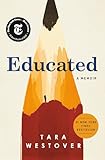
After The Glass Castle, Tara Westover's Educated covers comparable territory — an extraordinary childhood, a family outside conventional society, a self-education, and the complex question of what we owe our families when they have harmed us. Mary Karr's The Liar's Club is the earlier, darker memoir of a chaotic Southern childhood that in some ways set the template for this kind of work. Frank McCourt's Angela's Ashes covers poverty and difficult parents from an Irish Catholic perspective with comparable wit and precision.